


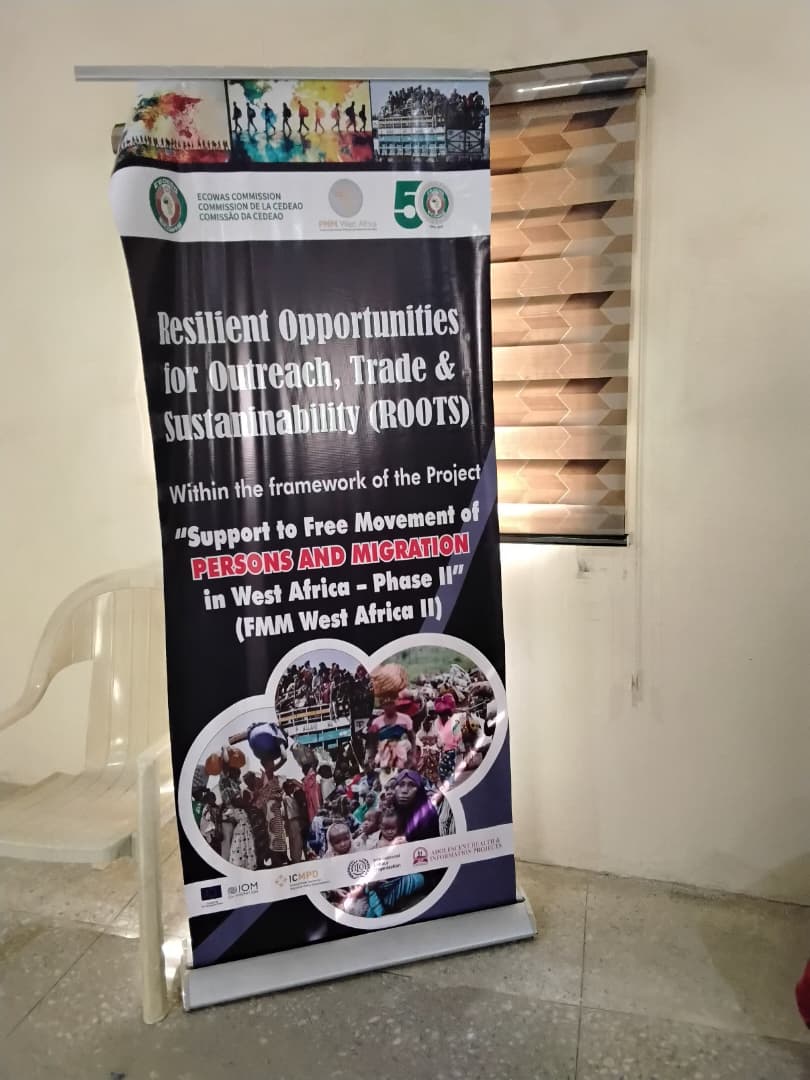
No fewer than 100 female small-scale trader farmers from Bunkure Local Government Area of Kano State are currently undergoing capacity-building training under the Resilient Opportunities for Outreach, Trade and Sustainability (ROOTS) project.
Speaking during the opening session, the Executive Director of AHIP, Dr. Mairo V. Bello, said the ROOTS project is designed to strengthen climate resilience, promote inclusive livelihoods, and support safe migration pathways for women, youth, returnees, and smallholder farmers in Kano State.
Read also: Federal Universities Get Green Light to Recruit Staff
Dr. Bello explained that the project seeks to address the root causes of irregular migration through climate-smart agriculture, economic empowerment, gender-responsive governance, and improved migration management systems.
She outlined the project’s specific objectives to include increased agricultural resilience and inclusive livelihood opportunities for vulnerable communities, improved economic inclusion and reduced migration-related risks among youths through sustainable empowerment initiatives, and enhanced governance, coordination, and institutional capacity of state and non-state actors in migration management and livelihood support.
AHIP IOM,Trains Journalists to Tackle Irregular Migration under EU-Funded ROOTS

According to her, the project also focuses on strengthening the capacity of civil society organisations, women’s groups, private sector actors, and local authorities to promote the ECOWAS Protocol on Free Movement, regional integration, gender equality, and the protection of migrants, returnees, and cross-border populations.
She added that increased public awareness, effective advocacy, and active community engagement on safe migration and reintegration issues remain key components of the intervention.
In a presentation titled “Climate Change and Our Future,” Professor Murtala Badamasi of the Centre for Dryland Agriculture (CDA), Bayero University Kano (BUK), highlighted the link between climate change and insecurity.
Read also: ABU SPESSE-CE Graduates 420 in Sustainability Training
He noted that climate change manifests through irregular rainfall patterns, the emergence of new pests and diseases, drying of water sources, altered animal behaviour, and stressed livestock.
Professor Badamasi further explained that climate change has serious financial implications for farmers, including reduced crop yields and sales, educational constraints, lower investments, and rising debt levels.
AHIP, IOM Inaugurates TWG for ROOTS Project In Kano
He identified climate-smart crop choices, soil protection, water conservation, farm diversification, improved weather knowledge, and strong community collaboration as essential tools for climate adaptation.
He also emphasized the importance of collective action, community seed banks, bulk purchasing, and shared labour systems.
The don added that effective adaptation requires joint efforts from farmers, non-governmental organisations, and government institutions.
Read also: Speaker Commissions Soba Projects to Boost Education, Healthcare
Some of the participants who spoke to journalists described the training as timely and relevant, pledging to apply the knowledge and skills acquired to improve their livelihoods and farming
Paradigm news reports that, the project is implemented by the Adolescent Health and Information Projects (AHIP) in partnership with the International Organisation for Migration (IOM), with support from the European Union (EU) and the Free Movement of Persons and Migration in West Africa Phase II (FM West Africa II) Programme.