


Ibrahim Sulaiman
The Institute for Agricultural Research (IAR), Zaria, has stepped up efforts to enhance crop productivity through the development of climate-resilient and high-yielding varieties.
Read also: Affordable Housing: FG Advances 10,000 Units Across Nigeria
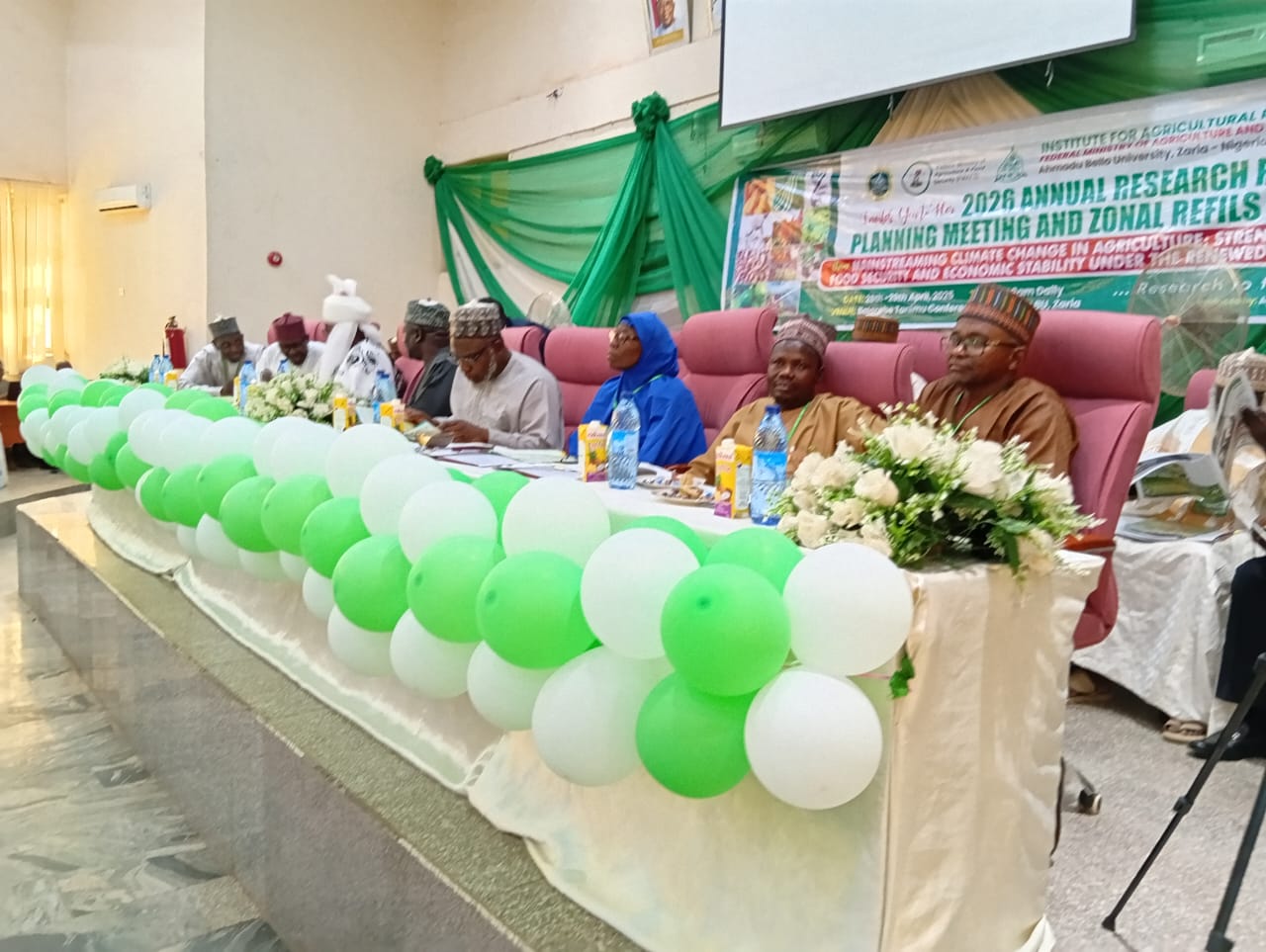
Executive Director of the Institute, Professor Ado Yusuf, disclosed this at the 2026 Annual Research Review and Planning Meeting and Zonal REFILS Workshop held at the Balarabe Tanimu Conference Hall in Zaria.
Represented by the Deputy Director, Professor Nafi’u Abdu, Yusuf said the Institute’s research is focused on improving key staple crops such as maize, sorghum, and cowpea to address the growing challenges of climate change, erratic rainfall, and pest infestations.
According to him, the development of drought-tolerant and pest-resistant crop varieties will help farmers adapt to unpredictable weather conditions and significantly reduce production losses.

He added that some of the improved varieties are already making an impact, particularly enhanced cowpea seeds that reduce the need for repeated pesticide applications, thereby cutting production costs and limiting environmental and health risks.
Read also: Speaker Commissions Soba Projects to Boost Education, Healthcare
Despite these gains, Yusuf identified inadequate funding as a major challenge affecting research activities, noting that many projects depend heavily on international partnerships. He called on both state and federal governments to increase investment in agricultural research to ensure timely delivery of innovations to farmers.
In his remarks, the Vice-Chancellor of Ahmadu Bello University, Professor Adamu Ahmed, represented by the Deputy Vice-Chancellor (Administration), Professor Bello Sabo, said the annual review provides a platform to assess progress, refine research strategies, and disseminate findings to end users.
He noted that the Institute has consistently developed improved crop varieties capable of boosting agricultural productivity nationwide.
Also speaking, the Executive Secretary of the Agricultural Research Council of Nigeria, Dr. Adamu Abubakar Damban, represented by Hajiya Hajara Buba Abdu, commended the Institute’s sustained contributions to agricultural development and called for stronger collaboration among researchers, farmers, and development partners, especially across northern Nigeria.
In his address, the Emir of Zazzau, Ahmed Nuhu Bamalli, represented by the Madakin Gonnan Zazzau, Alhaji Musa Ibrahim Bamalli, said Nigeria has the expertise required for agricultural innovation but faces challenges in implementing research outcomes effectively.
Read also: Federal Universities Get Green Light to Recruit Staff
He emphasized the need to strengthen agricultural extension services to ensure that research breakthroughs reach farmers and translate into increased food production.
The meeting, themed “Mainstreaming Climate Change in Agriculture: Strengthening Food Security and Economic Stability under the Renewed Hope Agenda,” aligns with the agricultural transformation drive of Bola Ahmed Tinubu’s administration.