


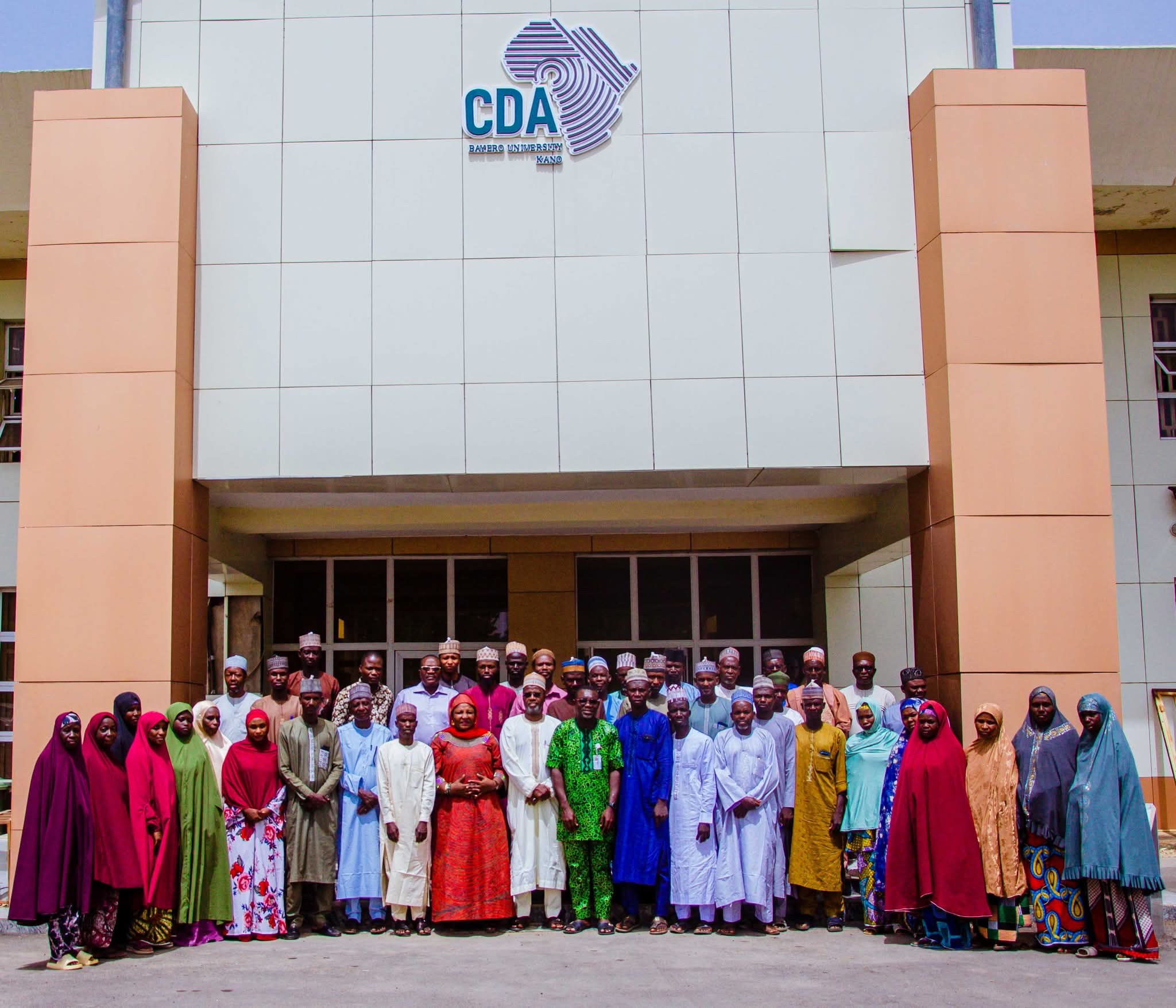
The Centre for Dryland Agriculture (CDA) BUK, in collaboration with the National Agricultural Seeds Council (NASC), has intensified efforts to improve seed quality and agricultural productivity through the training of community-based seed producers.
The training, brought together participants from farming groups across Kano State and Bauchi State, alongside representatives of five seed companies. It aimed to equip participants with the technical knowledge and practical skills required to produce and maintain high-quality seeds within Nigeria’s agricultural value chain.
Read also: Speaker Commissions Soba Projects to Boost Education, Healthcare
In his welcome address, the Director of CDA, Sanusi Gaya Mohammed, urged participants to take full advantage of the programme, emphasizing that competence in seed production is critical to addressing the persistent challenge of poor-quality seeds in the country.
He noted that strengthening local capacity remains a key pathway to enhancing food security and promoting sustainable agriculture.
Read also: Federal Universities Get Green Light to Recruit Staff

Delivering the keynote address, the Director-General of NASC, Fatuhu Mohammed, represented by Assistant Director, Enterprise Development, Easther Madi Aliyu, stressed that Nigeria’s agricultural future depends not only on large-scale commercial seed systems but also on empowered community-based producers within rural economies.
He commended CDA for its growing reputation as a centre of excellence in dryland agriculture, highlighting its contributions to climate-smart farming, capacity building, and research innovation.
According to him, the Centre has trained thousands of farmers, extension agents, and agripreneurs, while advancing research on drought-tolerant crops suited to arid and semi-arid environments.
Read also: ABU SPESSE-CE Graduates 420 in Sustainability Training
The NASC Director-General described the partnership between CDA and NASC as a strategic alignment of research and regulation necessary for building a resilient seed system. He added that the success of the trainees would depend on strict adherence to quality standards and certification requirements.
The training featured four technical modules, including best agronomic practices for producing quality seeds and guidelines for community-based seed production, aimed at strengthening participants’ practical capacity and ensuring compliance with national seed standards.