


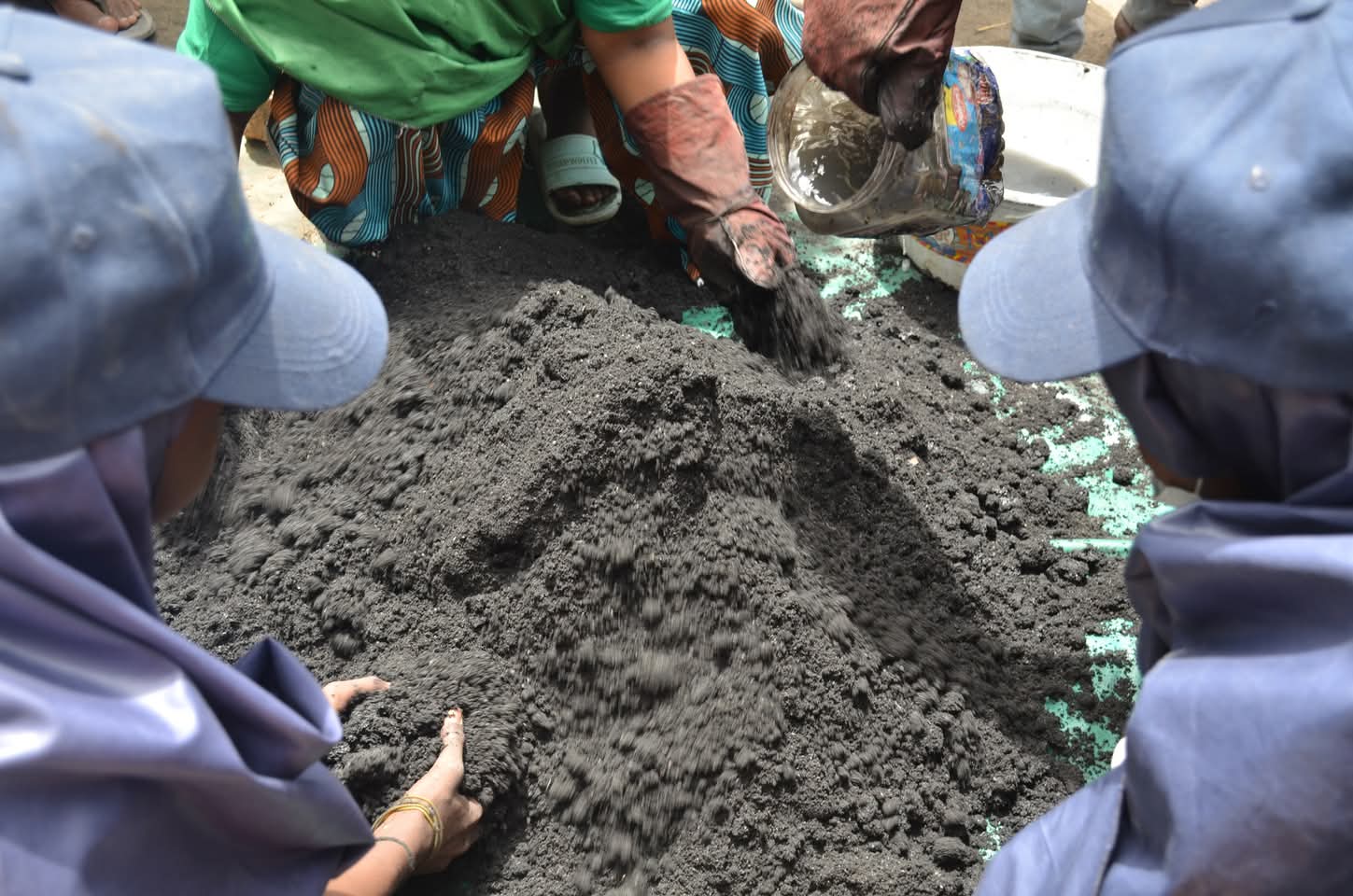
Communities in Jigawa State are transforming agricultural waste into clean energy briquettes and producing efficient cookstoves from clay, in a move that is improving livelihoods and reducing environmental pollution.
The initiative, known as the Waste-to-Wealth project, has enabled households to spend less on cooking fuel, adopt cleaner energy sources, and generate income from materials that were previously discarded.
Read also: WOFAN Turns Years of Hardship into Renewed Hope for Spinal Cord Patient in Jigawa
The project was implemented by the Exceptional Leadership and Integrity Promotion Initiative with support from UK in Nigeria under the PACE Programme.
At the close-out and media launch of the project, stakeholders highlighted the growing impact of community-led solutions in addressing climate and energy challenges.
A total of 120 women and youth from Dutse, Ringim, and Kirikasamma Local Government Areas were trained to convert agricultural waste such as rice husks and invasive typha grass into clean energy briquettes. Participants were also equipped with skills to produce efficient cookstoves using locally sourced clay.
Read also: ABU SPESSE-CE Graduates 420 in Sustainability Training
Speaking at the event, PACE National Team Leader, Ifeanyi Peters Ugwuoke, described the initiative as a practical demonstration of how partnerships can address climate vulnerabilities.
“This initiative represents more than a project. It demonstrates how community partnership, government leadership, and private sector participation can come together to deliver scalable solutions,” he said.
Also speaking, Governor Umar Namadi, represented by the Commissioner for Power and Clean Energy, Suraja Alhaji Musa, described the initiative as a model for sustainable development.
According to him, the Waste-to-Wealth project addresses key challenges, including environmental degradation and energy poverty, while creating new economic opportunities for residents.
Read also: Federal Universities Get Green Light to Recruit Staff
Participants and observers noted visible changes in the communities, including reduced reliance on firewood, cleaner cooking environments, and the emergence of new income streams, particularly for women and young people.
Stakeholders at the event called for the integration of such community-driven initiatives into Nigeria’s broader energy and development strategies, describing the project as a scalable model for tackling climate change at the grassroots level.