


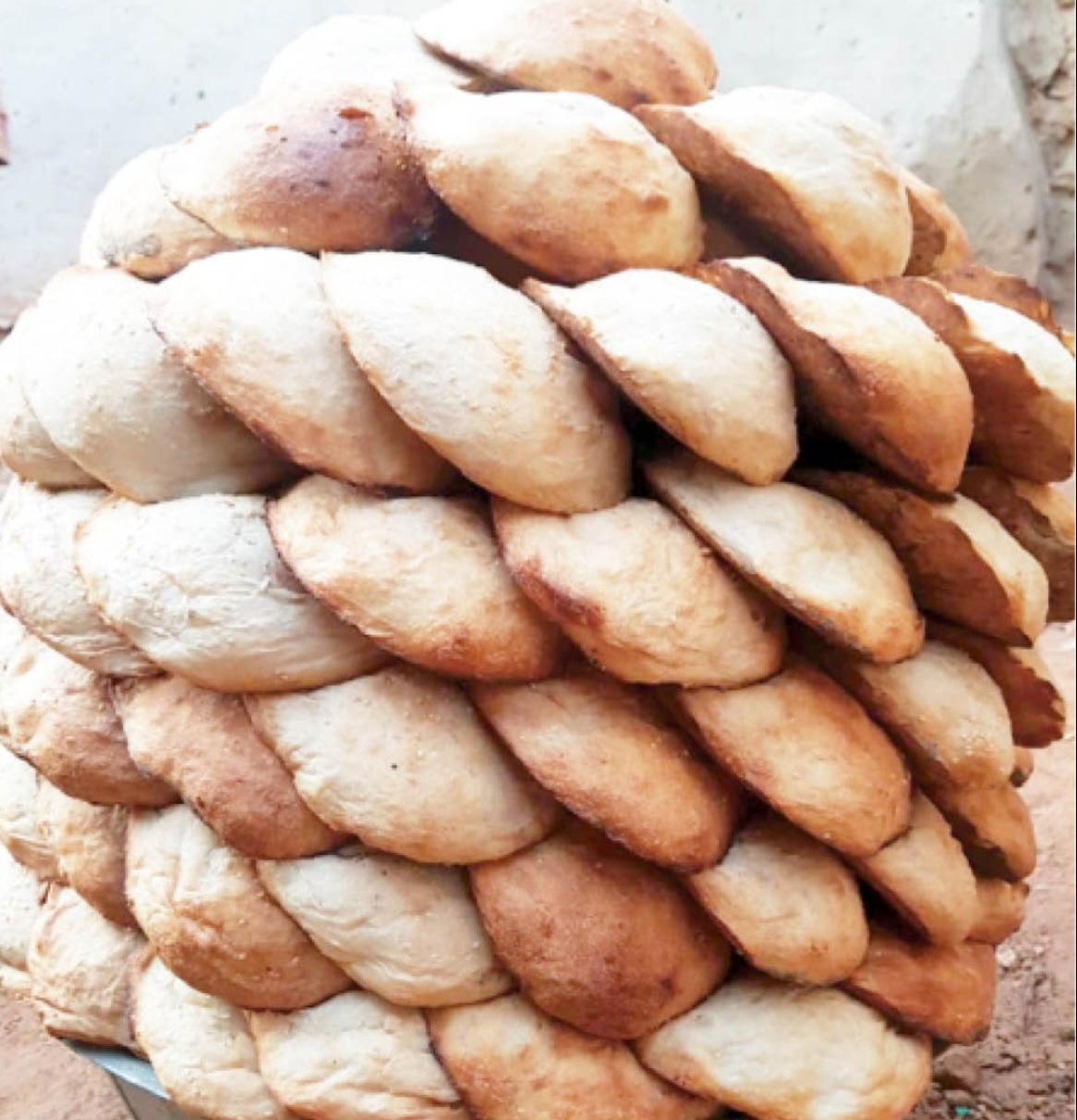
For generations, Gurasa, a traditional flatbread popular across Northern Nigeria, has remained an important part of the region’s food culture.
In Kano, the delicacy is not only a popular meal but has also developed into a thriving small-scale industry, providing income for bakers, sellers and other people involved in its value chain.
Read also: Kano Boosts Adolescent Healthcare with 743 Facilities
Zaria Bread Seller Who Topped Medicine Class Bags Scholarship
From the early hours of the morning, the aroma of freshly baked Gurasa fills parts of the city, particularly the popular Jakara Yan Gurasa area, where production and marketing of the traditional bread remain active.
Usually eaten with soup or stew, Gurasa is also served with groundnuts and vegetables, making it a convenient and relatively affordable food for many households.

Some Kano residents say Gurasa has been part of their diet for as long as they can remember.
For them, the traditional bread represents not only a familiar taste but also an important aspect of Kano’s cultural identity.
Beyond its cultural value, health experts say Gurasa can contribute to a balanced diet when consumed as part of meals containing other nutritious food groups.
A dietician at Aminu Kano Teaching Hospital, AKTH, Dr Dijeh Kabara, highlighted the nutritional value of Gurasa and the importance of combining it with appropriate sources of protein, vegetables and other essential nutrients.
At the Jakara Yan Gurasa area in Dala local government area, the business continues to attract customers despite the rising cost of food ingredients and other economic challenges.
Some of the bakers have spent decades perfecting the traditional method of production.
The Chairperson Kano female Gurasa bakers association Fatima Auwal said she has been baking Gurasa for 23 years.
She explained that the business has provided them with a means of livelihood and helped them support their families.
However, she said the increasing cost of flour, and other ingredients has raised their production expenses, making it difficult to maintain previous profit margins.
“We witness low patronage during the rainy season because most of the sellers travel to their villages to take care of their farms”
Read also: Girls’ Education: Kano SUBEB, AGILE Distribute 11 Laptops
“Our profit margin is usually between ₦3,000 and ₦3,500 per bag. We collect the flour and other ingredients from the shops, sell them, and then pay back the money.”
A Gurasa seller in Kano Abubakar Auwal Ibrahim said the business witnessed low patronage due to the current economic situation.
“We are managing the business, but these days, there has been a decline in patronage due to the current economic situation.
“We collect gurasa from the bakers at ₦200 each and sell them for ₦250 or ₦300, depending on the location.
“I take care of my family and parents through this business, but I need more capital to expand the business and become self-reliant.”
The Gurasa trade has also created a wider economic chain involving suppliers of ingredients, firewood vendors, transporters, sellers and other service providers.
This means that an industry that began primarily as a traditional food practice now provides economic opportunities for different categories of people.
An economist and lecturer at Sa’adatu Rimi University of Education, Dr Abdulsalam Kani, believes the industry has even greater economic potential if properly utilized.
“Concerning the Federal Government’s interventions for small-scale businesses, particularly those in the Gurasa industry, many operators face challenges accessing such support because they do not have Corporate Affairs Commission (CAC) registration, corporate bank accounts and other required documentation”
How V-PeSDI’s Ramadan Bread Initiative Brought Hope to Kano’s Most Vulnerable
According to him, the lack of these formal business requirements often prevents small-scale operators from benefiting from government grants, loans and other intervention programmes designed to support micro, small and medium enterprises (MSMEs).
“The issue of inadequate storage facilities, proper packaging and other measures needed to modernise the business remains a major concern.”
He called on the government to invest in the Gurasa industry, noting that the sector continues to provide employment and income at the grassroots despite receiving little or no formal recognition.
Read also: Kano, NWDC to Harmonise Data for Rural Dev Projects
Dr Kani noted that investment in the sector could go beyond financial support to include access to modern equipment, skills development, improved packaging, hygiene standards and wider market opportunities.
As Nigeria continues to explore ways of strengthening local enterprises and creating employment at the grassroots, the Gurasa industry demonstrates how traditional food businesses can contribute to economic development when given the necessary support.