


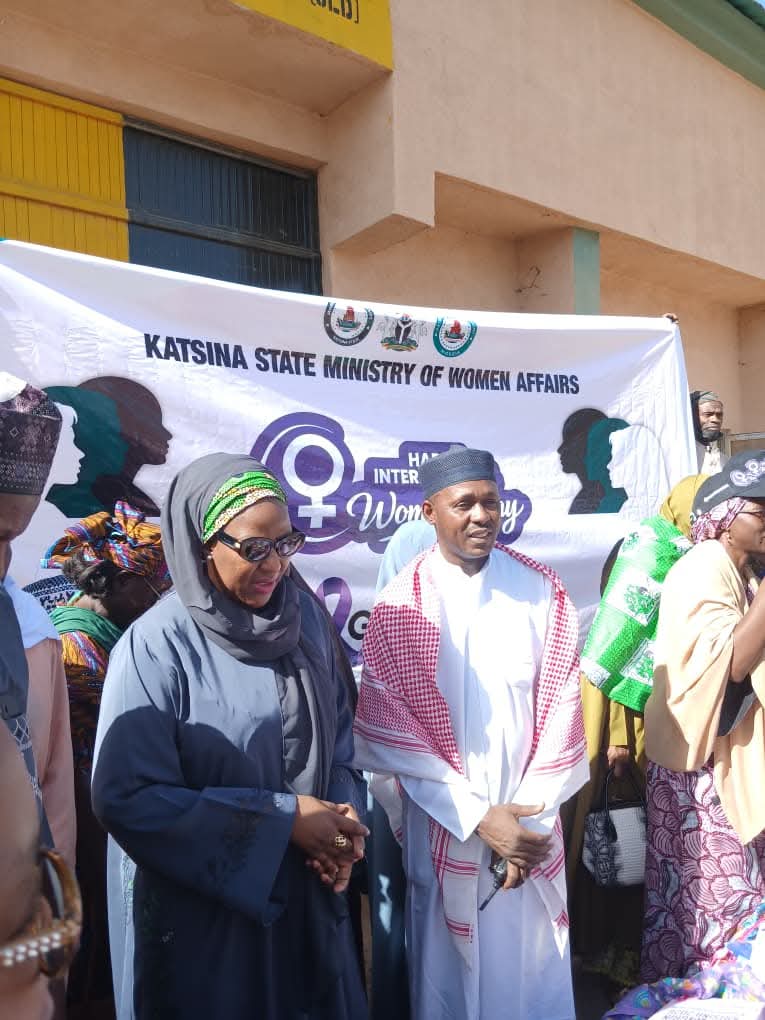
The Independent Corrupt Practices and Other Related Offences Commission (ICPC), in collaboration with the Katsina State Ministry of Women Affairs and other development partners, marked the International Women’s Day 2026 celebration by extending support and encouragement to female inmates in correctional centres across Katsina State.
The outreach, which began on March 8, was held under the theme “Give–To–Gain,” highlighting the importance of collective support, empathy, and shared responsibility in promoting women’s empowerment.
Read also: Uganda Hosts Historic African Defence Conference
Representing the Resident Anti-Corruption Commissioner, Mr. Samuel Lodam, Muhammad Kabir Goda joined the Commissioner for Women Affairs, Hajiya Aisha Aminu Malumfashi, and other stakeholders to visit two correctional facilities in the state.
At the Central Correctional Centre in Unguwar Yari, the Commissioner encouraged the 23 female inmates to remain hopeful and view their current circumstances as an opportunity for reflection and positive transformation.
She urged the inmates to remain resilient and focus on rebuilding their lives, assuring them that society still holds opportunities for reintegration and personal growth.
The Officer in Charge of the facility, CSC Habibu Kabir Ibrahim, expressed appreciation to the delegation for the visit and their gesture of solidarity with the inmates. He also assured the team that the welfare of the inmates remained a priority for the correctional authorities.
The delegation later visited the New Correctional Centre along Jibia Road, where they were received by the Deputy Controller of Corrections, Abdullahi Mamman Saulawa.
Saulawa informed the visitors that the facility houses 30 female inmates who are actively participating in various vocational and developmental programmes aimed at preparing them for life after incarceration.
Read also: Lagos Upgrades Yaba Centre for Medical Training
During the visit, the Commissioner donated essential items to the inmates as part of the International Women’s Day outreach, a gesture that was warmly received and appreciated by the beneficiaries.
Earlier, Mr. Lodam reaffirmed the ICPC’s commitment to promoting gender equality as a key component of its anti-corruption mandate. He highlighted the National Ethics and Integrity Policy (NEIP), launched in 2020, which prioritises the protection and empowerment of women and other vulnerable groups.
He also disclosed that the commission had developed a model sexual harassment policy for educational institutions and established a specialised unit to prosecute sexual harassment cases as acts of corruption, particularly where abuse of office is involved.
Speaking on the significance of the global celebration, Lodam described the 2026 theme as a call for collective action to dismantle gender inequality and harmful stereotypes.
He urged members of the public to support gender equality by sharing domestic responsibilities, challenging discriminatory practices, and amplifying the voices of women and girls.
According to him, achieving genuine equality requires systemic reforms, including a zero-tolerance approach to corruption and gender-based discrimination in all sectors of society.
Read also: HAFEDPOLY Kazaure Gets NBTE Approval for Additional Programmes
“Collective responsibility is our most powerful tool against inequality,” he said. “When we all take ownership of the problem, we build a world where every woman and girl can live freely and achieve fully.”
The event concluded with a renewed call for unity and inclusion, as participants emphasised that achieving gender equality remains a shared responsibility for governments, institutions, and communities.