


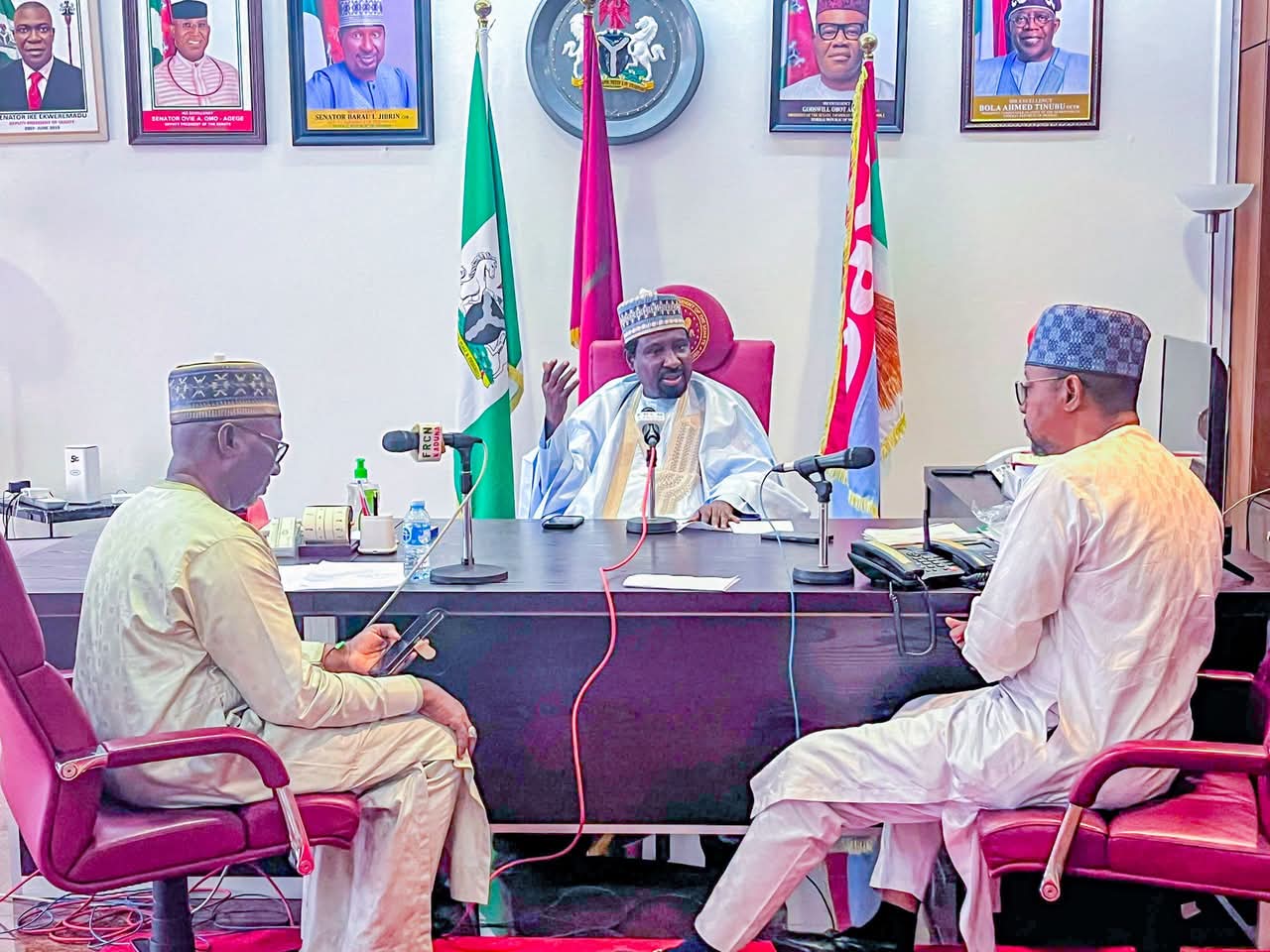
Deputy President of the Senate and Chairman of the Senate Committee on Constitution Review, Senator Barau I. Jibrin, has described President Bola Ahmed Tinubu’s proposal to establish State Police as a strategic and far-reaching reform aimed at addressing Nigeria’s persistent security challenges.
Speaking during Hannu Da Yawa, a live Hausa programme on Radio Nigeria Kaduna on Saturday, Senator Barau said the initiative represents a bold step towards strengthening the country’s security architecture through community-based policing backed by constitutional safeguards.
Read also: 5 Suspected Cultists Arrested Over Armed Robbery Rape in A/Ibom
The two-hour interactive programme featured callers from across Northern Nigeria who sought clarification on the proposed constitutional amendment and its implications for national security.
Senator Barau explained that the State Police proposal had undergone extensive legislative scrutiny, including public hearings conducted across the six geopolitical zones and the Federal Capital Territory (FCT), to ensure broad public participation and stakeholder input.
He said the executive bill, initiated by President Tinubu and recently passed by the Senate, was developed through consultations involving the Presidency, the National Assembly, the Inspector-General of Police, retired police officers, security experts, state governors, civil society organisations and members of the public.

According to him, the bill responds to longstanding calls for constitutional reforms that would allow states to establish their own police services while maintaining national security coordination.
“President Tinubu carefully studied the situation and recognised that although many Nigerians support the establishment of State Police, there were concerns that the system could be abused for political or ethnic purposes. That is why adequate safeguards have been incorporated into the proposal,” he said.
Barau stressed that State Police would complement, rather than replace, the Nigeria Police Force by improving security at the grassroots through locally recruited personnel familiar with their communities.
He noted that officers recruited from their respective states would possess better knowledge of the terrain, local residents and criminal networks, thereby enhancing the fight against banditry, kidnapping and other crimes.
Read also: Knowledge of History Vital for Nigeria’s Future -NERDC
Responding to a question from a caller in Katsina State, the Deputy Senate President said Northern Nigeria, where insecurity has had a significant impact on livelihoods, stands to benefit immensely from the proposed reform.
He also assured Nigerians that the constitutional amendment provides clear legal and institutional safeguards to prevent abuse of State Police powers.
According to him, where State Police are deployed in a manner that threatens lives or violates the law, the President would have the constitutional authority to direct the Nigeria Police Force to intervene.
Barau further explained that responsibilities between the Federal Police and State Police would be clearly defined, with the Nigeria Police Force retaining jurisdiction over national security issues such as terrorism and cybercrime, while State Police would focus on internal security, public order and community policing.
He added that State Police Commandants would be appointed through a transparent and legally protected process designed to shield them from undue political interference.
On funding and operational capacity, the Deputy Senate President acknowledged existing concerns but assured Nigerians that sustainable financial arrangements and operational standards would be developed as the constitutional amendment and enabling legislation progress.
He expressed confidence that state Houses of Assembly would support the initiative and urged Nigerians to embrace the proposed reform as a critical step towards improving security across the country.
Read also: No Tariff Increase: NCC Debunks Rumors of Price Hike
“We must re-engineer our security architecture to better protect lives and property while guarding against abuse. This is a balanced, consultative initiative built on safeguards and aimed at bringing policing closer to the people,” Senator Barau said.
During the programme, the Deputy Senate President also responded to questions on insecurity and other national issues affecting the country.