


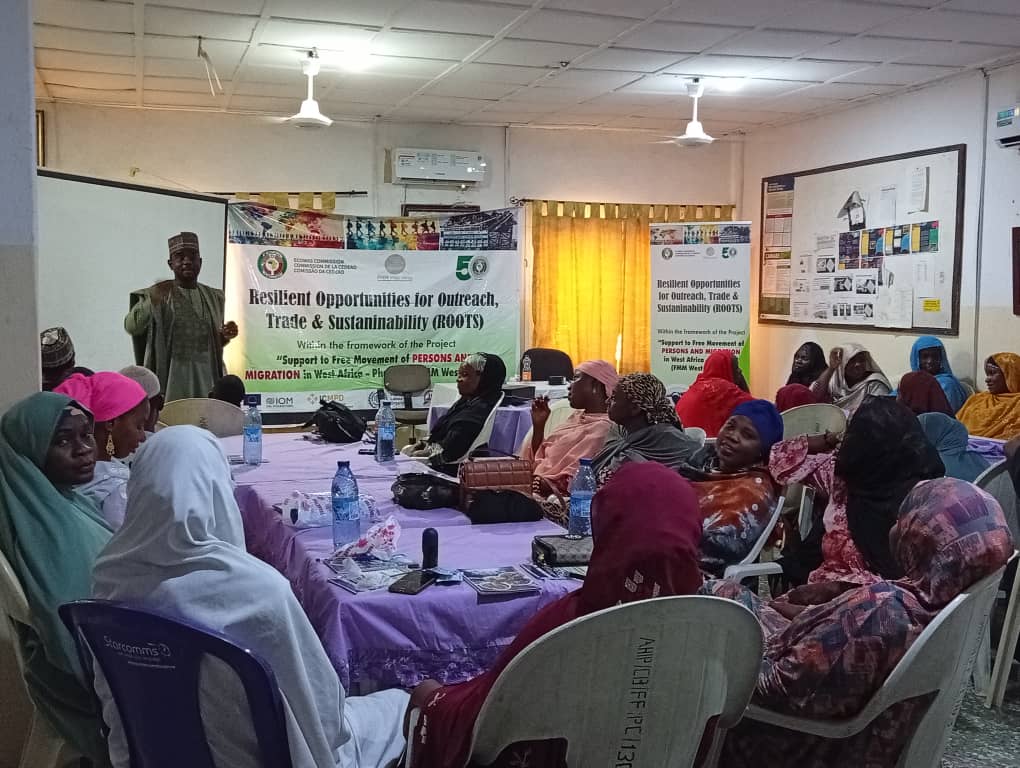
A non Governmental organization,Adolescent Health Information Project (AHIP), in collaboration with the International Organization for Migration (IOM) under its ROOTS Project, has organized a three-day capacity-building training for returnees on financial literacy and business management to promote self-reliance and discourage irregular migration.
The programme is designed to equip participants with practical financial management and entrepreneurship skills that will enable them to rebuild sustainable livelihoods and successfully reintegrate into their communities.
Read also: Kano Govt Backs MAAUN Student’s Guinness World Record Bid
In her opening remarks, the ROOTS Project Programme Manager, Halima Kasim, explained the initiative forms part of ongoing efforts to support returnees in overcoming the challenges associated with irregular migration.
Kasim noted that many returnees came back home after enduring hardship, deportation, exploitation and significant financial losses, making reintegration into society particularly difficult.
She explained that the project had previously trained beneficiaries in agricultural value addition, processing agricultural produce into flour, climate-smart agriculture and agribusiness.
According to her, the current training marks the fourth and final phase of the programme, with a focus on financial literacy and business management to help participants effectively manage and sustain their businesses.
Read also: Respect Nigerians’ Right to Peaceful Protest-CITAD to Police
“Our goal is to help beneficiaries develop sound financial management skills, cultivate a savings culture, access business financing and build sustainable livelihoods,” she said.
Kasim added that the project also aims to encourage young Nigerians to explore opportunities within the country rather than embark on dangerous irregular migration journeys that often expose them to abuse, exploitation and other risks.
Also speaking, the facilitator Shuaibu Umar, said the training would provide participants with practical knowledge on financial literacy and small business management.
He emphasized the importance of separating personal finances from business funds, describing it as a critical practice that many small-scale entrepreneurs often overlook.
“We want them to develop a strong savings culture and understand that consistent savings, even in small amounts, can support business expansion and financial stability,” Umar said.
Read also: Kano Assembly Tackles Soaring House, Shop Rents
Speaking on behalf of other participants,Habibu Abdullahi, a small-scale businessman, described the training as timely and impactful.
He noted that, the knowledge acquired would help them become more disciplined in managing both personal and business finances, ultimately improving the sustainability and growth of their enterprises.