


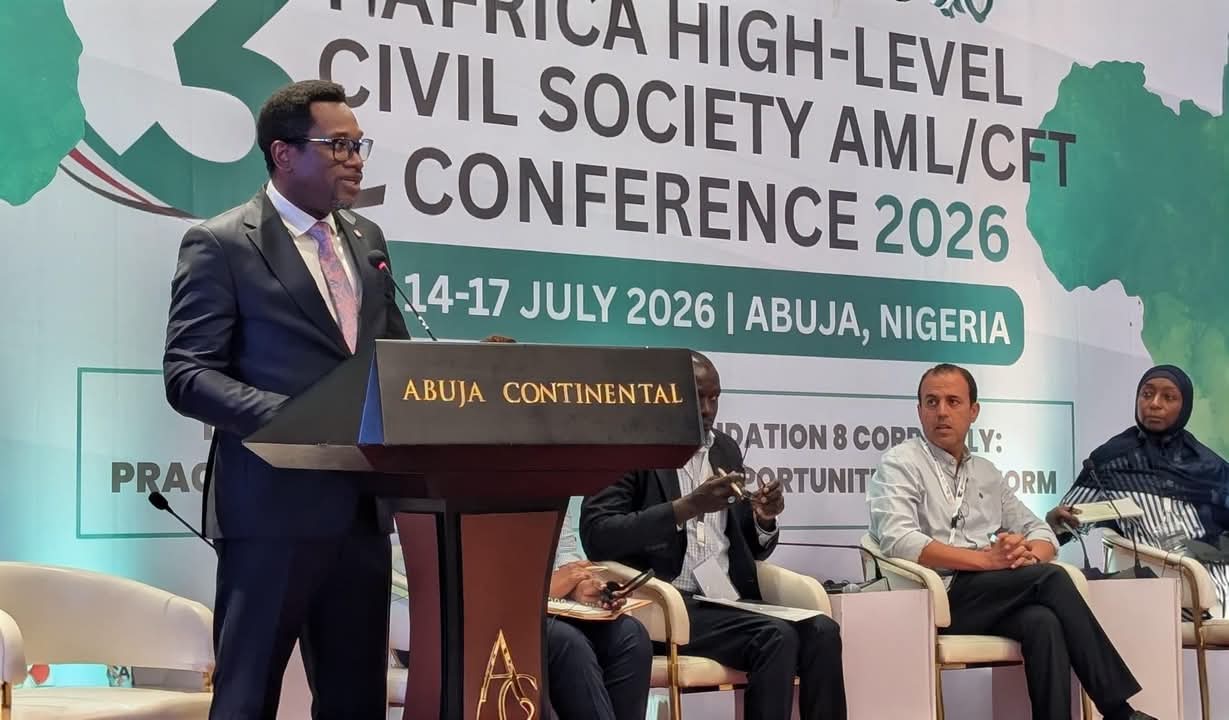
The Executive Chairman of the Economic and Financial Crimes Commission (EFCC), Ola Olukoyede, has called for stronger collaboration among governments, civil society organisations, regulators and development partners to effectively combat money laundering and terrorism financing across Africa.
Olukoyede made the call at the opening of the Third African High-Level Civil Society Anti-Money Laundering and Counter-Terrorist Financing (AML/CFT) Conference in Abuja.
No Evidence Linking Kwankwaso to Terror Financing -COSEYL Insists
Represented by the Director of the Special Control Unit against Money Laundering (SCUML), Deputy Commander of the EFCC, Harry Erin, the EFCC Chairman said robust legal and institutional frameworks must be complemented by partnerships built on trust, dialogue and shared responsibility.
He noted that the conference, themed “Implementing FATF Recommendation 8 Correctly: Practices, Lessons Learned and Opportunities for Reform,” provides a platform for stakeholders to exchange experiences, address implementation challenges and strengthen regional cooperation against illicit financial flows.
Olukoyede explained that the Financial Action Task Force (FATF) Recommendation 8 is designed to protect the non-profit sector from terrorist financing while safeguarding legitimate charitable and humanitarian activities from unnecessary regulatory burdens.
He said Nigeria had strengthened its Anti-Money Laundering and Counter-Terrorist Financing framework through collaboration among the EFCC, the Nigerian Financial Intelligence Unit (NFIU), the Office of the National Security Adviser (ONSA), the Corporate Affairs Commission (CAC), civil society organisations and other stakeholders.
According to him, the country’s National Terrorist Financing Risk Assessment of the non-profit sector has enabled authorities to adopt a more targeted, risk-based approach that protects legitimate organisations while identifying those vulnerable to abuse.
Olukoyede stressed that trust, transparency, consultation and information sharing remain critical to the effective implementation of anti-money laundering and counter-terrorist financing measures.
He reaffirmed the Commission’s commitment to working with all stakeholders to strengthen Nigeria’s AML/CFT regime and support continental efforts to protect the integrity of Africa’s financial system.
Earlier, the Executive Director of Spaces for Change, Victoria Ibezim-Ohaeri, described the conference as a milestone, marking a decade of advocacy for the proper implementation of FATF Recommendation 8 in Nigeria.
She commended the EFCC for sustaining dialogue between government institutions and civil society organisations, noting that collaboration had improved the country’s anti-money laundering framework.
Nigerians’ Assets Frozen by US Amid Counter-Terrorism Measures
Also speaking, Chairman of the Board of Trustees of Spaces for Change, Samuel Diminas, said Africa loses more than 88 billion dollars annually to illicit financial flows, stressing the need for stronger partnerships among governments, regulators, financial institutions and civil society to curb financial crimes.