

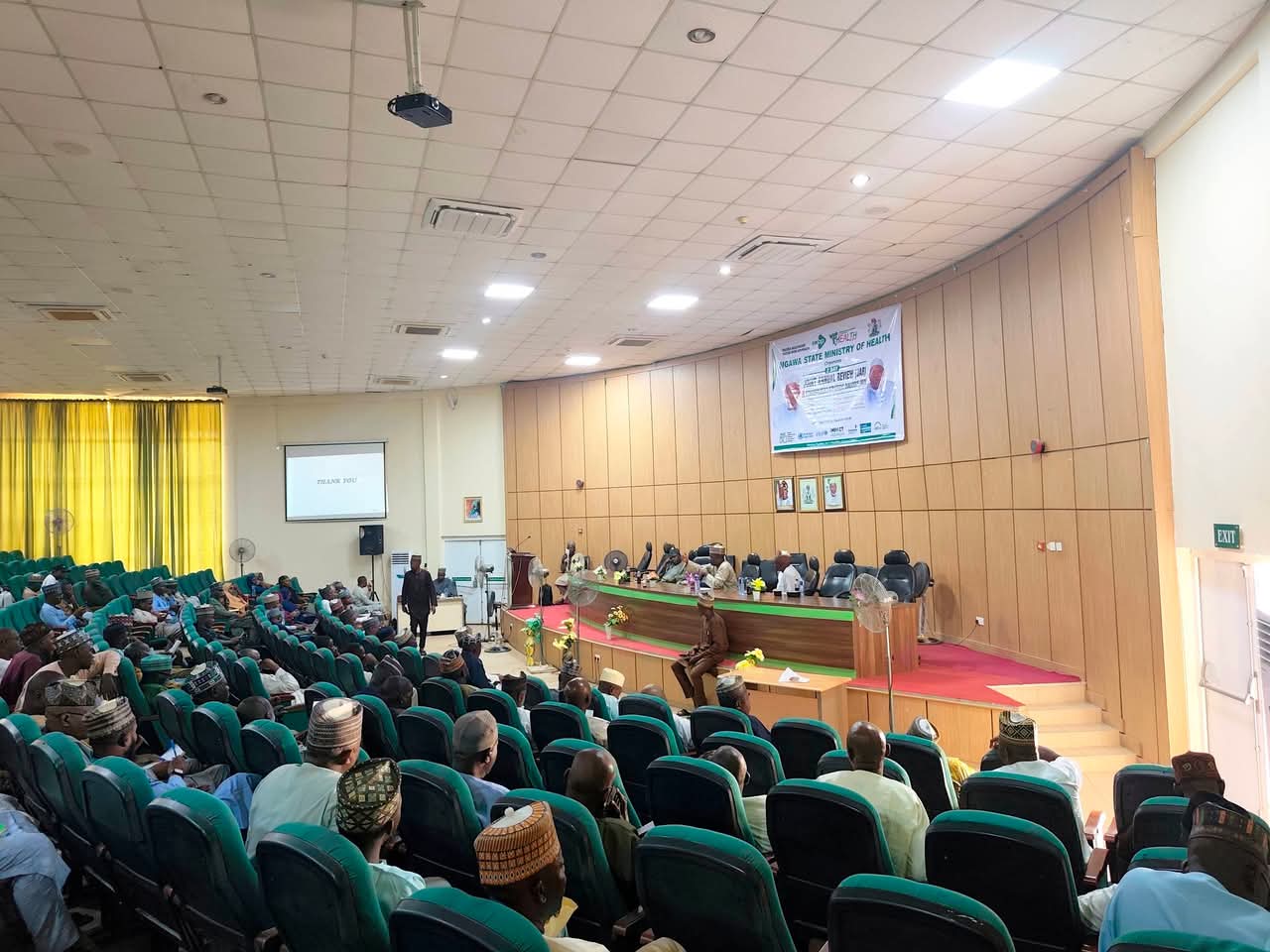
Jigawa State has commenced its 2026 State Joint Annual Review (JAR) and Stakeholders’ Strategic Dialogue, bringing together government officials, development partners, civil society organisations and health experts to assess the performance of the state’s health sector and chart a course for improved healthcare delivery.
The two-day review, held at the Ahmadu Bello Hall, New State Secretariat, Dutse, was declared open by the Commissioner for Health, Dr. Abdullahi Muhammad Kainuwa.
Read also: Nigeria Takes Major Step Toward Local Health Manufacturing
The meeting, chaired by the Permanent Secretary of the Ministry of Health, Dr. Kabir Ibrahim Aliyu, and coordinated by the Director of Planning, Research and Statistics, Dr. Yusuf Saleh, is reviewing progress recorded in 2026, identifying implementation gaps and developing evidence-based strategies to strengthen healthcare services across the state.
In his opening remarks, Dr. Kainuwa underscored the importance of collaboration among government institutions, development partners and other stakeholders in addressing the challenges facing the health sector.
He called for stronger partnerships, improved coordination and sustained commitment to evidence-based interventions that will expand access to quality healthcare services and improve health outcomes for the people of Jigawa State.
The Executive Secretary of the Jigawa State Primary Health Care Development Agency (JSPHCDA), Dr. Shehu Sambo, reaffirmed the agency’s commitment to evidence-based planning, stronger primary healthcare services and improved health outcomes, while making technical contributions during the review.
Read also: Galadanci Leads Innovation Drive to Strengthen PPH Detection
Other participants included the Technical Adviser to the Governor on Health Matters, Hon. Isa Surajo; the Senior Special Assistant to the Governor on Primary Health Care, Hon. Babangida Lawal Roni; the Executive Secretary of the Jigawa Contributory Health Management Agency (JICHMA), Pharm. Hamza Maigari Kakudi; representatives of the Federal Ministry of Health and Social Welfare, directors, programme managers, monitoring and evaluation officers, and officials from key state agencies.
Representatives of development partners, including the World Health Organization (WHO), UNICEF, Lafiya UK, the Gates Foundation, MSI Nigeria Reproductive Choices, Médecins Sans Frontières (MSF), Society for Family Health (SFH), SARMAAN, Evidence Action and the Malaria Consortium, also participated in the strategic dialogue.
Primary Health Care Managers from the 27 Local Government Areas and heads of state-owned health training institutions attended the review, reflecting a broad-based commitment to strengthening the state’s healthcare system.
Highlights of the opening day included presentations on the Jigawa State mini-Nigeria Demographic and Health Survey (mini-NDHS), SMART Survey findings, the 2026 Health Financing and Performance Analysis Report, as well as updates on HIV/AIDS, Tuberculosis, Malaria, Non-Communicable Diseases, Neglected Tropical Diseases, Nutrition, Immunisation, Reproductive, Maternal, Newborn, Child, Adolescent Health and Nutrition (RMNCAH+N), Logistics Management Coordination Unit (LMCU), and Human Resources for Health.
Read also: Kano IntegratE Project Close-Out: Stakeholders Push to Sustain Health Gains
Participants also reviewed the second-quarter RMNCAEH scorecards for the state’s 27 Local Government Areas and engaged in technical discussions to identify priority actions for improving healthcare service delivery.
The Joint Annual Review is expected to strengthen accountability, promote evidence-based decision-making, deepen collaboration among stakeholders and generate practical recommendations for building a more resilient, efficient and people-centred healthcare system in Jigawa State.