


Nafisa Murtala
The Kano State Government says the state’s modern contraceptive prevalence rate has increased from 5.8 per cent to 10.8 per cent, following interventions aimed at expanding access to family planning and primary healthcare services.
Read also: Rabies Scare Grips Kano as Dog Bites 18 Residents
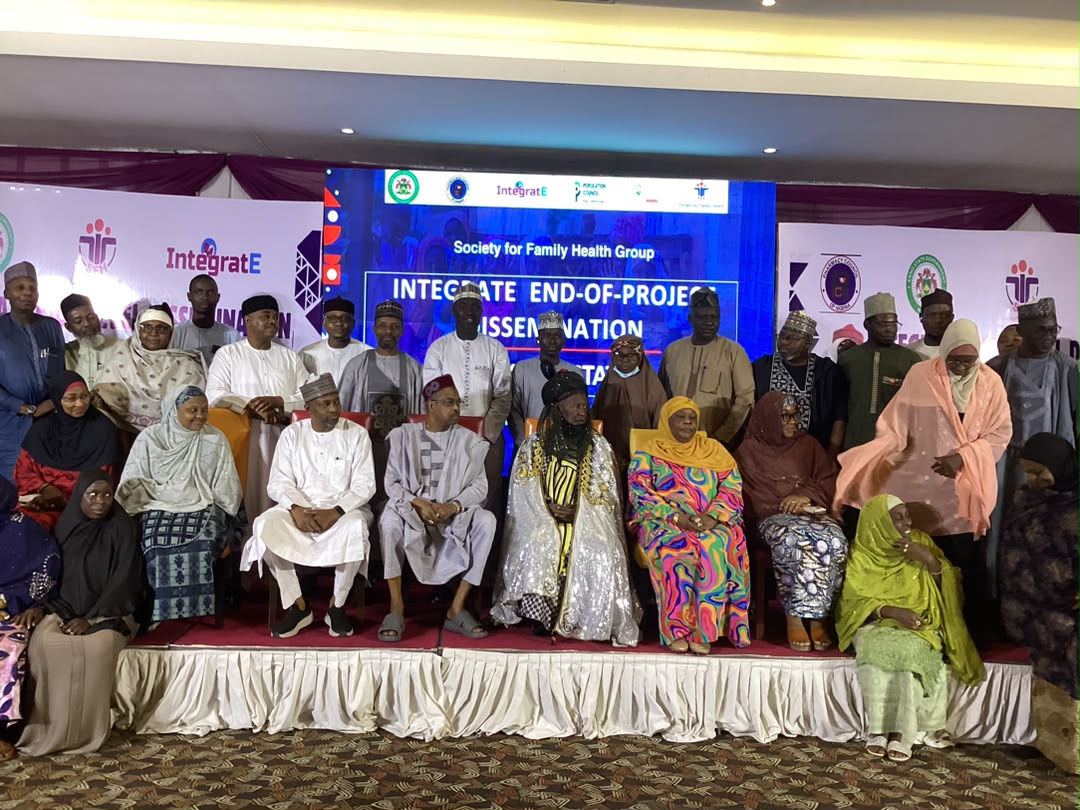
The State Commissioner for Health, Dr. Abubakar Labaran Yusuf, disclosed this at the high-level dissemination and close-out event of the Society for Family Health, SFH, IntegratE Project in Kano.
Dr. Yusuf said the project, implemented to strengthen integrated primary healthcare services with emphasis on family planning, had contributed significantly to the improvement recorded in the state.
He noted that the initiative recognised community pharmacies and Patent and Proprietary Medicine Vendors, PPMVs, as important points of contact for people, particularly those living in underserved communities.

The Commissioner said the project strengthened the capacity of community-level providers to offer family planning information, counselling and commodities, as well as identify and appropriately manage common childhood illnesses among children under five.
He added that the project also incorporated tuberculosis screening, creating additional opportunities to identify people requiring further assessment and treatment.
According to him, 988 community pharmacists and PPMVs were trained under the project in Kano State, equipping them with skills to provide quality services within their defined scope and refer clients requiring higher levels of care.
Dr. Yusuf urged the state’s health authorities and other stakeholders to ensure that the trained personnel remained integrated into the healthcare system and continued to serve communities after the close-out of the project.
He said the Ministry of Health would build on the achievements recorded through the intervention, while appreciating SFH and its partners for their technical support and collaboration with the state.
Read also: Galadanci Leads Innovation Drive to Strengthen PPH Detection
In his remarks, SFH Group Director, Impact and Partnership, Dayyabu Mahmud Yusuf, said the organisation had worked with the Kano State Government for about three decades across areas including HIV, tuberculosis, malaria, maternal and child health, family planning and health-system strengthening.
He said the IntegratE Project was designed around the principle that improving access to primary healthcare and family planning required reaching people where they live and seek care.
Mr Yusuf explained that community pharmacists and PPMVs were often among the first points of contact for people seeking healthcare, making their integration into the health system critical.
He said the nine-year IntegratE programme implemented across 11 states trained hundreds of community pharmacists and PPMVs, who provided family planning services to more than 1.75 million women nationally, including nearly 400,000 first-time users.
He stressed that sustaining the gains would require stronger regulation, continuous capacity development, supervision, quality assurance, functional referral systems and stronger linkages between community providers and public health facilities.
Also speaking, a representative of the Gates Foundation Dr Shamsudeen Sani noted that, the project had helped about a quarter of a million women in Kano access family planning services, with almost 100,000 of them being first-time users.
He hinted that,the intervention also contributed to preventing about 20,000 unintended pregnancies in Kano State and expanding access to primary healthcare services for children under five.
Shamsu urged the state government to take ownership of the model by providing domestic financing, sustaining supervision and ensuring the availability of commodities and other essential support systems.
Read also: Nigeria Records Over 100 Rabies Cases in 2026-Official
The gates foundation representative said the project demonstrated that private-sector community providers could play an important role in extending quality healthcare services when they were properly trained, regulated, supervised and linked to the formal health system.
The event brought together representatives of the Kano State Ministry of Health, SFH, development partners, community pharmacists, PPMVs, health officials,mwdia and other stakeholders to review the achievements and lessons from the IntegratE Project.