


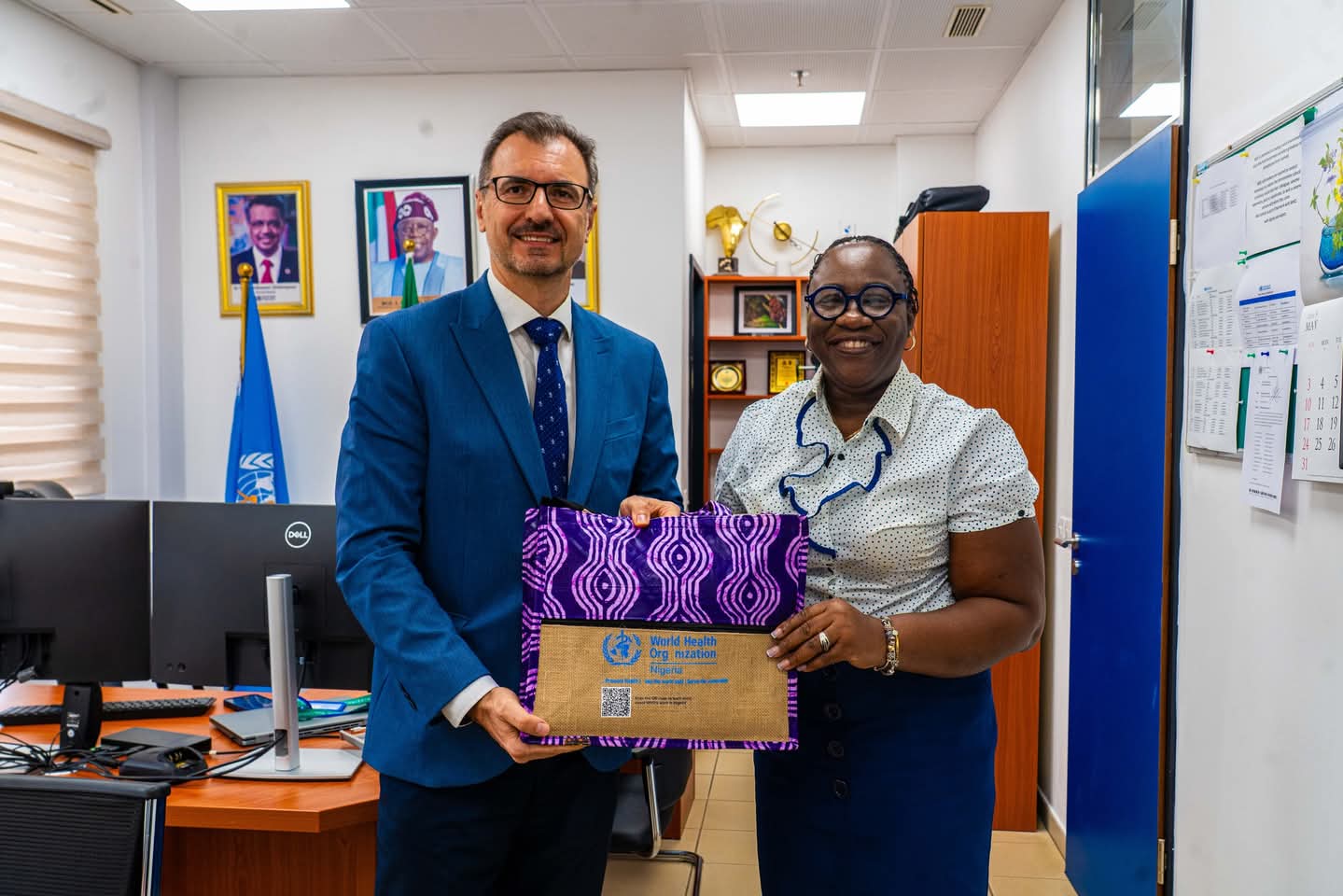
The World Health Organization (WHO) and the Private Sector Health Alliance of Nigeria (PSHAN) have reaffirmed their commitment to strengthening healthcare investments and expanding access to quality primary healthcare services across Nigeria through enhanced public-private sector collaboration.
This was highlighted during a courtesy visit by the Director of Policy at PSHAN, Dr. Anne Adah-Ogoh, to the WHO Representative in Nigeria, Dr. Pavel Ursu.
Read also: Kitchens to Serve Nigerian Pilgrims Fully Stocked-NAHCON
The meeting provided an opportunity for both organisations to review the impact of the Adopt-A-Healthcare Facility Programme (ADHFP), discuss the proposed adoption of 36 additional Primary Healthcare Centres (PHCs) by WHO—including one in the Federal Capital Territory (FCT)—and explore areas for deeper collaboration.
The WHO-PSHAN partnership under the ADHFP has recorded significant achievements in strengthening primary healthcare delivery across the country.
According to figures presented during the meeting, the initiative has positively impacted healthcare services in 33 states and the FCT, with 60 primary healthcare centres revitalised and made fully functional.

The programme has facilitated access to quality healthcare services for 711,272 people, while 274,612 children under one year of age have been immunised.
Read also: Community Applauds CODARAN For Setting Up Milk Collection Centre In Ringim
In addition, 16,677 community outreach activities have been conducted, 76,500 women have received antenatal care services, and 38,860 individuals have accessed family planning services through the revitalised facilities.
The initiative has also supported the treatment of 31,117 malaria cases among children under the age of five, contributing to improved health outcomes in underserved communities.
Speaking during the engagement, both parties underscored the importance of leveraging private sector resources and expertise to strengthen Nigeria’s healthcare system and accelerate progress toward universal health coverage.
The discussions also focused on expanding collaboration in digital health and mobilising additional domestic private sector investments to improve healthcare delivery nationwide.
Stakeholders at the meeting noted that the success of the Adopt-A-Healthcare Facility Programme provides a model that could be replicated in other African countries seeking sustainable approaches to strengthening primary healthcare systems.
Read also: Waiya Urges Media to Adhere to Ethical Journalism Practices
The renewed partnership is expected to drive further investments in healthcare infrastructure, service delivery, and innovation, while enhancing the resilience of Nigeria’s primary healthcare system.
Both organisations expressed optimism that sustained collaboration between public and private sector actors would help build a stronger, more accessible, and sustainable healthcare system capable of meeting the needs of all Nigerians.