


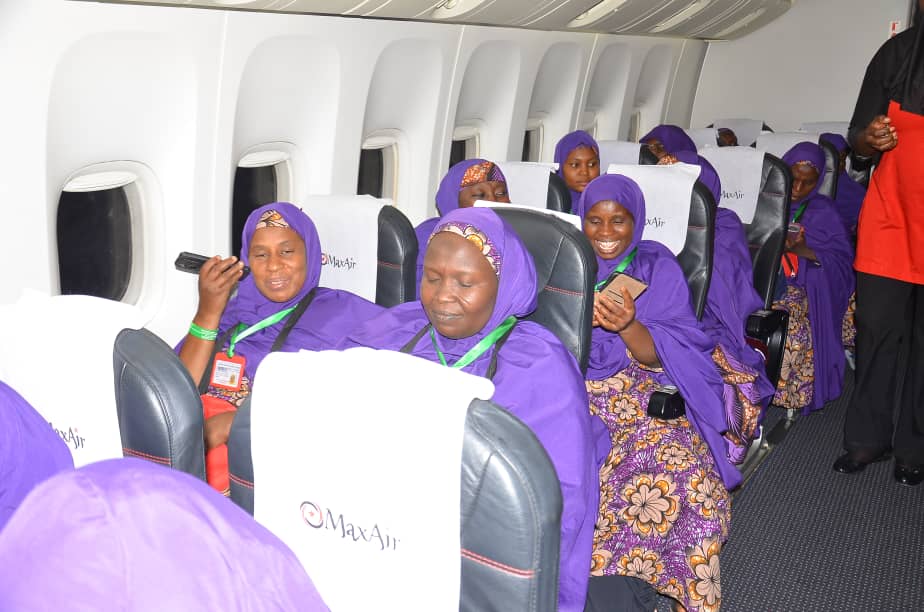
The inability of Kano pilgrims participating in the 2026 Hajj exercise to enjoy direct shuttle bus services between their accommodation and the Grand Mosque in Makkah is due to a new transportation and crowd-control policy introduced by Saudi authorities ahead of the commencement of the core Hajj rituals.
The Director-General of the Kano State Pilgrims Welfare Board, Dr. Abubakar Ibrahim Matawalle, disclosed this while speaking with journalists in Makkah on Sunday.
Read also: Kano Steals the Show in Kaduna: Abba Yusuf Emerges as Tinubu’s Political Mobiliser
This was contained in a statement issued by the Head of the Media Team for Kano Hajj Operations 2026, Mustapha Muhammad.
According to the statement, the Saudi authorities have restricted the movement of large buses conveying pilgrims near accommodation areas and around the Grand Mosque beginning seven days before the commencement of Hajj rites.
The policy, the statement explained, forms part of broader measures aimed at reducing congestion and improving crowd management around the Haram during the peak pilgrimage period.

The development affects pilgrims from different countries participating in this year’s Hajj and is not limited to Kano pilgrims alone.
However, the situation became more noticeable among Kano pilgrims because they were among the final batch of Nigerian pilgrims airlifted to Saudi Arabia, arriving in Makkah barely five days before the commencement of the major Hajj rituals.
As a result, many of them had limited opportunity to benefit from regular shuttle services to the Haram before the transportation restriction came into effect.
Read also: Islamic Summit in Kano Urges FG to Address Insecurity, Economic Hardship
Despite the development, Matawalle assured pilgrims and their families that the Kano State Pilgrims Welfare Board had already put adequate measures in place to ensure the comfort and convenience of pilgrims throughout their stay in the Kingdom of Saudi Arabia.
He explained that all accommodation secured for Kano pilgrims in Makkah was carefully selected within manageable walking distance to the Grand Mosque in anticipation of transportation restrictions usually imposed during the Hajj season.
“We are fully aware of the new operational policy introduced by the Saudi authorities,” Matawalle stated. “The board made proper arrangements ahead of time to ease movement for our pilgrims. All the houses secured for Kano pilgrims are within trekable and manageable walking distance to the Haram.”
The Director-General further disclosed that the restriction on vehicular shuttle services between pilgrims’ residences and the Grand Mosque would be lifted immediately after pilgrims return to Makkah from Arafat, Mina, and Muzdalifah, after which transportation services would resume.
He urged pilgrims and their relatives back home to refrain from spreading false or misleading information capable of causing unnecessary panic or confusion regarding the welfare of Kano pilgrims in Saudi Arabia.
Matawalle emphasized that the transportation restriction was a general directive from Saudi authorities and not a failure on the part of the Kano State Pilgrims Welfare Board.
He also appealed to pilgrims to cooperate with officials and exercise patience during the spiritually significant period, noting that the crowd-control measures are necessary to ensure the safety of millions of pilgrims gathered in the holy land.
Read also: ACF Appoints Three-Member Interim Leadership in Kano
Saudi authorities annually implement strict transportation and movement regulations during the peak Hajj season as part of efforts to maintain order, prevent stampedes, and guarantee smooth coordination of pilgrims around the holy sites.
As preparations intensify for the commencement of the Hajj rites, pilgrims continue to adapt to the operational realities on ground while anticipating improved mobility after the completion of the major rituals.