


Ibrahim Sulaiman
Director-General of the National Institute of Public Health and Infectious Diseases (NIPHID), Dr. Abdullahi Aminu Dalhatu, has called for stronger collaboration among stakeholders in the health sector to enhance infectious disease control and strengthen Nigeria’s public health response.
Read also: Over 1,000 Benefit as NMA Holds Medical Outreach in Bunkure
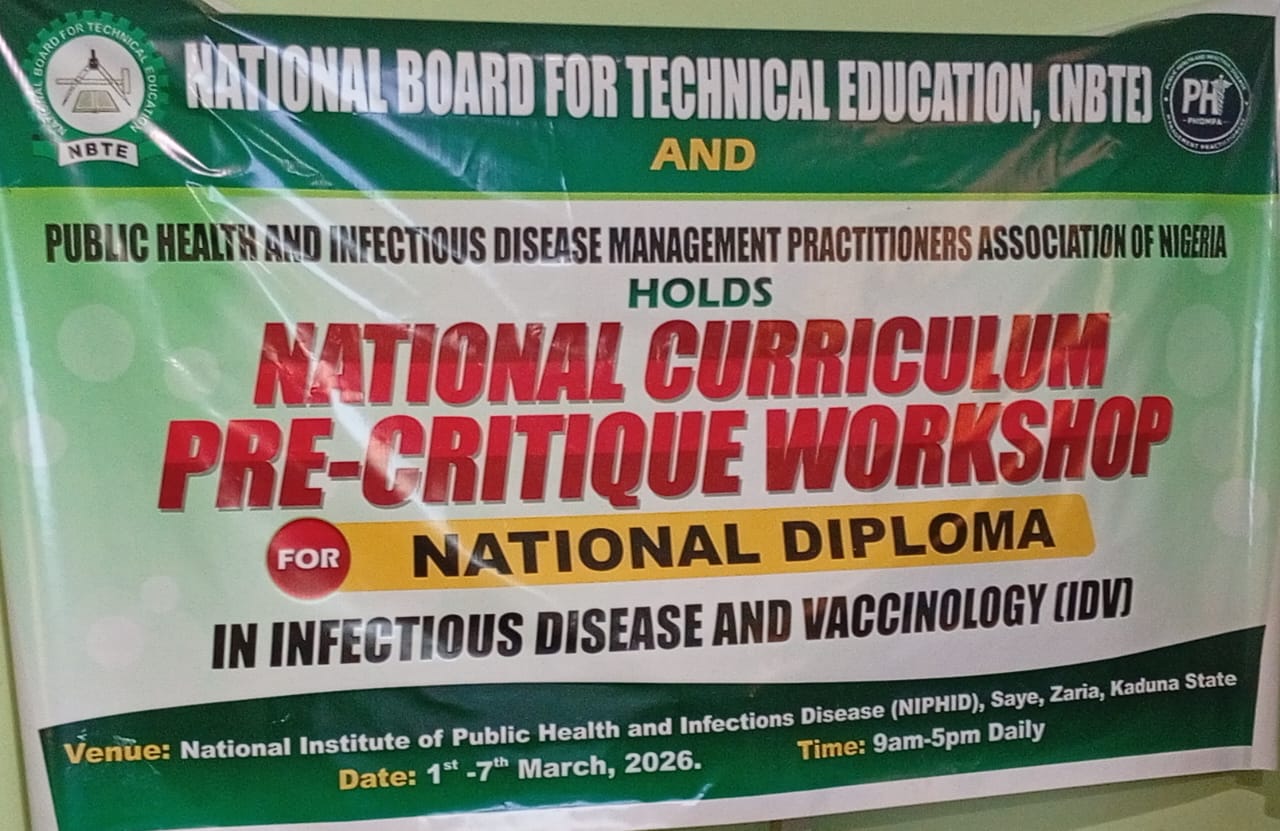
Dr. Dalhatu made the call during the National Curriculum Pre-Critique Workshop for the proposed National Diploma in Infectious Diseases and Vaccinology, held at the institute’s headquarters in Saye, Zaria.
He emphasized the importance of developing a comprehensive and forward-looking curriculum that will equip students with the knowledge and skills required to manage both existing and emerging infectious diseases.
According to him, the programme is expected to prepare a new generation of health professionals capable of responding effectively to evolving public health threats.
Read also: Police Arrest Suspect in Kano Kidnap Case, Recover Rifle
The Director-General urged participants to adopt a broad and global perspective in reviewing the curriculum to ensure it aligns with international best practices and adequately prepares students for future health challenges.
He also commended the National Board for Technical Education (NBTE) and other partners for their commitment to strengthening technical education and building capacity within the health sector.
In separate remarks, the Director of Curriculum Development at NBTE, Mr. Oladipo Bello, and the Chairman of the Board of Trustees, Prof. Khadija Musa, highlighted the urgent need for a skilled workforce to address emerging and re-emerging infectious diseases such as cholera and Ebola.
They noted that the workshop provided a valuable platform for scholars, public health experts, regulatory authorities, and other stakeholders to review and refine the curriculum to ensure it is practical, globally relevant, and capable of producing ethical, knowledgeable, and responsive health professionals.
Read also: ACReSAL: Kebbi Moves to Tackle Erosion in Vulnerable Communities
The workshop, organized by NBTE in collaboration with the Public Health and Infectious Diseases Management Practitioners Association of Nigeria, aims to develop middle-level manpower to support disease surveillance, vaccination campaigns, and public health emergency response across the country.
Stakeholders expressed optimism that the initiative would significantly strengthen Nigeria’s capacity to prevent, detect, and respond to infectious disease outbreaks while improving overall public health outcomes.