


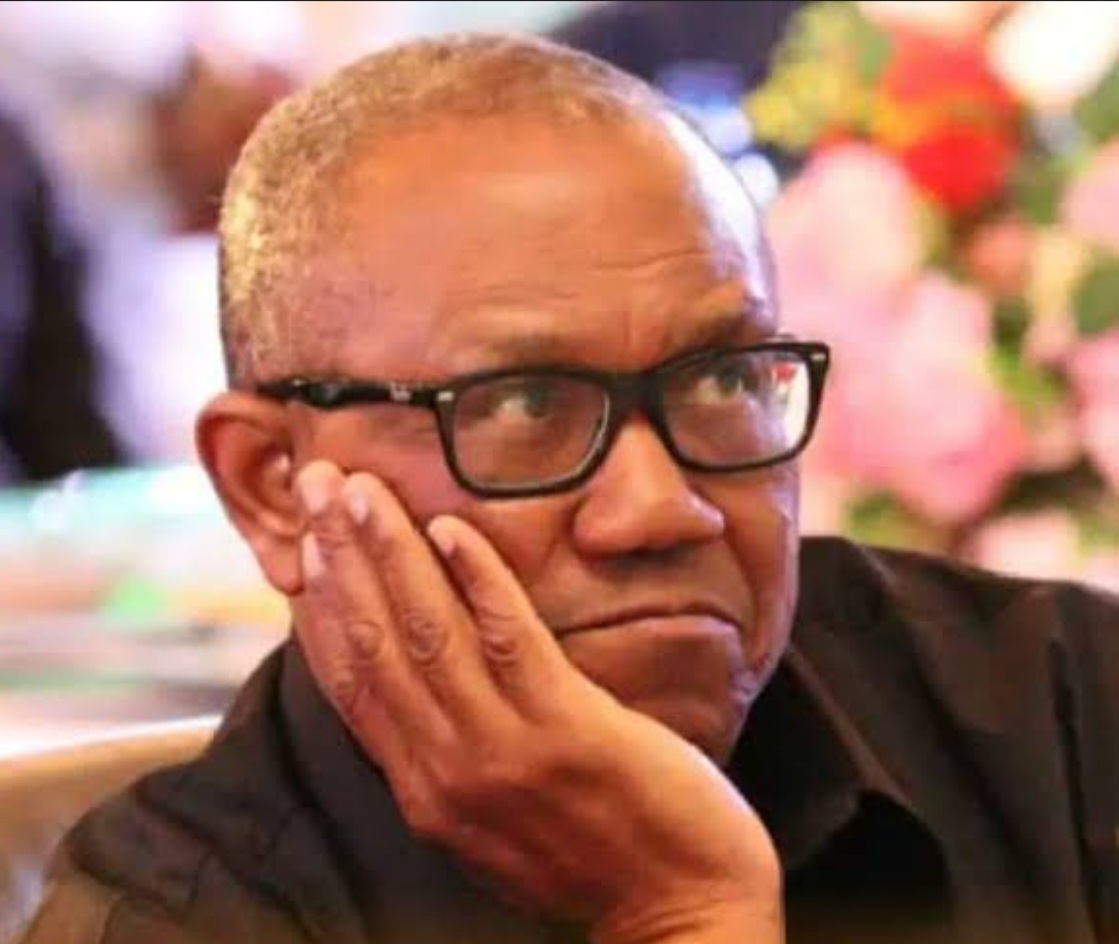
Onyedikachi Chinatu
“The only thing I disagree with is naming IPOB terrorist; they are not terrorists.”
Read also: Mauludi:Ku dage Wajen Tallafawa Masu Karamin Karfi-Sheikh Ibrahim Khalil
“I stay in Onitsha, and I can tell you that they are people I pass them on the road every day.”
No doubt emotions has eroded the minds of some Nigerians making them vulnerable to politicians who feeds on these emotions but more importantly is that our reasoning should not let this be, it is for this purpose that I have tried in providing evidences to these issues and as Peter Obi himself will always chant “go and verify” I have tried to make these verifications easier.
The words above were the very words of Peter Obi, during a 2022 interview while reacting to the designation of IPOB as a terrorist organization. (https://www.vanguardngr.com/2022/10/ipob-members-not-terrorists-i-live-with-them-peter-obi/amp/ )
Years later, these comments continue to raise questions, not because Nigerians are opposed to free speech or alternative opinions, but because insecurity has left deep wounds across the country and especially within parts of the South-East where many families, businesses, and communities have directly or indirectly suffered from violence, fear, and economic disruptions.
Across several South-East states, sit-at-home orders and their enforcement have disrupted commercial activities, education, transportation, and everyday life. Major commercial cities once known for nonstop economic activities have repeatedly witnessed closures, empty streets, and declining investor confidence. ( https://businessday.ng/news/article/nigerias-south-east-region-losses-n7-6trn-on-ipobs-sit-at-home-order/ )
The insecurity situation also produced tragic incidents that shaped national conversations. On April 5, 2021, gunmen attacked the correctional facility and police formations in Owerri, Imo State, leading to mass prison breaks and widespread security concerns. Nigerian authorities linked the incident to IPOB and its armed wing, though the group denied involvement. ( https://www.channelstv.com/2021/04/05/imo-prison-attack-1844-inmates-escaped-corrections-authorities/ )
Beyond isolated attacks, reports have documented hundreds of deaths, repeated disruptions, and severe economic losses connected to insecurity and the enforcement of sit-at-home actions across the region. ( https://www.reuters.com/world/africa/separatists-sit-at-home-protests-lead-700-deaths-nigerias-southeast-report-says-2025-05-26/ )
This is why public figures seeking national leadership are often judged not only by what they criticize, but also by what they defend, how they frame sensitive issues, and the clarity of the alternatives they provide.
Read also: The Untold Burden: Inside the Emotional Weight Nigeria’s Journalists Carry
Peter Obi has consistently criticized the current administration over insecurity and the economy. Criticism itself is not a problem. In democracy, governments should be questioned and challenged. In fact, opposition politics exists partly for that reason.
However, difficult questions also deserve difficult answers.
When insecurity in parts of the South-East escalated, did his public comments provide enough reassurance to victims and families affected by violence?
When discussing groups and movements that government institutions view differently, could such statements have been interpreted differently by people living with fear and uncertainty?
And perhaps more importantly, beyond repeatedly pointing out failures, what specific pathways has he consistently placed before Nigerians as solutions?
Supporters often describe Peter Obi as disciplined, prudent, and accountable. Critics argue that he sometimes appears quicker at identifying problems than communicating practical implementation strategies. Both viewpoints deserve consideration.
Politics should not simply be about who criticizes more effectively. It should also be about who provides clearer answers.
Because in a country battling insecurity, unemployment, economic hardship, and growing divisions, Nigerians have a right to question those in government.
Read also: NAERLS Trains 90 ABU Students in Poultry Production
They equally have a right to question those asking to replace them.
Onyedikachi Chinatu writes from Kano onyedikachichinatu7@gmail.com