


Hamman Abdulkareem
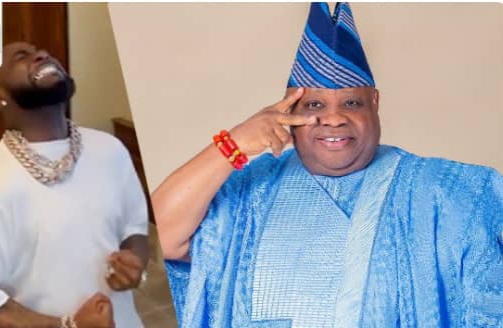
In 2022, an emotional Ademola Adeleke and his nephew Davido celebrated what appeared to be a political breakthrough with the words, “We did it this time.” Four years later, those words deserve to be revisited—not as a political slogan, but as a question. Did the hope that brought Adeleke to power become the transformation Osun voters expected, or has the celebration become more memorable than the governance?
Read also: Affordable Housing: FG Advances 10,000 Units Across Nigeria
“We did it this time.”
Those five words, spoken in an emotional moment in 2022, captured something much bigger than an election victory.
Governor Ademola Adeleke and his nephew, music superstar David Adeleke, popularly known as Davido, had every reason to celebrate. The Peoples Democratic Party was leading the Osun governorship election, and the long political struggle that had preceded the moment appeared to be ending in victory. Davido responded simply: “Yes.”
There were tears.
There were embraces.
There was jubilation.
There was hope.
And, perhaps most importantly, there was an expectation that something new was about to begin in Osun State.
But politics has a cruel way of turning yesterday’s celebration into today’s examination.
Four years later, perhaps the most important question is no longer “Did you do it?”
It is:
What exactly did you do with the opportunity the people gave you?
THE MAN THEY ONCE SAW AS HOPE
Adeleke’s political journey was unusual.
Before he became governor, he was widely mocked for his dancing. His opponents used the nickname and his public dancing to portray him as unserious.
But Adeleke turned that weakness into part of his identity.
He told Nigerians that dancing was simply part of who he was.
His supporters did not see a man who danced.
They saw a man who had been underestimated.
They saw the uncle of Davido.
They saw the Adeleke family name.
They saw a politician who had endured electoral disappointment and eventually returned to claim victory.
When he finally won, the excitement was therefore not only about one politician.
It was about hope defeating disappointment.
BUT HOPE HAS AN EXPIRY DATE
The people of Osun did not vote for entertainment.
They voted for governance.
They voted for roads.
They voted for employment opportunities.
They voted for functioning schools.
They voted for hospitals.
They voted for security.
They voted for a government that would treat public resources as a trust rather than political property.
And this is where the conversation becomes uncomfortable.
A governor is allowed to dance.
There is nothing wrong with celebration.
There is nothing wrong with having a personality.
But when a bridge develops cracks, when roads deteriorate, when public projects raise questions about quality, and when citizens complain about the cost of living and government performance, the music inevitably becomes secondary.
The people begin listening for something else:
Answers.
THE BRIDGE IS MORE THAN CONCRETE
A cracked bridge should not simply become another political photograph circulated on social media.
It should trigger questions.
Who designed the bridge?
Who awarded the contract?
How much was budgeted?
How much was released?
Who supervised the project?
What materials were used?
Was the structure inspected before commissioning?
Was there a warranty?
And who will pay for the repairs?
These are the questions that separate serious journalism from political propaganda.
If the infrastructure is sound, let the government demonstrate it.
If there is a defect, let the appropriate authorities investigate it.
If a contractor failed, let the contractor be held accountable.
If government officials failed in supervision, let responsibility be established.
The people deserve facts, not noise.
“WE DID IT” SHOULD NOW MEAN SOMETHING DIFFERENT
Read also: Gambo Musa Gets NBBF Role to Develop Young Basketball Talent
Perhaps the most powerful way to revisit that famous phrase is to change its meaning.
In 2022:
“We did it” meant winning an election.
Today:
“We did it” should mean delivering on the promises that accompanied that victory.
That is the real test.
Because winning an election is not the final achievement of democracy.
It is only the beginning of the responsibility.
THE DANCE IS NOT THE PROBLEM
It would be unfair to judge Adeleke simply because he dances.
Indeed, the governor has repeatedly defended his dancing and argued that it does not interfere with his responsibilities. He has also pointed to infrastructure projects, workers’ welfare and other programmes as evidence of his administration’s performance.
So the argument should not be:
“Stop dancing.”
The argument should be:
“Dance if you want—but govern effectively.”
A governor can dance at night and sign important documents in the morning.
A governor can celebrate with musicians and still build excellent roads.
A governor can be entertaining and competent at the same time.
The people are not asking for a governor without personality.
They are asking for a government whose performance can withstand scrutiny.
HAS THE ADELEKE PROMISE BEEN FULFILLED?
This is where Osun citizens must become the judges.
The government has presented its own record of achievements, including roads, schools, health facilities and other projects. Those claims should be independently verified rather than accepted blindly or dismissed simply because they come from government.
The opposition, civil society groups, journalists and citizens also have a responsibility to examine projects critically.
Democracy becomes dangerous when every government achievement is automatically celebrated by supporters and every criticism is automatically dismissed as opposition politics.
Osun deserves better.
FROM CELEBRATION TO ACCOUNTABILITY
There was something deeply emotional about that 2022 video.
Two members of the Adeleke family stood together at a moment they believed history was changing.
They had fought.
They had hoped.
They had lost before.
And suddenly, they believed they had won.
“We did it.”
It was a beautiful political moment.
But beautiful moments do not build bridges.
Tears of joy do not repair roads.
Dance steps do not equip hospitals.
Political slogans do not employ graduates.
Family popularity does not guarantee good governance.
Only serious leadership can do those things.
THE PEOPLE MUST NOW ASK THE HARD QUESTION
Osun State does not belong to the Adeleke family.
It does not belong to the Accord party.
It does not belong to the APC.
It belongs to the people.
And the people have every democratic right to ask whether the government they helped elect has delivered enough to deserve their continued confidence.
The governor should not fear that question.
No responsible government should.
Instead, the administration should answer it with figures, completed projects, audited expenditure, functioning infrastructure and measurable improvements in the lives of ordinary citizens.
That is how history is written.
Not by the loudest supporters.
Not by the most entertaining political rallies.
Not by the number of times a governor dances.
But by what remains after the music stops.
Four years ago, Adeleke and Davido celebrated and declared:
“We did it.”
Now Osun should ask:
“What did you do?”
And perhaps that is the question every Nigerian government should be prepared to answer when the applause fades and the people begin to examine the records.
Read also: Kano NMA Hails Abba Yusuf’s Efforts to Improve Healthcare
Because in democracy, winning the people is only the first victory. Keeping their trust is the harder one.
Hamman Abdulkareem
Publisher hammanmedia
www.hammanmedia.com