


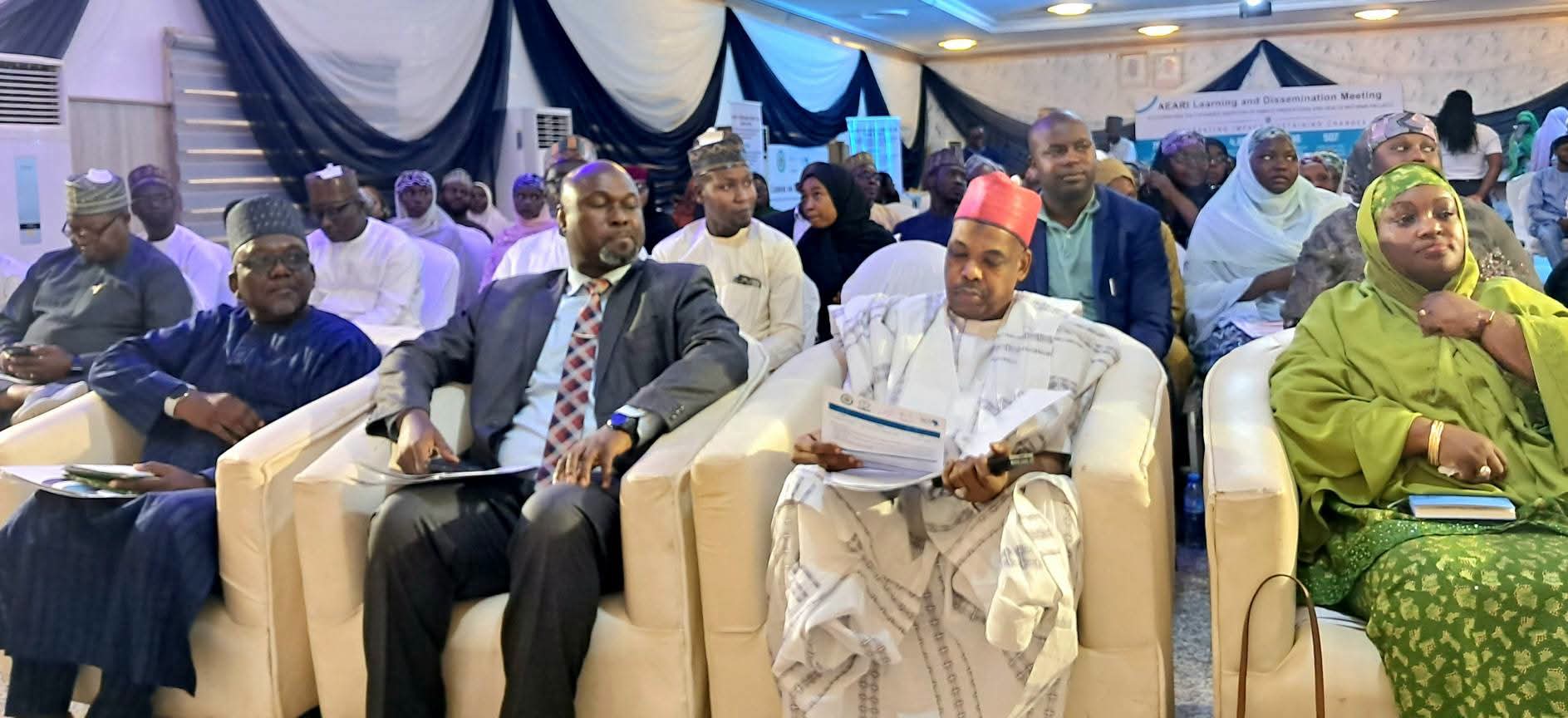
The West and Central Africa Health (WCA Health), through its Accelerating the Expanded Adoption of RMNCHC Innovations and Health Reforms in Kano State (AEARI) Project, has showcased significant achievements in reducing maternal mortality and strengthening primary healthcare delivery in Kano State.
The achievements were presented during the AEARI Project Learning and Dissemination Meeting held in Kano, where government officials, development partners, health experts and stakeholders reviewed the project’s impact and explored strategies for sustaining the gains recorded in maternal and newborn healthcare.
Read also: Kano Boosts Adolescent Healthcare with 743 Facilities
Speaking at the event, the Managing Director and Chief Executive Officer of WCA Health, Dr. Ufuoma Festus Omo-Obi, said the project introduced evidence-based maternal health innovations at the primary healthcare level for the first time in Kano, adapting interventions previously implemented mainly in tertiary health institutions.
According to him, the interventions were deliberately targeted at primary healthcare facilities in 18 high-burden Maternal and Neonatal Mortality Reduction Innovation Initiative (MAMII) local government areas identified as contributing significantly to maternal deaths in the state.
FESTUS OMO-OBI
He explained that rather than implementing conventional classroom-based training, the project adopted a mentorship-driven approach that provides continuous on-site coaching for healthcare workers.
Dr. Omo-Obi disclosed that within four months of implementation, the project supported the delivery of more than 14,000 babies across participating facilities without recording a single maternal death.
He added that the use of calibrated drapes enabled healthcare workers to identify and successfully manage 507 cases of postpartum haemorrhage that could otherwise have resulted in maternal fatalities.
Read also: KIRCT Deepens Research into Vaccines, Breast Cancer
He further revealed that the project trained more than 800 healthcare workers and strengthened the capacity of 242 skilled birth attendants through continuous mentoring and supportive supervision. According to him, the strategy has equipped frontline health workers with practical skills that will remain within the state’s healthcare system long after the project’s completion.
The WCA Health/AEARI Project Team, led by Dr. Mukhtar Muhammad, presented an overview of the project, outlining its objectives, scope, implementation model, key interventions, achievements, impact, and lessons learned.
The presentation highlighted the project’s contribution to improving maternal and newborn health outcomes through evidence-based innovations, capacity building for healthcare workers, strengthened service delivery, and strategic collaboration with government and development partners across Kano State.
In his welcome remarks, the Kano State Commissioner for Health, Dr. Abubakar Labaran Yusuf, said the state’s maternal mortality rate has declined by 50 per cent over the past 18 months, with recorded maternal deaths dropping from 1,026 to 570 through sustained government investment in healthcare and collaboration with development partners.
He expressed optimism that the state would achieve an additional 25 to 30 per cent reduction within the next 18 months through continued implementation of proven interventions.
The commissioner attributed the progress to improved training of frontline healthcare workers, enhanced readiness of health facilities, increased acceptance of hospital deliveries by pregnant women, and the adoption of evidence-based innovations such as the E-MOTIVE initiative and calibrated drapes for the early detection and management of postpartum haemorrhage.
Read also: EHCON Strengthens Capacity for Safe Reptile Control
The event featured a panel discussion moderated by Nafisa Murtala Ahmed of Express Radio, bringing together key health sector stakeholders, including DG ACEPHAP Prof. Hadiza Shehu Galadanci, DG Kano State Primary Healthcare Management Board, DG Kano State Drugs and Medical Consumables Supply Agency,ES KSCHMA the State Maternal, Newborn and Child Health Coordinator, Mansura Yahaya Haruna, and other experts.
The panel emphasized that sustained government ownership, strategic partnerships, continuous mentorship and institutionalising the low-dose, high-frequency training model are critical to scaling up RMNCH innovations and achieving lasting reductions in maternal and newborn deaths across Kano State.