


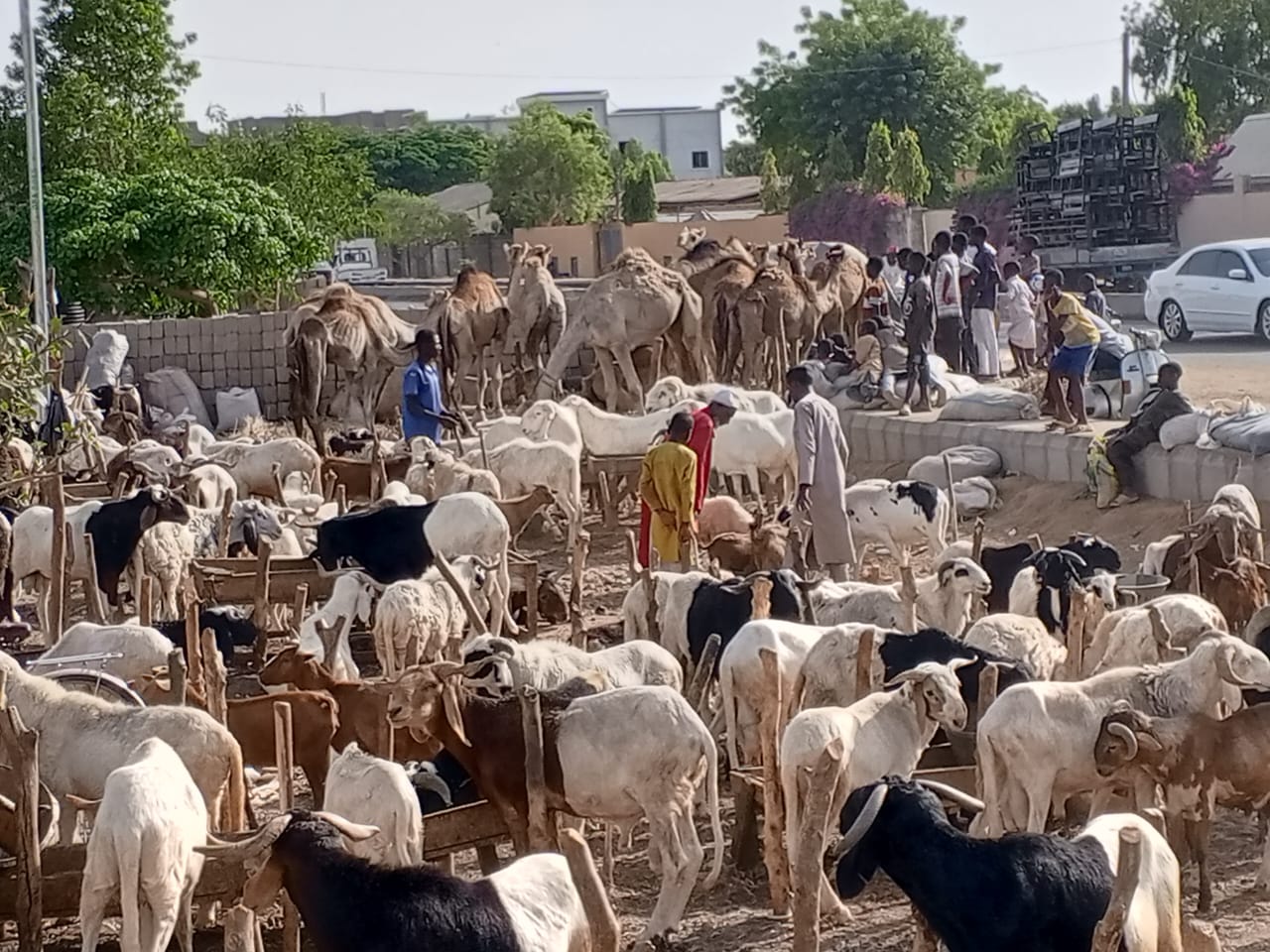
As Muslims across Nigeria prepare for Eid al-Adha, popularly known as Eid-ul-Kabir, livestock markets in Kano are witnessing an unusual trend large supplies of animals but fewer buyers.
For many Muslim families, purchasing a ram for sacrifice remains a significant religious obligation and cultural tradition. However, this year’s celebration is coming amid harsh economic realities, rising inflation, and increasing livestock prices that have placed many households under financial pressure.
Read also: AFRIVAC Champions Africa’s Health Sovereignty with CFA 50m Vaccination Fund
A visit to major livestock markets across Kano, including the bustling Gandun Albasa Animal Market, revealed that despite the large number of rams, goats, sheep, cows, and camels brought in from different parts of the country, patronage remains relatively low compared to previous years.
At Gandun Albasa market, small-sized rams were being sold for between ₦150,000 and ₦250,000, while medium and large-sized rams ranged from ₦300,000 to as much as ₦1 million, depending on breed, weight, and appearance.
Cows were also sold at significantly higher prices, starting from about ₦400,000 upward, while camels ranged between ₦600,000 and over ₦1 million.
The sharp rise in prices has left many intending buyers struggling to meet up with the demands of the season.
For Umar Ibrahim, a livestock buyer seen negotiating prices at the market, the cost of purchasing rams this year has increased considerably compared to last year.
According to him, he had already purchased more than 20 rams, with each costing from ₦250,000 upward.
“The prices are much higher this year,” he said, while calling on government authorities to invest more in the livestock sector to improve food security and support animal production.
Another buyer, Usman Abdulrahman, said the economic situation forced him to scale down his plans for the festival.
“I planned to buy five rams this year, but because of the prices, I could only afford three,” he lamented.
While buyers complained about rising costs, sellers also expressed concern over low patronage despite the large turnout of animals in the markets.
A livestock seller, Alhaji Isah Dan Sulaiman, said he had not sold a single ram from the more than 30 animals in his stall.
Read also: Adamawa Teams Win Savannah Conference Milo Championship
He attributed the situation to the current economic hardship facing many Nigerians.
“Previously, people could buy a ram for as low as ₦120,000, but things have changed,” he said.
Another trader, Aminu Ahmed, linked the high cost of livestock to the rising prices of animal feed and transportation.
According to him, rams in his stall were being sold from ₦200,000 upward, cows from ₦500,000, while camels ranged from ₦700,000 to over ₦1 million.
“The cost of feeding animals has increased drastically, and that affects market prices,” he explained.
Stakeholders say several factors have contributed to the high cost of sacrificial animals this year, including inflation, transportation costs, insecurity affecting grazing routes, and reduced purchasing power among citizens.
The Public Relations Officer of the Livestock Traders and Meat Processing Union who doubles as the Treasurer of Gandun Albasa Animal Market, Sulaiman Muhammad Yahaya, noted that market activity has dropped significantly compared to previous years.
He explained that many intending pilgrims usually purchase sacrificial animals before departing for Hajj, thereby boosting market sales during the Eid season.
However, he observed that this year’s turnout has been lower than expected.
“There is low patronage compared to last year,” he said.
He advised Muslims intending to perform the sacrifice to purchase animals early based on their financial capacity and urged governments and relevant stakeholders to support the development of the livestock sector.
Read also: Youth in Liberai Call for Jobs, Education to Fight Drug Epidemic
For many families, Eid-el-Kabir remains a deeply spiritual occasion rooted in sacrifice, generosity, and devotion. Yet, as prices continue to rise, the economic realities facing many Nigerians are increasingly shaping how households prepare for the celebration.
Despite the challenges, traders remain hopeful that patronage may improve as the festival draws closer, while buyers continue searching for affordable options that fit within their budgets.