


The Adolescent Health and Information Projects (AHIP) has called on young people across Nigeria to embrace skills acquisition as a pathway to self-reliance, economic empowerment and sustainable development, describing practical skills as one of the most valuable assets anyone can possess.
The appeal is contained in a statement issued by the Executive Director of AHIP, Dr. Mairo V. Bello, to commemorate World Youth Skills Day 2026, celebrated annually on July 15. This year’s observance is themed “Skills for a Shared Future.”
Read also: FG Seeks Practical Training to Unlock Nigeria’s $3.2bn Livestock Market
According to the NGO, the rapid transformation of the global economy requires young people to acquire relevant technical, vocational, entrepreneurial and digital skills that will enable them to compete, innovate and thrive in an increasingly technology-driven world.
AHIP described skills as a lifelong treasure that can serve as both a personal asset and a form of capital investment, noting that unlike money, which can be spent, or jobs that may be lost, skills remain with an individual for life and can continually generate income, build resilience and create opportunities.
Read also: BUK Interfaculty Games: Students Battle for Sporting Glory
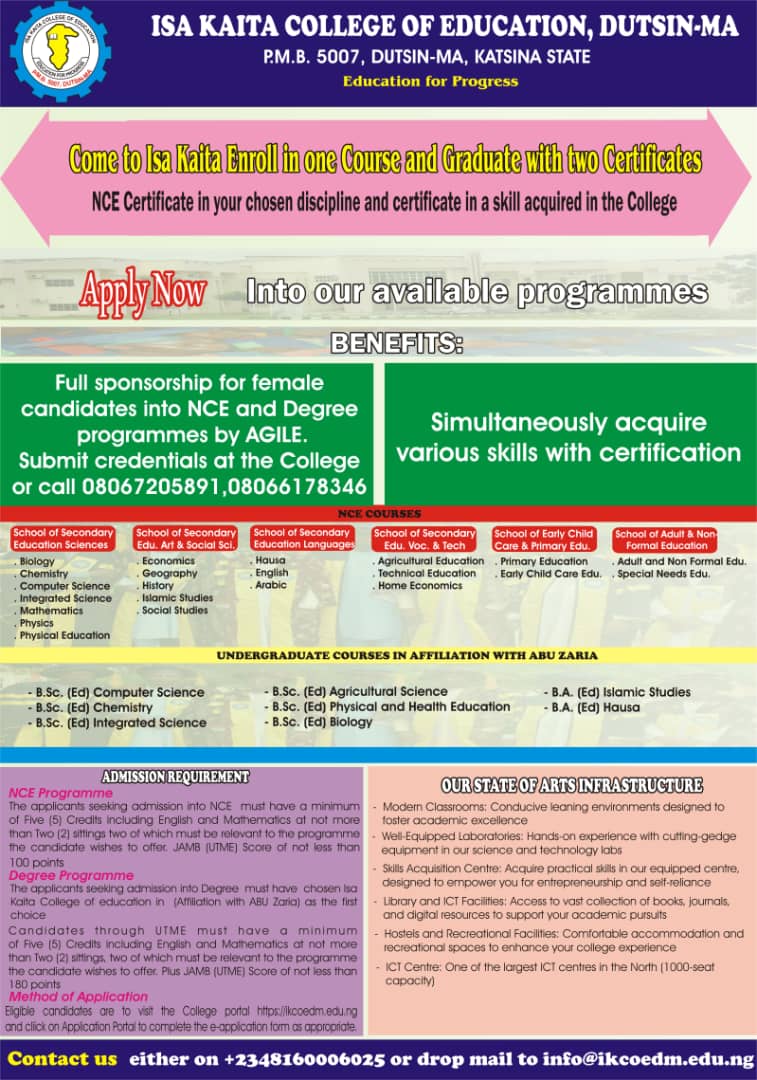
The NGO observed that many successful entrepreneurs and professionals started with a single skill and gradually transformed it into sustainable businesses and rewarding careers. It stressed that investing in skills development remains one of the most effective strategies for addressing youth unemployment, reducing poverty and promoting inclusive economic growth.
AHIP further noted that today’s labour market increasingly values competence, creativity, innovation, adaptability and problem-solving abilities alongside academic qualifications, making continuous learning and skills development indispensable for career success.
The NGO therefore called on governments, educational institutions, development partners, the private sector and community leaders to expand access to quality technical, vocational and digital skills programmes, particularly for adolescents, young women and other vulnerable groups.
Read also: Kano Assembly Confirms Six Commissioner Nominees
AHIP said such investments are essential to unlocking the enormous potential of Nigeria’s youthful population and accelerating national development. It also encouraged young people to take advantage of opportunities for vocational training, apprenticeships, internships, mentorship, entrepreneurship development and digital literacy to enhance their employability and future prospects.
The organisation reaffirmed its commitment to promoting adolescent development, youth empowerment and inclusive opportunities through advocacy, capacity building and community-based interventions aimed at equipping young people with the skills needed to succeed in a rapidly evolving world.