


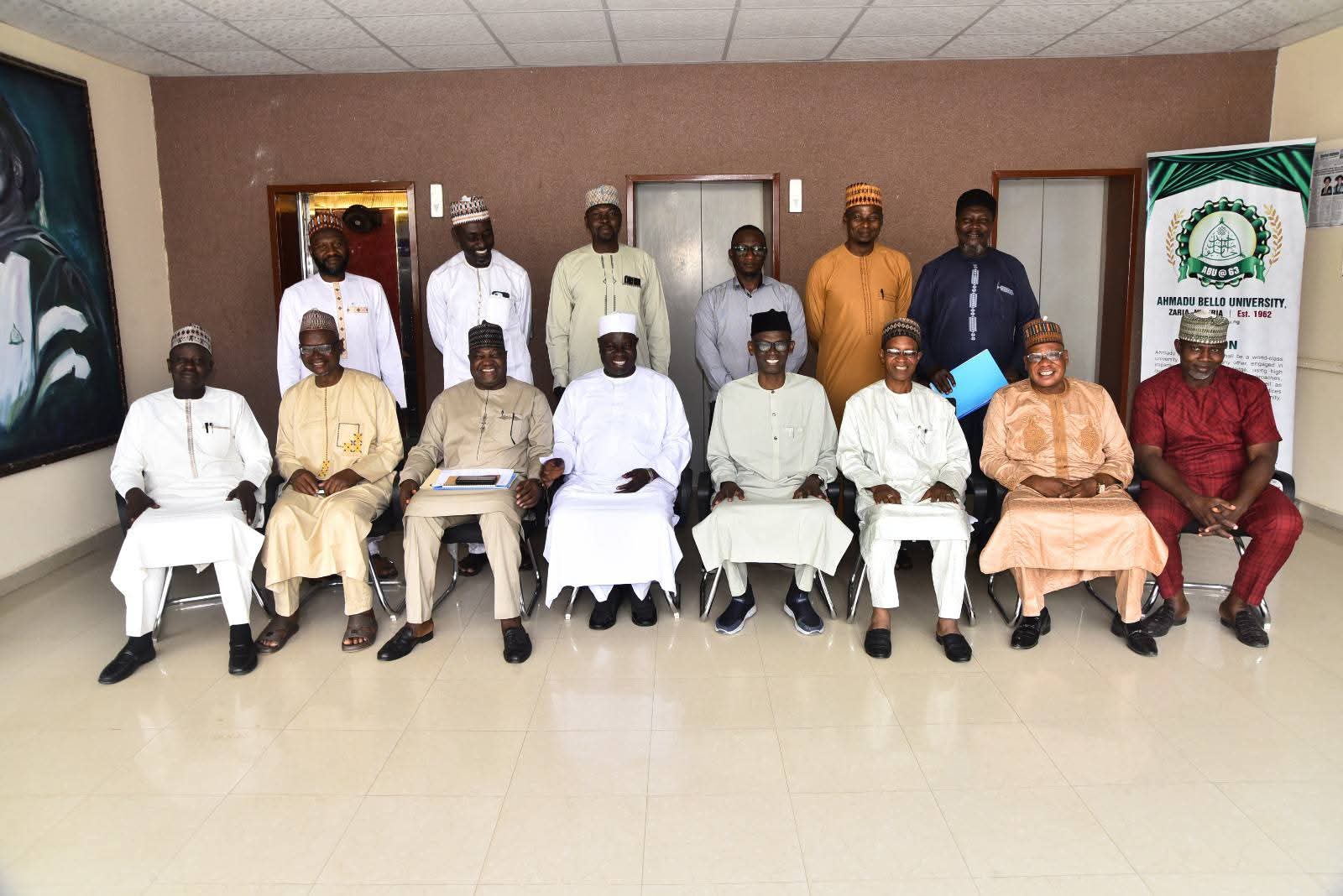
Two committees constituted by Ahmadu Bello University (ABU), Zaria, to address research commercialisation and fire safety have submitted their reports to the university management, proposing measures aimed at boosting innovation-driven revenue and strengthening disaster preparedness across the institution.
Presenting a 340-page report on behalf of the Committee on Research Commercialisation and Knowledge Transfer, the committee chairman, Prof. Mohammed Ishiyaku Faguji, said the team had developed a practical framework designed to transform the university’s research outputs into commercially viable products and services.
Read also: Garo Urges Support for Chidari After Massive Empowerment
According to Faguji, the committee proposed a hybrid structure that separates policy enforcement from commercial execution, a model successfully adopted by institutions such as the Massachusetts Institute of Technology, University of Cambridge, University of Lagos, and Stellenbosch University.
ECoN Will Elevate Nigeria’s Research, Innovation Sector-Minister
He noted that the proposed structure would establish a corporate entity owned by the university to drive commercialisation efforts.
“ABU is not building a government department but a corporate entity that happens to be owned by the university,” he said.
Faguji observed that the university possesses significant untapped intellectual property and innovations that remain largely uncommercialised.
“ABU currently operates as a cost centre when it should function as a profit centre. We have world-class researchers producing groundbreaking innovations, but no commercial vehicle to convert research outputs into revenue, patents, licences or spin-off companies,” he lamented.
The professor of Plant Science and former Director of the Institute for Agricultural Research (IAR) highlighted several innovations developed by ABU research institutes, particularly IAR and the National Animal Production Research Institute (NAPRI), including drought-resistant crop varieties, veterinary vaccines, livestock feed formulations, post-harvest processing technologies and agricultural machinery prototypes.
He said these innovations address critical challenges in Nigeria’s agricultural sector and possess the potential to generate hundreds of millions of naira in economic value.
Faguji disclosed that the committee conducted a university-wide digital audit and received 94 submissions from faculties, institutes and centres. Through a technology readiness level (TRL) assessment process, the committee identified 31 market-ready innovations with an estimated commercial value ranging between N500 million and N2 billion over the next five years.
“This represents a 35 per cent increase from our initial estimate of 23 assets, confirming that ABU’s innovation output has been systematically undervalued,” he added.
Read also: Police Invite Kano Politician Over Alleged Firearm Display
Among its recommendations, the committee urged the university Senate to harmonise provisions in the institution’s research and intellectual property policies, particularly regarding revenue sharing from commercialised innovations.
According to the committee, legal clarity on revenue distribution is essential to encourage researchers to disclose and commercialise their innovations.
Faguji expressed appreciation to the Vice-Chancellor for the confidence reposed in the committee.
In a separate presentation, the Committee on Fire Safety and Disaster Preparedness submitted its report, outlining measures aimed at improving emergency response and preventing fire outbreaks within the university.
Chairman of the committee, Prof. I. A. Mohammed-Dabo, recommended the procurement of an additional firefighting truck and a water tanker to enhance the capacity of the university fire service.
The committee also advised that the university fire service should immediately notify the Bulk Metering Unit and University Health Services whenever a fire incident is reported.
Other recommendations included periodic integrity assessments of the university’s electrical systems, establishment of muster points at strategic locations, improved disaster coordination mechanisms, rehabilitation of existing water hydrants, and installation of additional hydrants in Phase II areas of the campus.
The committee further called for the activation of emergency exits in university buildings and the establishment of a standing committee on fire safety and disaster preparedness.
Mohammed-Dabo, a former Dean of Engineering, thanked the Vice-Chancellor for entrusting the committee with the assignment and expressed confidence that the report would help address recurring fire incidents on campus.
Receiving the reports, the Vice-Chancellor of ABU, Prof. Adamu Ahmed, commended members of both committees for their diligence and thoroughness.
Read also: Kano First Petitions Police Over Alleged Utterances by Dan Agundi
African Experts Call for Innovation, Health Sovereignty
He assured them that the university management would carefully review the reports and take appropriate steps toward implementing their recommendations.