


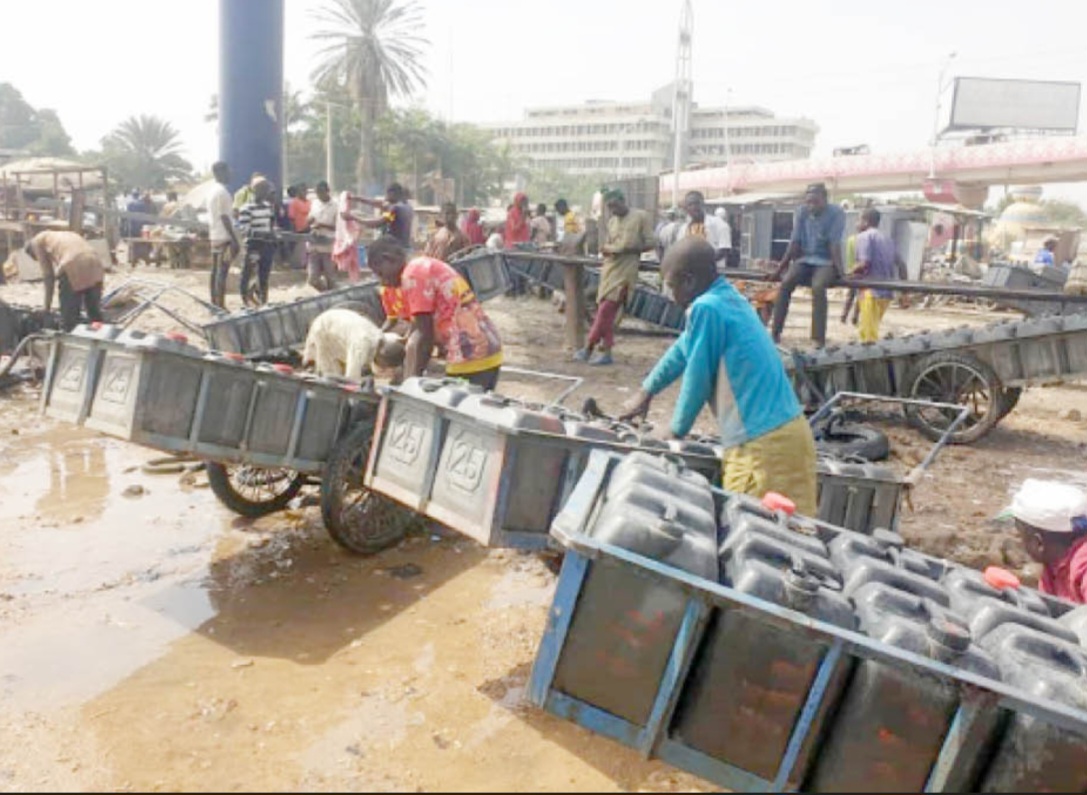
Water vending, popularly known as “Ga Ruwa” has become a thriving source of livelihood for many residents of Kano metropolis as recurring water shortages continue to drive demand for the essential commodity.
The business involves fetching water from boreholes, loading it into jerry cans mounted on hand-pushed trucks, and delivering it to households and businesses in areas experiencing inadequate water supply.
Read also: ABU Honours Onitsha Monarch During Ofala Festival
UNICEF-RRM Targets Critical Water, Nutrition Needs in Borno
A visit to various parts of Kano metropolis revealed scores of water vendors navigating the city’s streets daily, pushing loaded trucks to meet the growing needs of residents.
The sight of vendors drenched in sweat while transporting water has become a common feature, especially during the dry and hot season when demand peaks.

The booming trade has created opportunities for many unemployed youths and low-income earners. Most vendors purchase water from privately owned boreholes, while others rent trucks and operate on a profit-sharing arrangement.
Findings showed that a truck carrying between 10 and 14 jerry cans of 25 litres each is sold for between N1,800 and N2,000, depending on the distance and location of delivery.
Speaking with Radio Nigeria, a water vendor, Surajo Umar, described the business as demanding but rewarding, particularly during periods of water scarcity.
According to him, he rents a water truck for N500 per day and pays N600 to the borehole owner for access to water, retaining the remaining earnings after meeting daily expenses.
Read also: Speaker Commissions Soba Projects to Boost Education, Healthcare
“I make more sales during periods of water scarcity and the hot season because demand for water increases ”
According to another vendor Adam Salisu,despite the steady income generated from the business, he has been unable to purchase his own truck due to family responsibilities and rising living costs.
He explained that a substantial portion of his earnings goes toward supporting family members in his village, paying house rent, feeding expenses, and settling occasional medical bills.
Residents in areas affected by irregular water supply continue to rely heavily on water vendors for their daily needs, making the “Mai Ruwa” business an indispensable service in many communities across Kano.
A resident Shafa’atu Musa says she spends over 30 thousand naira on water due to her large family.
A father of five Hamisu Nura explained that water vendors are making huge amount of money in his community due to water scarcity.
He urged the Kano State Government to put modalities in place that will alleviate the hardship faced by Sheka residents.
Africa’s Push for Water Privatisation Threatens Public Access- OWORAC
Read also: Say No to Vote Buying, Violence, Minister Urges Nigerians
Observers say that while the business provides employment opportunities and helps bridge gaps in water supply, the growing dependence on water vendors highlights the need for improved access to potable water and expanded public water infrastructure across the state.
RADIO NIGERIA