


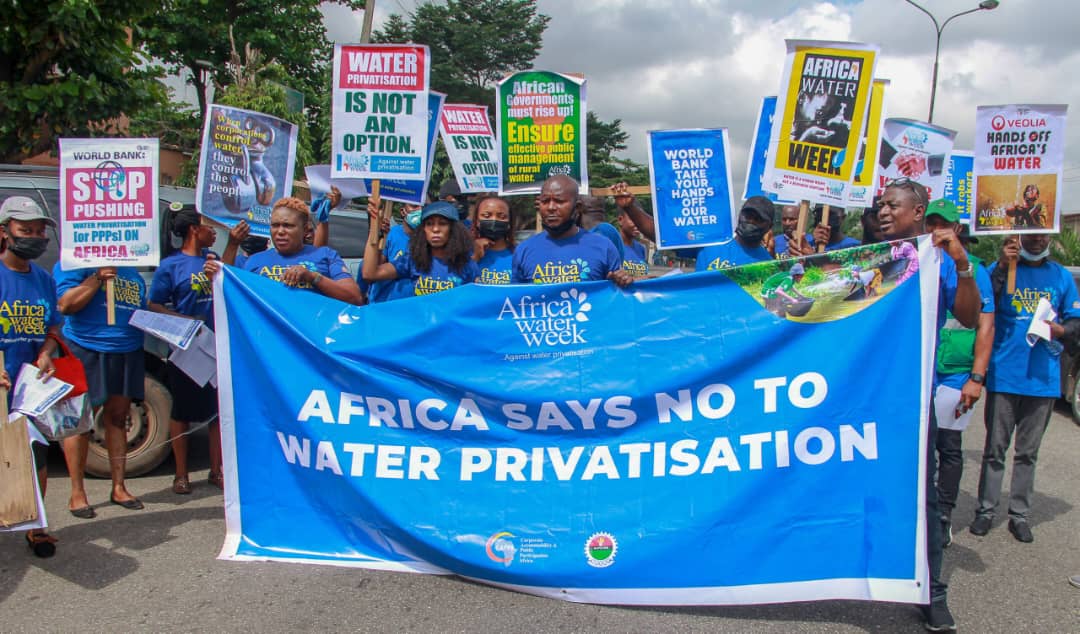
The Our Water Our Right Africa Coalition (OWORAC) has raised concerns over what it describes as a growing shift toward water privatisation in Africa, warning that the trend could undermine public accountability and reduce access to safe and affordable water across the continent.
The coalition expressed its concerns following a regional consultation held in Abuja, organised by the African Ministers’ Council on Water (AMCOW) as part of ongoing discussions on the First Implementation Plan (2026–2033) of the Africa Water Vision 2063.
Read also: NMDPRA, Power Ministry Move to Improve Electricity Supply
KNSG Trains 132 LGA WESH Personnel to Improve Rural Water Supply
The meeting brought together representatives of the African Union, the ECOWAS, development partners, and regional institutions. It comes at a critical moment following the African Union’s declaration of 2026 as the Year of “Ensuring Sustainable Water Availability and Safe Sanitation Systems to Achieve the Goals of Agenda 2063.”
In a statement, OWORAC warned that increasing reliance on private sector participation, blended financing models, and public–private partnerships in the water sector could accelerate privatisation trends across Africa.
According to the coalition, such approaches have in several cases been associated with rising water tariffs, weakened public oversight, deteriorating labour conditions, and unequal access to services.
“When essential public services are transferred to corporate actors, the human right to water risks being subordinated to profit-driven interests,” the coalition said.
OWORAC also expressed concern over what it described as the marginalisation of water workers in privatised systems, noting that any sustainable water governance framework must recognise both communities and workers as key stakeholders.
While acknowledging the need for investment in water infrastructure, the coalition cautioned against treating water primarily as an economic commodity, stressing that it remains a public good and a fundamental human right.
Read also: RMAFC Chairman Demands Accountability, Discipline
Sarina Youth Forum Seeks Urgent Intervention Over Water Crisis in Kano
The group also criticised the perceived exclusion of civil society organisations, community representatives, and water workers’ unions from the Abuja consultation, arguing that the process was largely dominated by government officials and regional institutions despite commitments to inclusive participation in the Africa Water Vision 2063 framework.
OWORAC further raised concerns over the lack of clarity on financing, implementation strategies, and safeguards against excessive private sector control in the proposed policy framework.
The coalition cited Senegal—currently chairing AMCOW—as an example, referencing ongoing debates over urban water management under Sen’Eau, a utility largely controlled by Suez. It noted public concerns in Senegal over tariffs, service delivery, transparency, and labour relations since the arrangement began in 2020.
OWORAC also pointed to Nigeria as an example of broader continental challenges, stating that many communities continue to lack reliable access to safe drinking water despite policy reforms and privatisation initiatives in the sector. It argued that reliance on private water vendors and informal sources reflects long-standing underinvestment in public water systems.
The coalition urged African governments, regional bodies, and development partners to prioritise transparency, inclusiveness, and public accountability in implementing the Africa Water Vision 2063.
It further called for strengthened public water systems and greater participation of communities, workers, and civil society in decision-making processes, insisting that water governance should remain firmly under public control.
Read also: BREAKING: Dr Mustapha Abdullahi Emerges NBBF President
“Water is a public good,” OWORAC said. “Its future must be determined by the people who depend on it for life and dignity, not by profit.”
OWORAC is a network of grassroots organisations, activists, trade unions, and civil society groups across multiple African countries advocating for access to clean and affordable water as a fundamental human right.