


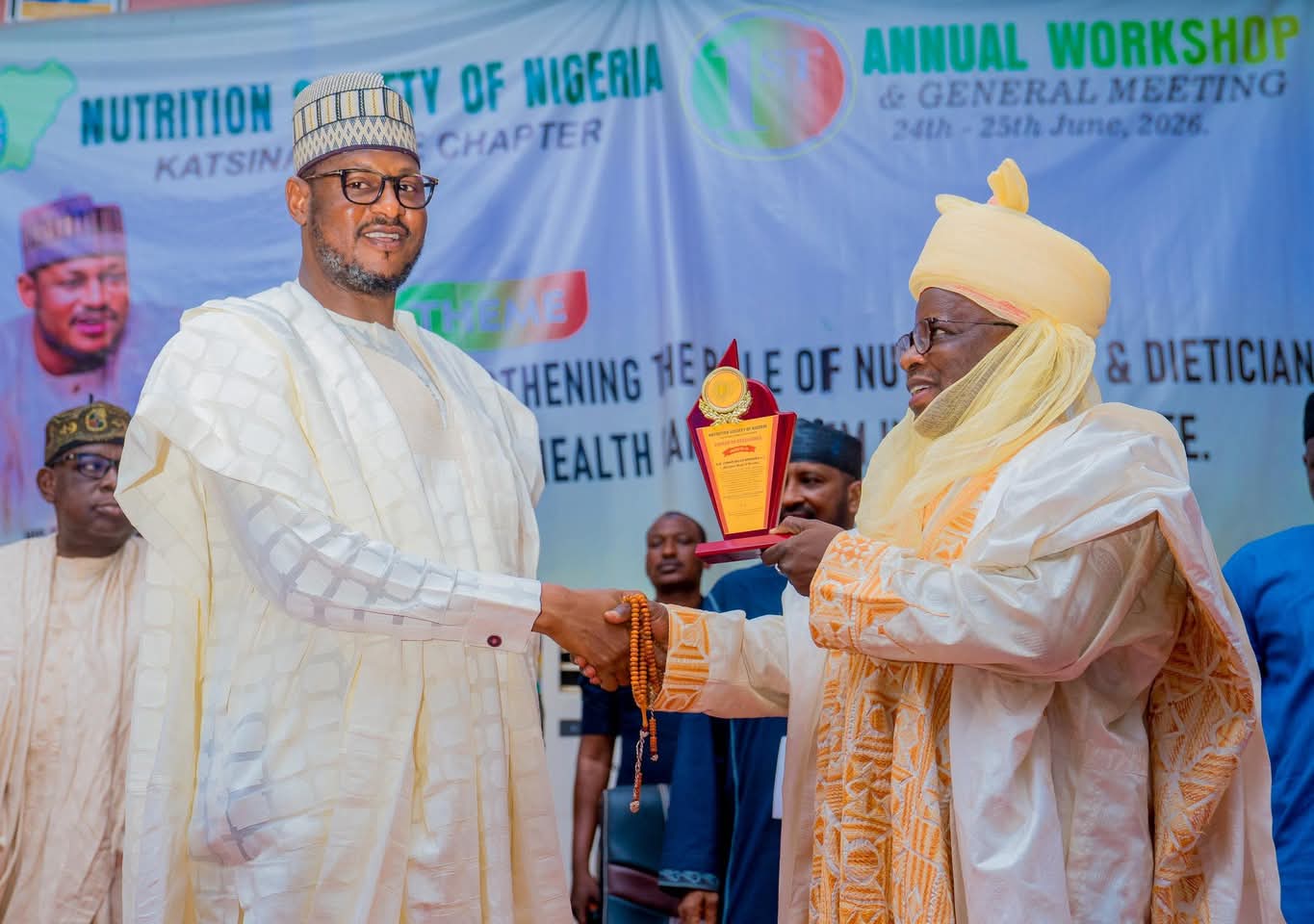
Governor of Katsina State, Dikko Umaru Radda, has reaffirmed his administration’s commitment to tackling malnutrition and improving public health, announcing a ₦1.7 billion investment in nutrition interventions across the state.
The governor made the commitment while declaring open a workshop organised by the Nutrition Society of Nigeria in Katsina. The workshop, held at the Local Government Service Commission Hall, was themed: “Strengthening the Role of Nutritionists and Dieticians in the Katsina State Health System.”
Read also: Lagos Upgrades Yaba Centre for Medical Training
Governor Radda described malnutrition as one of the most significant public health challenges facing the state, noting that its effects extend beyond health to education, household income, workforce productivity, and economic development.
“Addressing malnutrition is not only a moral imperative but also a strategic investment in the future prosperity of our dear state,” he said.
As part of broader healthcare reforms, the governor disclosed that the state government had upgraded and revitalised 268 Primary Health Centres at a cost of ₦26.7 billion.
According to him, the intervention included extensive renovations, provision of motorcycle ambulances, supply of medical equipment, and improvements in water, sanitation, and hygiene facilities.
He further revealed that the administration had established additional Outpatient Therapeutic Programme (OTP) centres and nine stabilisation centres to provide care for children suffering from severe acute malnutrition.
Governor Radda also announced the release of ₦700 million as counterpart funding for the ARIN Project 2.0, aimed at strengthening nutrition interventions and improving child survival rates across the state.
On food security, the governor said more than 90,000 bags of food items had been distributed to vulnerable households, while improved seedlings, fertilisers, and over 400 tractors had been provided to farmers to boost agricultural productivity.
Highlighting achievements in the health sector, he disclosed that nearly 800 healthcare professionals, including doctors, nurses, pharmacists, and laboratory scientists, had been recruited to improve healthcare delivery.
The governor added that seven comprehensive healthcare centres had been upgraded to general hospitals, expanding access to advanced diagnostic and treatment services.
In support of medical education, he announced the approval of ₦950 million for the payment of allowances to Katsina State medical students studying within Nigeria and abroad between 2020 and 2023.
Read also: Kano Targets Stable Power for Water Treatment Plants
Governor Radda urged medical professionals trained with government support to give back to society by serving in the state.
“Money is not everything; serving your people is a major responsibility, especially considering the support provided by the government throughout your training,” he said.
While acknowledging the importance of infrastructure and funding, the governor stressed that eliminating malnutrition would also require behavioural change, community participation, and evidence-based interventions.
He called on nutrition experts to develop practical solutions capable of translating policies into measurable results at the grassroots level, while promoting exclusive breastfeeding, improved maternal nutrition, nutrition education, and the utilisation of locally available food resources.
The governor specifically encouraged the use of indigenous food products such as moringa, noting that Katsina possesses significant agricultural potential that can be harnessed to improve nutrition outcomes.
He also urged the Nutrition Society of Nigeria to intensify research, advocacy, and public awareness efforts, while commending development partners for their continued technical and financial support.
Governor Radda further acknowledged the critical role of traditional and religious leaders in promoting hygiene, sanitation, and healthy living within communities.
Earlier, the Chief Guest, Kabir Ibrahim Matazu, described nutrition as a strategic investment in human capital development, noting that improved nutrition contributes significantly to educational attainment, productivity, and socio-economic growth.
Also speaking, Maimuna Aliyu Ladidi called for greater investment in nutrition services and professional development, stressing the importance of strengthening the role of nutritionists and dieticians within the healthcare system.
The Chairperson of the Katsina State Nutrition Committee, Rukayya Hamza Usman, commended the governor for prioritising nutrition and public health, while the Kanwan Katsina, Usman Bello, urged stakeholders to deepen collaboration in addressing nutrition challenges.
Read also: Residents Seek Justice Over Demolished Zaria Property
The workshop attracted members of the Katsina State Executive Council, development partners, health professionals, representatives of the Nutrition Society of Nigeria, and other key stakeholders.
Governor Radda assured participants that recommendations from the workshop would be carefully reviewed and implemented as part of the administration’s broader strategy to build a healthier and more productive Katsina State.