


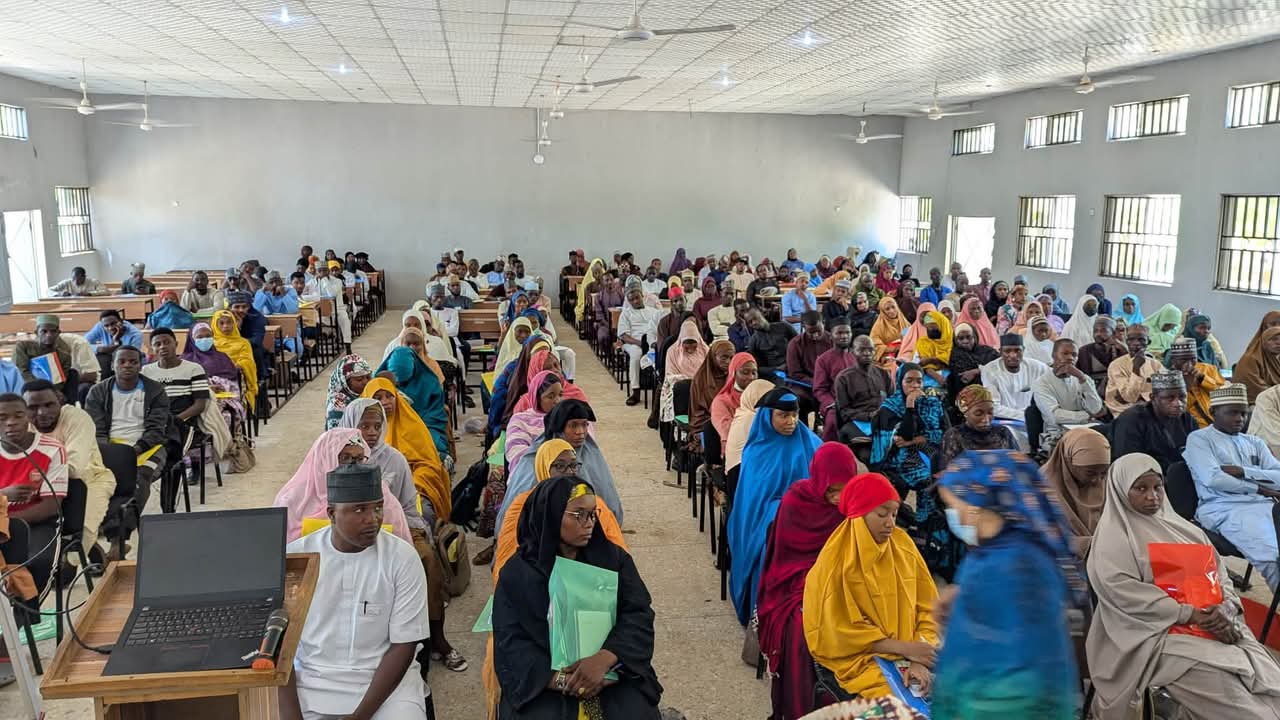
The Kano State Special Agro-Industrial Processing Zones (SAPZ) Programme has commenced a capacity-building training for selected landless youth and women beneficiaries under its International Fund for Agricultural Development (IFAD) component, aimed at promoting inclusive agricultural development, sustainable livelihoods, and climate-smart farming practices.
Declaring the training open, the State Project Coordinator (SPC) of the SAPZ Programme reaffirmed the programme’s commitment to empowering young people and women through skills development and sustainable agricultural interventions.
Read also: Yar Kasar Iran ta amsa laifin kashe mazaje 11 don mallakar dukiya
The SPC welcomed the management and staff of Audu Bako College of Agriculture, resource persons, SAPZ technical staff, and other stakeholders, while appreciating the Kano State Government, the Federal Government, IFAD, and development partners for their continued technical and financial support toward improving the livelihoods of rural communities.
He congratulated the beneficiaries, noting that their selection through a transparent and competitive process reflected the programme’s confidence in their ability to become successful agricultural entrepreneurs and catalysts for rural development.
According to him, the training is designed to equip participants with practical knowledge and hands-on skills in Good Agricultural Practices (GAP), climate-smart agriculture, sustainable land management, Nature-Based Solutions (NbS), agribusiness development, and nutrition-sensitive agriculture.

He added that the programme also includes Farmer Field School sessions, demonstration plots, digital learning, mentoring, and group formation to prepare beneficiaries to establish profitable and sustainable agricultural enterprises.
Read also: Crisis: Kano State NNPP Suspends SSG Commissioner
The SPC commended Audu Bako College of Agriculture for partnering with the SAPZ Programme, describing the institution as a centre of excellence in agricultural education and capacity development.
He explained that the Sustainable Land Development Initiative under the IFAD component seeks to address land degradation and the impacts of climate change by promoting climate-resilient farming practices that restore degraded land, improve soil fertility, enhance food security, increase agricultural productivity, and create employment opportunities, particularly for women and youth.
The coordinator urged participants to actively engage in the training, apply the knowledge gained, and share best practices within their communities to support the programme’s objective of driving inclusive and commercially viable agricultural transformation in Kano State.
In his remarks, the Acting Provost of Audu Bako College of Agriculture, Dr. Hassan Ibrahim, described the initiative as a strategic investment in the future of agriculture and rural development in Kano State.
Read also: Brazil-Nigeria Deal to Transform Pharma Industry, Medical Workforce
He commended the SAPZ Programme for empowering landless youth and women and reaffirmed the institution’s commitment to providing high-quality technical training in Good Agricultural Practices, climate-smart agriculture, nutrition-sensitive farming, agribusiness development, and sustainable land management.
Dr. Ibrahim expressed confidence that the collaboration would contribute significantly to improved agricultural productivity, food and nutrition security, environmental sustainability, and economic growth in Kano State.