


Ibrahim Suleiman
The Institute for Agricultural Research (IAR), Ahmadu Bello University, Zaria, has organised a one-day sensitisation exercise on the safety, quality and benefits of TELA maize.
Read also: NBC Backs Innovation, Responsible AI as Creative Economy Expands
The Director of the Institute, Professor Ado Yusuf, said TELA maize is safe for human consumption and was developed to address challenges posed by fall armyworm, stem borer and drought associated with climate change.
Represented by his Deputy, Professor Nafiu Abdu, the Director said farmers cultivating the variety now harvest between 60 and 90 bags per hectare, compared with fewer than 50 bags obtained from conventional varieties.
Professor Yusuf explained that TELA maize also reduces production costs because it requires fewer insecticide applications.

He added that feedback from farmers indicated that 100 kilogrammes of TELA maize produces more flour than the same quantity of conventional maize.
Read also: CITAD Raises Alarm Over Arrests of Critics in Kano
Also speaking, a researcher at the Institute, Professor Rabiu Adamu, described TELA maize as high-yielding, drought-tolerant, insect-protected and nutritious, with the potential to produce between seven and nine tonnes per hectare.
He noted that with Nigeria requiring more than 20 million metric tonnes of maize annually, the adoption of high-yielding varieties was crucial to improving food security.
In a goodwill message, the Chairman of the All Farmers Association, Alhaji Nuhu Aminu, urged farmers to cultivate improved and high-yielding crop varieties capable of withstanding drought and other harsh weather conditions.
Some farmers who participated in the exercise also attested to the quality of TELA maize, describing it as drought-tolerant, pest-resistant and capable of producing higher yields per hectare.
They urged other farmers to adopt the variety to improve agricultural productivity and profitability.
Read also: Haraji: Kasashen Turai Sun Yi Barazanar Daukar Mataki Kan Trump
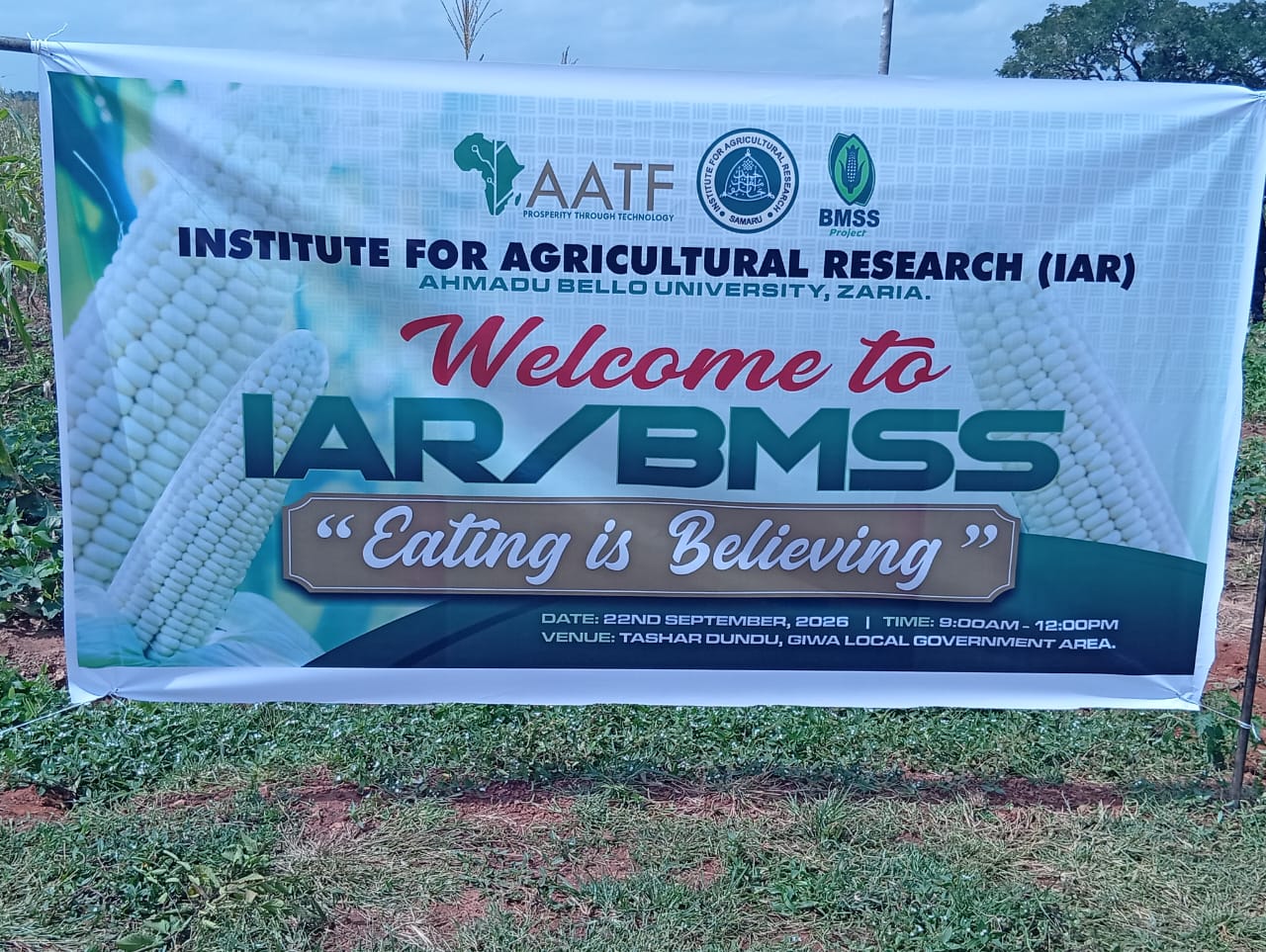
The event, tagged “Eating is Believing,” was organised under the IAR/BMSS Project in collaboration with the African Agricultural Technology Foundation (AATF) at Tashar Dundu in Giwa Local Government Area of Kaduna State.
The exercise featured the preparation and consumption of food made from TELA maize with members of the public, as part of efforts to address claims that the variety causes cancer, infertility and other health problems.