


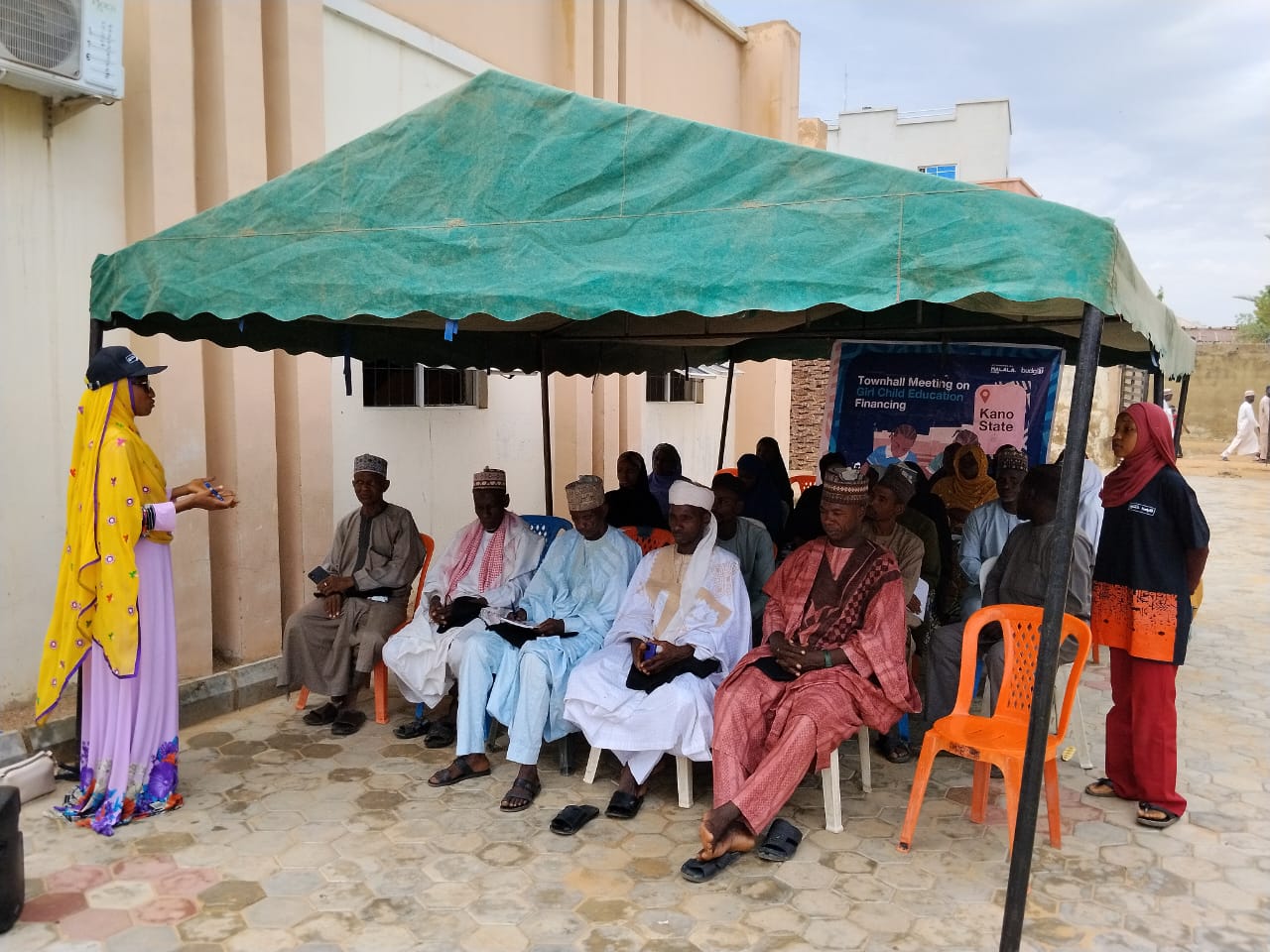
BudgiT Foundation, with support from the Malala Fund, has organised on Friday 26th June, 2026 a joint School-Based Management Committee (SBMC) meeting involving head teachers, principals, SBMC chairpersons, Head Students and teachers from Government Senior Secondary School (GSSS) Hotoro Masallaci, Hotoro South Primary School and Abubakar Imam GUBSS (Co-exists) Junior Secondary School Hotoro, to identify challenges affecting girls’ education and advocate for sustainable solutions.
The meeting was held under the project titled “Girls’ Education Financing,” which seeks to address barriers hindering girls’ enrollment, retention, completion, and academic performance.
Read also: Girls’ Education: Kano SUBEB, AGILE Distribute 11 Laptops
BudgIT, Partners Train Kano Stakeholders to Curb Corruption, Strengthen Governance
Speaking on the outcome of the engagement, Maryam Usman, State Officer of the BudgiT Foundation in Kano stated that, participants from each of the three schools, including teachers and students, were divided into groups to identify and present the major challenges affecting learning in their respective schools.
She explained that the discussions formed the basis of a community town hall meeting held on Sunday 28th June, 2026 at Hotoro South Primary School, where education stakeholders and community leaders, reviewed the findings and explored practical solutions.

According to her, the town hall meeting was attended by officials of the Kano State Universal Basic Education Board (SUBEB), the Local Education Authority (LEA), district and ward heads, religious leaders, Parent-Teacher Association (PTA) representatives, School-Based Management Committees (SBMCs), Mothers’ Associations, Old Students’ Association representatives, head teachers, principals,students and teachers from the three participating schools.
Maryam Usman said the challenges identified during the joint SBMC meeting were extensively discussed, with participants agreeing that while some issues require government intervention, others could be addressed through community support and collective actions.
Participants listed major challenges facing Hotoro South Primary School to include inadequate classroom desks, overcrowded classrooms, frequent flooding caused by the absence of drainage facilities and inadequate toilet facilities.
They noted that both the primary and junior secondary sections currently share a single toilet without doors, which has been reserved for female students.
At Abubakar Iman GUBSS (Co-exist) Junior Secondary School, participants identified the absence of a perimeter fence as a major concern, noting that trespassers often defecate inside classrooms, forcing students and teachers to spend the first period of each school day cleaning the learning environment before lessons begin.
Read also: Kano Boosts Adolescent Healthcare with 743 Facilities
Other challenges highlighted include the absence of security personnel, overcrowded classrooms and inadequate learning facilities.
BudgIT Foundation,RoLAC Hosts Tracka Town Hall in Dawakin Kudu
At Government Secondary School Hotoro Masallaci, participants raised concerns over severe classroom congestion, explaining that only Senior Secondary Three (SS3) students currently have access to desks.
They also disclosed that a contractor removed the leaking roof of one of the classroom blocks nearly a month ago but had yet to complete the repairs, leaving students without adequate learning spaces.
Maryam Usman said during the engagement it was observed that GSS Hotoro Masallaci serves as the only senior secondary school for several surrounding communities, including Yan Dodo.
As a result, many students trek long distances to school, while others engage in hawking and other economic activities before attending classes, contributing to lateness and poor academic performance.
She said participants stressed the need for government to establish additional Senior secondary schools in the area to improve access to quality education.
As part of the achievements recorded during the engagement, the SUBEB Desk Officer for Girl-Child Education Haj Amina Galadanci pledged to present issues relating to school fencing, overcrowding, toilets and classroom furniture to the Executive Chairman of SUBEB for necessary action.
Read also: Kano Stars Centre Installs Solar Streetlights, Renovates Vigilante Office
She also promised to facilitate advocacy engagements with the SUBEB leadership to address the identified infrastructure gaps.
According to the organisers, the engagement was designed to strengthen collaboration between schools, communities and government agencies in creating a safe and conducive learning environment that enables girls to remain in school and realise their full academic potential despite prevailing challenges.