


Ibrahim Sulaiman
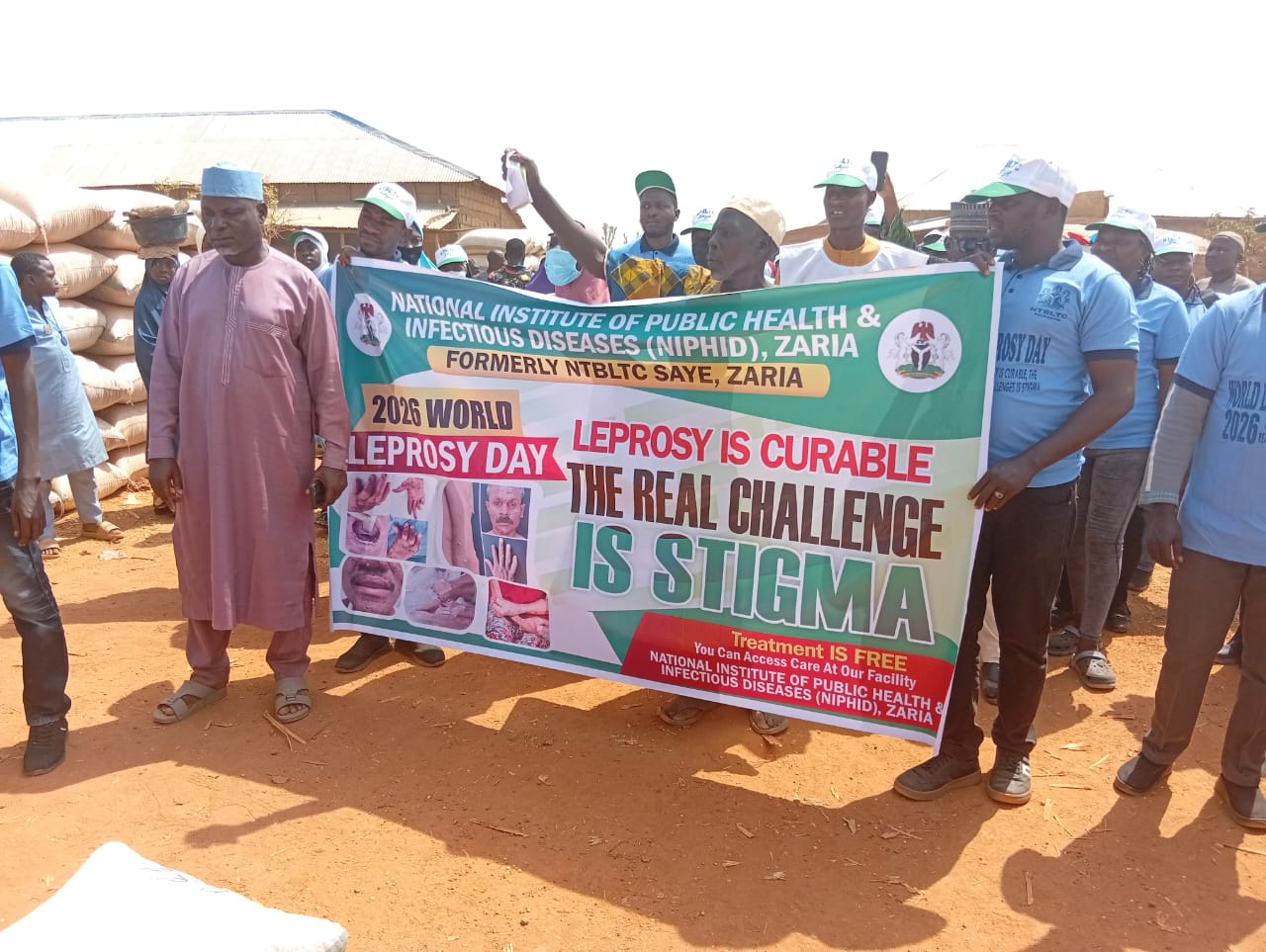
The National Institute of Public Health and Infectious Diseases (NIPHD), Saye, Zaria, has commemorated the 2026 World Leprosy Day with a sensitisation campaign at Giwa and Yakawada markets in Kaduna State, aimed at increasing public awareness on the prevention, early detection, and treatment of leprosy.
Speaking during the outreach, the Director-General of the Institute, Dr. Abdullahi Dalhatu Aminu, said the campaign was designed to educate the public that leprosy is a curable infectious disease, especially when detected early.
Dr. Aminu explained that common symptoms of leprosy include changes in skin colour such as whitish, reddish, or dark patches often accompanied by loss of sensation in the affected areas.
He urged members of the public to seek medical attention at the nearest health facility whenever they notice unusual skin changes, stressing that early diagnosis helps prevent disability and halts the transmission of the disease.
He noted that the observance of World Leprosy Day also serves as an opportunity to restore the dignity of persons affected by the disease and to address stigma and discrimination. According to him, individuals who have completed treatment are fully cured and can no longer transmit leprosy.

NIPHID Steps Up as Nigeria’s Frontline Defence Against Epidemics
The Director-General added that Giwa Local Government Area was selected for the campaign due to available statistics indicating that it records the highest number of reported leprosy cases in the area.
Also speaking, the Head of Hospital Services at NIPHD, Dr. Umma Aliyu, advised patients currently undergoing treatment to adhere strictly to their prescribed medications to avoid complications and relapse.
In his remarks, the Sarkin Kasuwar Giwa, Malam Ibrahim Isa, called on the public to shun stigma and discrimination against leprosy patients, urging communities to show love, understanding, and support to affected persons.
REMAPSEN Launches 4th Media Forum to Champion Africa’s Fight Against NTDs
Some persons affected by leprosy, including Yarima Dalladi Paul, Malam John, and Ayuba Kom, shared their personal experiences and appealed to the public to stop discriminating against people living with the disease.
The sensitisation campaign featured health talks and community engagement activities aimed at promoting awareness and encouraging early reporting of suspected cases.
The theme for this year’s World Leprosy Day is “Leprosy is curable, the real challenge is stigma.”