


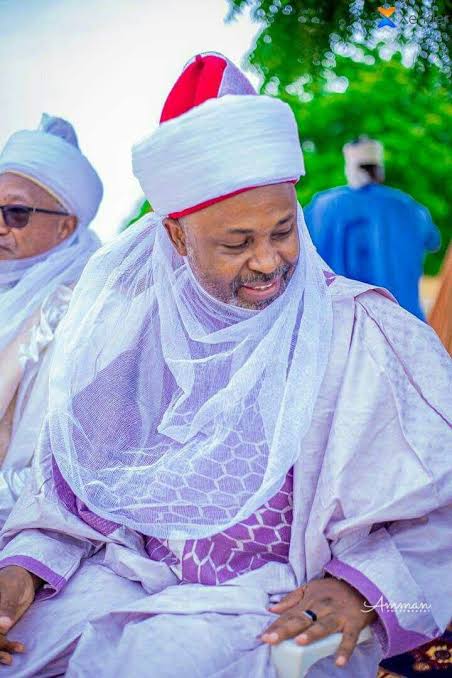
Sani Dutsinma
Alhaji Sada Muhammad Sada, the 14th District Head of Dutsinma and Yandakan Katsina, has been widely celebrated as he marks 17 years on the throne, a period distinguished by dedicated service, humility, and exemplary traditional leadership.
Read also: The $700bn Question: Is Nigeria Trading Resources for Dependency?
Yandaka Sada Muhammad Sada is the current District Head of Dutsinma and one of the four most senior council members of the Katsina Emirate, known as the Hakiman Karaga and kingmakers. He belongs to the renowned ruling family that traces its heritage to the legacy of Shehu Usmanu Dan Fodio and the historic House of Mallam Na’Alhaji.
He ascended the throne as the 14th District Head of Dutsinma following the passing of his father, the late Alhaji Balan Goggo Muhammad Sada. The family’s leadership lineage in the area dates back to 1804, making it one of the most respected traditional institutions in Katsina State.
The extended descendants of Mallam Na’Alhaji are spread across numerous chapters within and outside Nigeria, including Dutsinma, Tsauri, Danmusa, Makera, Dan’ali, Tarno, Yankuzo, Makada, Kano, and even Scotland, reflecting the family’s enduring influence and rich heritage.

As part of activities marking the 17th anniversary of his reign, districts and principalities under the leadership of the Yandakan Katsina joined family members, community leaders, and well-wishers in congratulating Alhaji Sada Muhammad Sada on his remarkable journey of service to the people.
Similarly, the people of Dutsinma Local Government Area, including ward heads, village heads, community leaders, and residents, extended their congratulations to the District Head of Dutsinma and the Emir of Katsina, Abdulmumini Kabir Usman, praying for continued peace, wisdom, progress, and successful leadership.
Read also: Galadanci Leads Innovation Drive to Strengthen PPH Detection
Over the past 17 years, the Dutsinma community has witnessed what many describe as a reign characterized by simplicity, accessibility, compassion, and effective leadership. Despite occupying one of the most influential traditional positions in the emirate, Yandaka Sada Muhammad Sada has remained widely respected for his modest lifestyle and close relationship with ordinary people.
Those who have interacted with him often speak of a leader whose achievements and status have never altered his humility. Whether dealing with highly placed individuals or common citizens, he is known for his calm disposition, respectful conduct, and commitment to justice.
Although widely regarded as a principled and firm leader, Yandaka Sada is equally known for his openness, fairness, and straightforward approach to addressing community matters. His leadership style has earned him admiration across different segments of society.
Before ascending the throne, he built a distinguished career as a banker and accomplished public servant. Yet, despite his achievements and responsibilities as a senior traditional ruler and kingmaker, he has remained connected to his roots, maintaining the values of simplicity, generosity, and service that have endeared him to many.
Observers note that one of the defining features of his reign has been his refusal to distance himself from the people. Unlike leaders who become inaccessible after attaining high office, Yandaka Sada has consistently kept his doors open to everyone, regardless of social status.
Read also: Kaduna LPRES Begins Distribution of 38 Milking Machines
For seventeen years, his palace has remained a place where kings and labourers, business executives and petty traders, community leaders and ordinary residents can seek audience and receive attention. Through this culture of openness and accessibility, he has strengthened the bond between traditional institutions and the people they serve.
As he marks his 17th anniversary on the throne, many regard Alhaji Sada Muhammad Sada as a symbol of responsible traditional leadership, whose legacy continues to inspire the people of Dutsinma, Katsina Emirate, and beyond. His reign stands as a testament to the enduring values of humility, service, justice, and community development.