


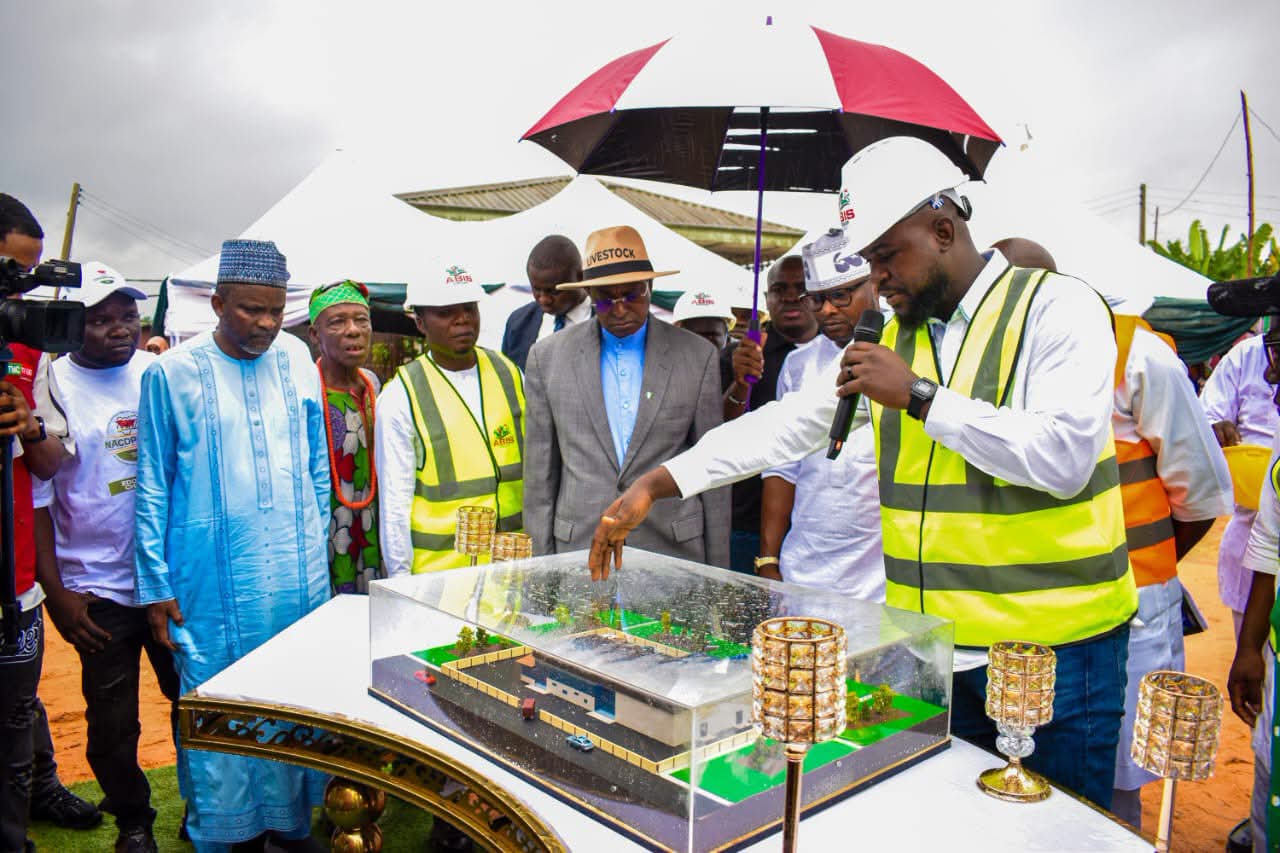
The Federal Government and the Edo State Government have launched a series of strategic livestock infrastructure projects aimed at transforming Nigeria’s livestock sector, boosting food security, creating jobs, and attracting private investment.
The projects, implemented under the World Bank-supported Livestock Productivity and Resilience Support (L-PRES) Project, include the commissioning, handover, and groundbreaking of key facilities designed to strengthen livestock production, processing, and animal health services in Edo State.
Speaking at the groundbreaking ceremony for an ultramodern livestock processing facility in Ikpoba-Okha Local Government Area of Benin City on Friday, Edo State Governor, Senator Monday Okpebholo, represented by the Deputy Governor, Rt. Hon. Dennis Idahosa, described the projects as a major milestone in the state’s economic transformation.
He said the initiatives would position Edo as a leading destination for livestock production, processing, and investment.
“Today marks the beginning of a new chapter in Edo State’s economic transformation. Through our strong partnership with the Federal Government, we are laying the foundation for sustainable growth, expanding opportunities for our people, and creating a future where agriculture and livestock become powerful engines of prosperity,” he said.
According to him, the livestock processing facility will create employment opportunities, strengthen value chains, improve livelihoods, and stimulate wealth creation across the state.
Governor Okpebholo commended President Bola Ahmed Tinubu for establishing the Federal Ministry of Livestock Development and expressed appreciation to the Federal Government for locating two strategic regional facilities in Edo State—a 40-million-dose capacity solar-powered regional cold storage facility and a model veterinary hospital to serve the South-South region.
He noted that the projects align with the state’s SHINE Agenda and the Federal Government’s Renewed Hope Agenda, with a focus on expanding market access, improving food security, and promoting inclusive economic growth.
The Minister of Livestock Development, Idi Mukhtar Maiha, reaffirmed the Federal Government’s resolve to implement a comprehensive National Livestock Transformation Agenda aimed at unlocking the sector’s economic potential through strategic investments, innovation, and partnerships.
“The livestock sector is a strategic economic asset capable of creating millions of jobs, strengthening national food security, supporting industrialisation, and driving inclusive economic growth. The Federal Government is committed to providing the infrastructure, policy environment, and institutional support required to unlock these opportunities across the country,” the minister said.
Maiha disclosed that the ministry would continue to strengthen animal health systems, expand feed and fodder production, modernise livestock production, improve national traceability systems, promote value addition, and create greater opportunities for women, youths, and private-sector participation.
He described Edo as one of Nigeria’s emerging livestock investment destinations, citing its strategic location, favourable policy environment, and growing agro-industrial potential. He urged investors, financial institutions, development partners, and producer organisations to leverage the new infrastructure to accelerate growth in the sector.
Also speaking, the Edo State Commissioner for Livestock Development, Engr. Prof. Ignatius Ikponmwosa Omorodion, commended the Federal Ministry of Livestock Development, the L-PRES Project, and the World Bank for supporting initiatives that are strengthening Nigeria’s livestock value chain.
He said the newly commissioned 40-million-dose solar-powered cold chain facility would play a critical role in enhancing animal health, improving vaccine storage and distribution, increasing livestock productivity, and strengthening food security.
National Coordinator of the L-PRES Project, Dr. Sanusi Abubakar, described the cold storage facility as a strategic investment that would significantly improve Nigeria’s capacity to preserve animal vaccines and respond effectively to disease outbreaks.
He explained that the solar-powered facility would ensure the potency of vaccines, strengthen disease prevention and control, and improve institutional capacity for livestock development in line with the objectives of the Federal Ministry of Livestock Development and the L-PRES Project.
As part of the visit, the Minister also held strategic engagements with stakeholders in the livestock sector, stressing that the investments would stimulate Edo State’s economy by promoting local livestock production, modern meat processing, and wider distribution of livestock products across Nigeria.
The Federal Government said the projects underscore its commitment to transforming the livestock sector into a globally competitive industry capable of driving economic diversification, enhancing food security, creating employment opportunities, and improving livelihoods nationwide.