


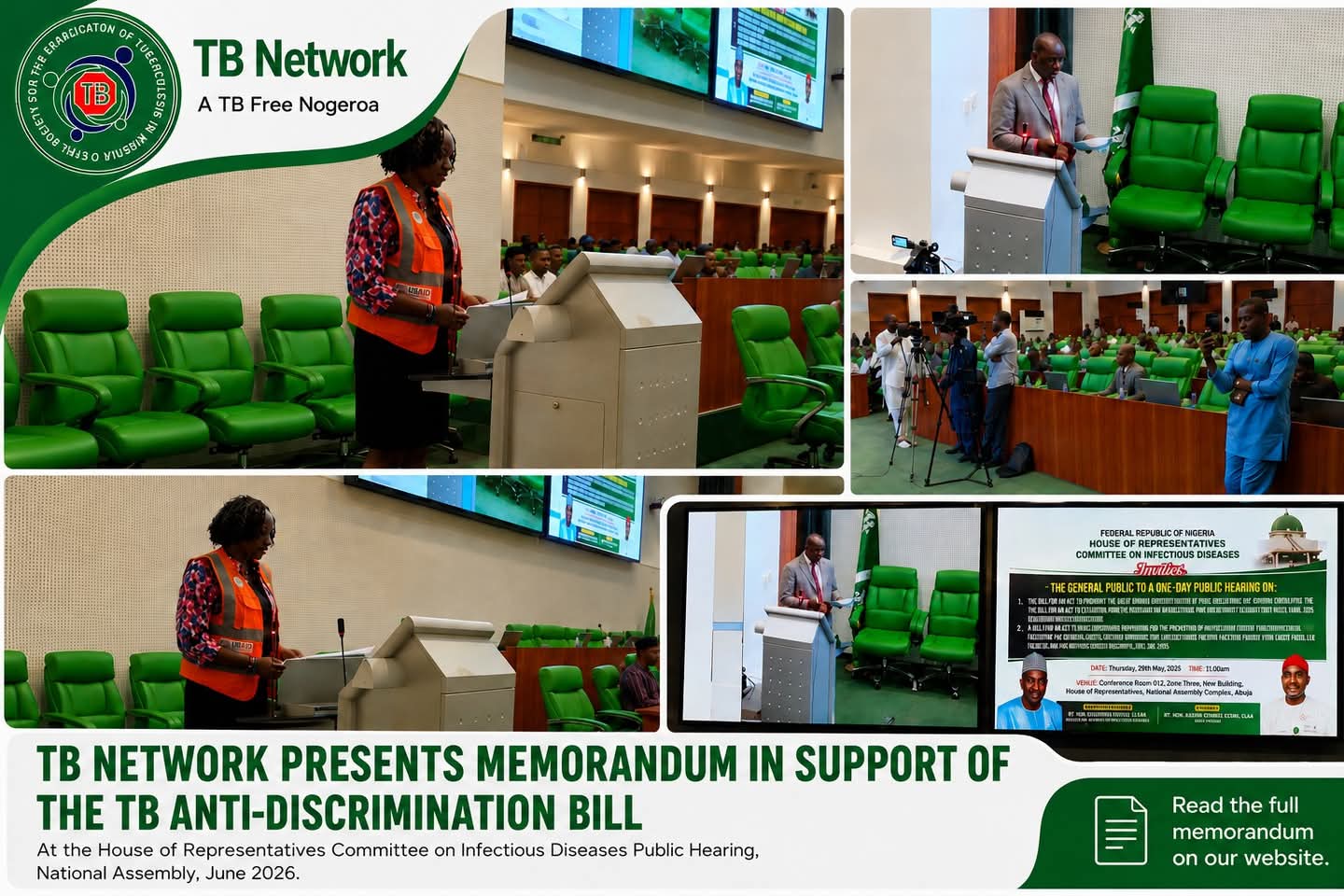
The Civil Society for the Eradication of Tuberculosis in Nigeria (TB Network) has called on the House of Representatives Committee on Infectious Diseases to strengthen the proposed Bill on the Prevention of TB-Based Discrimination by incorporating provisions on increased domestic funding, expanded access to near point-of-care diagnostics, and social protection for people affected by tuberculosis.
The recommendations were contained in a memorandum presented during the public hearing on the proposed legislation, formally titled A Bill to Make Provision for the Prevention of TB-Based Discrimination and Protect the Fundamental Human Rights and Dignity of People Living With and Affected by TB; and for Related Matters, 2025.
Read also: Say No to Vote Buying, Violence, Minister Urges Nigerians
WHO Declares Ebola Outbreak in DRC, Uganda Global Health Emergency
The TB Network, an umbrella body representing over 600 registered civil society organisations advocating equitable access to comprehensive, patient-centred TB services, commended the sponsors of the Bill, particularly the Chairman of the House Committee on Infectious Diseases, Hon. Amobi Ogah, for recognising tuberculosis as both a public health and human rights issue.
The Network noted that stigma and discrimination against people living with TB—including forced disclosure of health status, denial of employment and education, refusal of healthcare services, and social exclusion—continue to discourage timely diagnosis and treatment completion.

To strengthen the proposed legislation, the organisation made three key recommendations.
Read also: ABU SPESSE-CE Graduates 420 in Sustainability Training
First, it called for increased domestic financing for TB prevention, diagnosis, treatment, care, and support services. The Network argued that Nigeria’s heavy reliance on donor funding poses a sustainability risk, particularly amid declining global health financing. It therefore proposed an amendment to Section 4 of the Bill to explicitly recognise domestic resource mobilisation as a national policy objective, in line with the funding provisions contained in Section 12.
Second, the memorandum advocated the inclusion of near point-of-care molecular diagnostic tests as part of the country’s national TB elimination strategy. According to the Network, bringing diagnostic services closer to communities would improve early detection, reduce delays in treatment, and increase access for rural, underserved, conflict-affected, and hard-to-reach populations. It recommended that Section 5(2)(vi) be amended to prioritise free molecular and near point-of-care diagnostic services.
Third, the Network urged lawmakers to integrate social protection measures into the Bill to address the financial burden faced by TB patients. It noted that although treatment is offered free of charge, many patients still struggle with transportation costs, nutritional needs, income loss, and other indirect expenses that often lead to treatment interruption.
African Leaders Unite to End AIDS, TB, and Malaria at ICASA 2025 Accra
The organisation proposed amending Section 5(2)(viii) to include psychological support, nutrition assistance, transportation support, and linkage to existing social protection programmes alongside peer counselling and other patient support services.
Read also: Federal Universities Get Green Light to Recruit Staff
According to the memorandum, these measures would improve treatment adherence, promote social inclusion, and advance the right to health and social security, particularly for vulnerable groups such as children, women, persons with disabilities, internally displaced persons, people living with HIV, and low-income households.
The TB Network concluded that the passage of the Bill would mark a significant milestone in protecting the rights and dignity of persons affected by tuberculosis. It urged the Committee to adopt the proposed amendments to ensure the legislation aligns with the 1999 Constitution (as amended), the African Charter on Human and Peoples’ Rights, the Convention on the Elimination of All Forms of Discrimination Against Women (CEDAW), the Convention on the Rights of the Child (CRC), and relevant International Labour Organization conventions.