


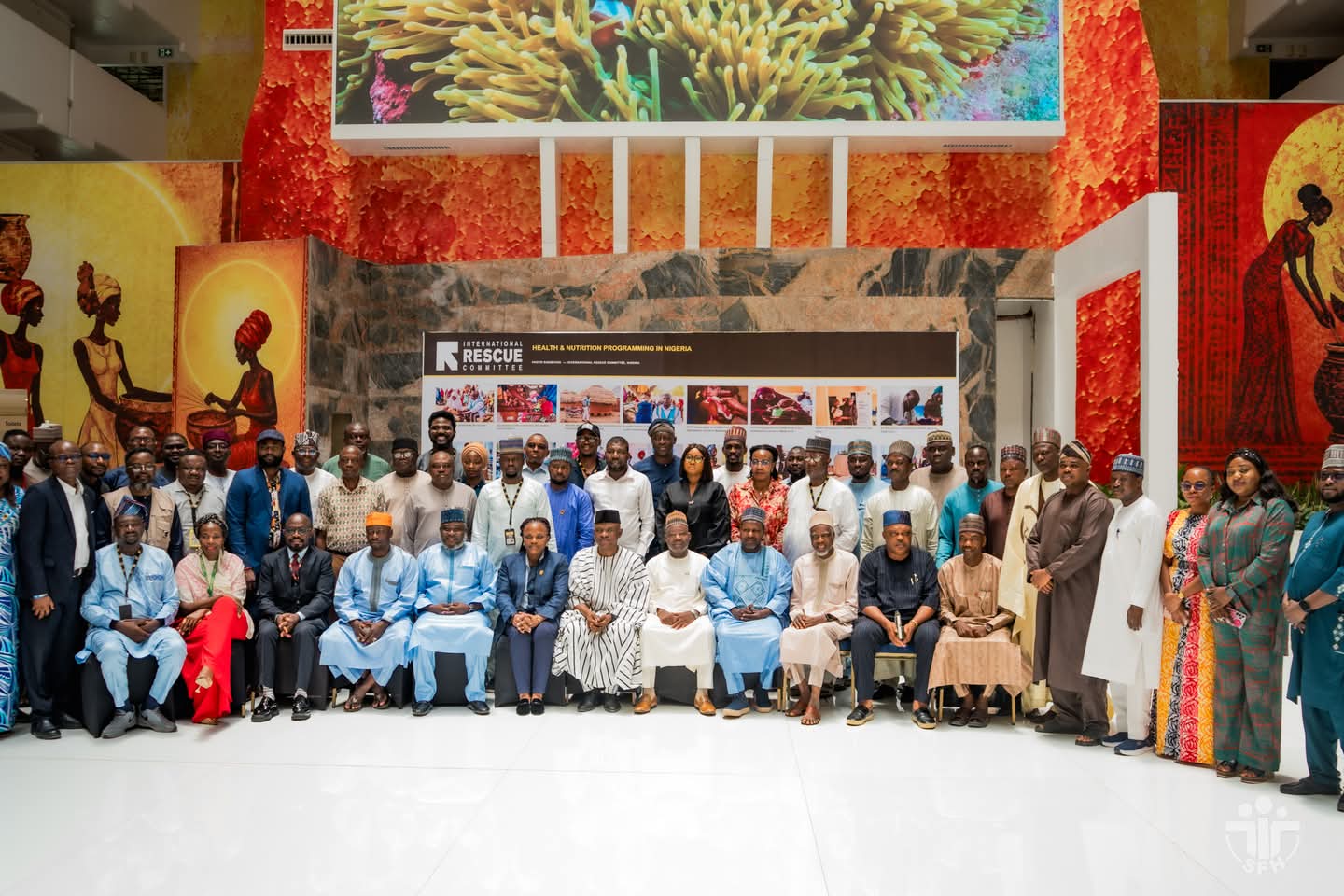
The Society for Family Health (SFH) has partnered with the International Rescue Committee (IRC) to implement the Impact at Scale Project, an initiative aimed at expanding access to essential healthcare services and strengthening health systems in Borno, Adamawa, Sokoto and Zamfara States.
The project is designed to address persistent barriers to maternal, newborn and child health (MNCH) and nutrition services, particularly among women and children living in underserved, crisis-affected and hard-to-reach communities.
Kano Boosts MNCH Services With ₦79.8m Child Spacing Investment
The initiative builds on lessons and experiences from SFH’s implementation of the HeRON Project with IRC in Northeast Nigeria, as well as the IntegratE Project, which have provided valuable insights into delivering health interventions in challenging environments.
Under the Impact at Scale Project, SFH will implement an integrated package covering family planning, malaria prevention and treatment, pneumonia and diarrhoea management, nutrition, basic and comprehensive emergency obstetric and newborn care, as well as broader health system strengthening interventions.
Speaking at a National Stakeholders Workshop organised by IRC and themed “Impact @ Scale: Experience Sharing from the Frontline States,” SFH Group Director, Impact, Partnership and Engagement, Mr Dayyabu Yusuf, stressed the importance of linking humanitarian response with long-term health system strengthening.

He said the approach would help build resilient health systems capable of responding effectively to the needs of vulnerable populations while ensuring continuity of essential healthcare services.
Yusuf said SFH would leverage its experience working with IRC and other stakeholders across the four states to expand access to quality healthcare and deliver greater impact in underserved communities.
The Federal Ministry of Health and Social Welfare also underscored the importance of ensuring that healthcare interventions reach vulnerable populations, particularly those living in conflict-affected and difficult-to-access areas.
Representing the Minister of State for Health and Social Welfare at the workshop, the Director of Health Planning, Research and Statistics, Dr John Ovuoraye, said achieving Universal Health Coverage required deliberate efforts to ensure that no population was left behind.
He highlighted the importance of reaching communities affected by insecurity and displacement with essential services, including immunisation, maternal and child healthcare and nutrition interventions.
Dr Ovuoraye commended the work of IRC and its partners in delivering lifesaving health services to communities that are often difficult to reach.
The collaboration between SFH and IRC is expected to strengthen community-level health services, improve access to essential care and enhance the capacity of health systems to respond to the needs of vulnerable women and children.
Advocates Call for Increased Financing for MNCH, Family Planning
The partners say the new phase of collaboration will focus on translating lessons from previous interventions into scalable solutions that can contribute to improved health outcomes and stronger, more resilient health systems across the four states.