


Musa Abdullahi Sufi
Who decides what the people need?
It is a question at the heart of democratic governance. For decades, public budgets in many developing societies have largely been conceived within government offices, where policymakers, technical experts and public officials determine how available resources should be allocated.
Technical expertise is indispensable. But government officials, however experienced, cannot always possess the same intimate understanding of local realities as the people who live with them every day. One community may need clean water most urgently; another may prioritise a road, a healthcare facility, a school, agricultural support or improved security.
That is why the participatory and community-informed budgeting model being strengthened in Katsina State deserves attention.
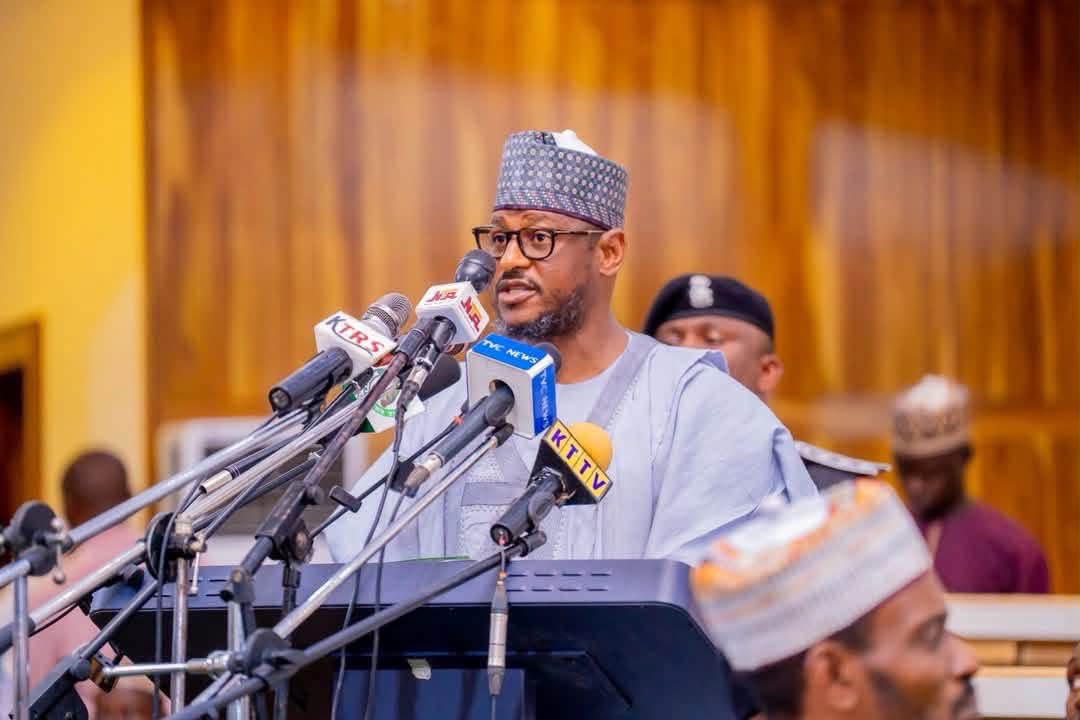
As part of preparations for the proposed ₦828.64 billion 2027 Appropriation Bill, tagged “Building Your Future IV,” the Katsina State Government took the development conversation directly to the grassroots.
Through a Citizens’ Budget Exercise conducted simultaneously across all 361 wards, citizens were invited to review development progress, identify challenges and rank the priorities they considered most important for their communities.
The exercise, coordinated through the Community Development Programme (CDP) alongside the relevant budget planning institutions, was also the third ward-level Citizens’ Budget engagement under Governor Dikko Umaru Radda’s administration.
Its central message is simple, development should not merely be delivered to communities; communities should help shape it.
WHEN 361 WARDS BECAME PLANNING CENTRES
On July 18, 2026, citizens across Katsina’s 361 wards simultaneously participated in discussions about the future development priorities of their communities.
The significance was not merely the size of the exercise. It was the decision to move the budget conversation beyond government offices, the state capital and major urban centres.
The ward, the political and social unit closest to the people became a development planning platform.
Citizens were given an opportunity to identify the challenges confronting their communities, assess competing needs and rank the interventions they believed deserved priority attention. Their contributions were intended to inform the preparation of the 2027 budget.
This distinction matters. Consultation after major decisions have been taken may provide information, but meaningful participation requires citizens to contribute before priorities are finalised.
According to Governor Radda, the first-priority project selected in each ward is expected to form part of the grassroots development framework for the 2027 fiscal year.
That commitment gives the process a direct connection to public expenditure. Community voices are expected to travel beyond the meeting hall and into the machinery of government planning.
Public confidence will, of course, depend on implementation. Citizens are more likely to trust participation when they can see a clear relationship between what they requested and what government eventually delivers.
LOOKING BACK BEFORE LOOKING FORWARD
One of the strongest features of the exercise was that citizens were not asked to discuss the future without considering the present.
Communities were given an opportunity to review progress under the 2026 budget before contributing to the planning of the 2027 fiscal year. This introduces an important element of accountability into the budgeting process.
Public budgeting should not simply involve producing a new list of projects every year. Before deciding what comes next, government and citizens need to understand what has been achieved, what remains incomplete and where significant gaps still exist.
The Katsina process therefore creates a potentially important governance cycle: implementation is followed by community review; gaps are identified; new priorities are agreed upon; and those priorities inform the next planning cycle.
This is particularly important because resources are limited. A community may simultaneously require roads, schools, healthcare facilities, water infrastructure and agricultural support. No government can fund every need at once. Prioritisation is unavoidable.
Giving communities a role in that prioritisation provides government with clearer information about local realities and gives citizens a greater understanding of the difficult choices involved in allocating public resources.
THE GOVERNOR WHO RETURNED TO HIS WARD AS A CITIZEN
Perhaps the most symbolic moment of the exercise was Governor Dikko Umaru Radda’s participation in the process in his own Radda Ward.
Governors frequently attend public events. But the significance of this occasion was not simply that Governor Radda was present. It was the manner in which he participated.
The Governor joined the community exercise without attempting to dictate the projects or priorities citizens should select. That detail carries considerable democratic significance.
The presence of a Governor can influence a community meeting. Citizens may feel pressure to choose projects they believe government prefers. A participatory process can only be credible, however, when people are free to express their genuine views.
Governor Radda’s approach therefore conveyed an important message: political authority should not silence community voices.
The image of a sitting Governor returning to his own ward to participate in a development conversation also reinforces a broader principle of leadership.
No Governor can personally understand every challenge facing hundreds of communities. Governments require systems that allow information, concerns and priorities to move from citizens into public institutions. The 361-ward Citizens’ Budget Exercise provides such a mechanism.
In that sense, the strongest message behind the Governor’s participation may be that leadership is not only about making decisions. It is also about creating systems for listening.
WHO SAT AT THE DEVELOPMENT TABLE?
The strength of a community-informed process depends largely on who participates.
A consultation dominated by politicians and government officials cannot fully capture the diversity of community experience. Development affects different groups differently, and planning becomes stronger when multiple perspectives are represented.
The Katsina exercise brought together traditional and religious leaders, teachers, students, women, young people, farmers, livestock rearers, persons with disabilities, poor and vulnerable citizens, political representatives, professionals, civil society organisations, artisans, traders and other community members.
Each group brings a different understanding of development challenges.
Farmers understand the practical realities of agricultural production, access to markets and rural infrastructure. Teachers understand the pressures facing schools. Women bring important perspectives on healthcare, water, livelihoods and family welfare. Young people understand the challenges of education, employment and economic participation.
The participation of persons with disabilities is equally important. Genuine inclusion means more than providing specialised services. It means ensuring that people can participate in decisions that affect their lives.
Similarly, poor and vulnerable citizens often depend most directly on public services. For them, the availability of a functional school, healthcare facility, water source or access road can fundamentally shape everyday life.
The principle is clear, the government brings institutional capacity and technical expertise, while communities bring lived experience. Effective development planning requires both.
FROM COMMUNITY VOICES TO DEVELOPMENT DATA
Evidence-based planning is a cornerstone of modern governance. Governments require data to allocate resources effectively.
But statistics and administrative records do not always tell the full story.
A resident knows whether a local school has enough classrooms. A farmer understands how poor roads affect access to markets. A mother understands the difficulty of travelling long distances for healthcare. A person with a disability understands whether public facilities are accessible.
These everyday experiences are forms of development evidence.
The Citizens’ Budget Exercise provides an opportunity to transform such community knowledge into structured information for planning.
According to Governor Radda, citizens identified, assessed and ranked their needs, generating community-level information expected to guide interventions in areas such as agriculture, Micro, Small and Medium Enterprises, water, sanitation and hygiene, women’s empowerment, the environment, climate change and security.
The value of this approach lies in its recognition that development challenges are interconnected.
A rural road, for example, can affect agricultural productivity, access to healthcare, school attendance and commercial activity. Clean water influences health, education and household welfare. Agriculture affects livelihoods and food security. Security shapes the environment in which virtually every other development intervention operates.
Community-level consultation can therefore help government understand not only what communities need, but how different challenges intersect.
THE 2027 BUDGET: INVESTING IN HUMAN DEVELOPMENT
Governor Radda presented the proposed ₦828.64 billion 2027 Appropriation Bill to the Katsina State House of Assembly with a strong emphasis on capital expenditure.
Of the proposed total, ₦637.91 billion, representing 76.98 per cent, is allocated to capital expenditure, while ₦190.73 billion is proposed for recurrent expenditure.
The major priority sectors within the capital budget include education, works and housing, agriculture and livestock, healthcare and rural development.
Education is allocated ₦83.82 billion, works and housing ₦71.60 billion, agriculture and livestock ₦65.88 billion, healthcare ₦53.64 billion, and rural development ₦50.51 billion.
Together, these sectors account for more than half of the proposed capital budget.
The figures represent more than financial allocations. They reflect investments in the foundations of human and economic development.
Education builds human capital. Healthcare protects lives. Agriculture supports livelihoods and food security. Infrastructure connects communities to markets and services. Rural development ensures that progress is not concentrated only in major urban centres.
What gives these allocations additional significance is the process behind them.
The 2027 budget is being presented not merely as a financial document prepared by government institutions, but as a fiscal framework informed by consultations with citizens across the state.
Governor Radda has described it as the most participatory budget process in the history of Katsina State. By its scale and the breadth of participation, the exercise represents a significant attempt to bring public finance closer to the people.
ONE STATE, DIFFERENT REALITIES
Katsina is not a single community with a single set of needs.
Some areas face serious infrastructure deficits. Others may require greater investment in education, healthcare, employment or agriculture. Rural communities may prioritise access roads and agricultural infrastructure, while urban areas may focus more on housing, sanitation, transportation and other public services.
Communities affected by insecurity face additional concerns relating to safety, displacement and livelihoods.
A development model that treats every community as though it has identical needs is unlikely to produce the best outcomes.
The 361-ward approach recognises this diversity by giving communities an opportunity to define their own priorities.
The commitment that each ward’s leading priority will inform grassroots development planning creates a stronger connection between public investment and local realities.
This does not eliminate the need for statewide planning. Major infrastructure, education reforms, healthcare systems and security interventions require central coordination.
Rather, community-informed planning complements statewide strategy by ensuring that local voices are not lost within broader government priorities.
PARTICIPATION MUST LEAD TO ACCOUNTABILITY
The real test of participatory budgeting begins after the consultation.
Citizens who identify development priorities will naturally want to know whether those priorities were included in the final budget and whether the projects were eventually implemented.
This is where participation can become a powerful accountability mechanism.
When communities know what they requested, they are better positioned to follow implementation. They can ask questions, monitor projects and demand explanations when commitments are not met.
Participation can also create a stronger sense of ownership.
A community that helped identify the need for a school, healthcare facility or water project is more likely to see that investment as its own, rather than as something imposed from outside.
The review of the 2026 budget strengthens this accountability cycle by encouraging citizens to consider progress and remaining gaps before setting new priorities.
Governor Radda has acknowledged continuing challenges in areas including insecurity, education, healthcare, water and sanitation and infrastructure.
That acknowledgement is important. Effective planning requires governments to recognise both progress and the problems that remain.
BEYOND BILLIONS: THE HUMAN MEANING OF A BUDGET
Public budgets are often discussed in billions and percentages.
₦83.82 billion for education. ₦71.60 billion for works and housing. ₦65.88 billion for agriculture and livestock. ₦53.64 billion for healthcare. ₦50.51 billion for rural development.
But behind every figure is a human story.
Investment in education can mean a better classroom for a child. Investment in healthcare can mean access to medical services for a pregnant woman, a child or an elderly citizen.
Agricultural investment can improve a farmer’s productivity and strengthen food security. Rural infrastructure can connect isolated communities to markets and essential services. Water projects can reduce the burden on women and children who travel long distances in search of water.
This is the essence of people-centred governance.
The purpose of a public budget is not simply to spend money. It is to improve lives.
The size of an allocation matters, but the more important question is what difference it will make in the daily lives of citizens.
A MODEL NIGERIA CAN STUDY
The Katsina experience offers an important lesson for other states.
Across Nigeria, governments make decisions about public resources that affect millions of people, yet many citizens remain disconnected from the budgeting process. They often hear about budgets only after they have been prepared and projects have already been selected.
Participatory budgeting can help bridge that gap.
Katsina’s experience demonstrates that it is possible to take the development conversation directly to communities. Other states may not replicate the model exactly, as political structures, population sizes and administrative capacities differ.
But the underlying principle is transferable: citizens should have meaningful opportunities to influence development priorities.
Governors can strengthen town hall systems. Local governments can institutionalise community consultations. Legislators can connect constituency engagement with budget planning, while ministries can improve systems for gathering and analysing community-level information.
The lesson from Katsina is that participatory governance does not have to remain a concept discussed only in policy documents. It can be practised.
DEMOCRACY BEYOND THE BALLOT BOX
Perhaps the most important lesson from the 361-ward exercise is that democracy should not end on election day.
Citizens elect leaders to make decisions on their behalf, but democratic governance becomes stronger when people continue to participate between elections.
They can contribute to development planning, monitor public projects, provide feedback and hold public institutions accountable.
Participatory budgeting is one way of extending democracy beyond the ballot box.
For democracy to be meaningful, it must connect with everyday life: the school a child attends, the healthcare facility a family depends upon, the road a farmer travels and the water a community drinks.
That is how democracy moves from an abstract political principle to a practical experience.
BUILDING THE FUTURE WITH THE PEOPLE
The proposed 2027 budget is appropriately titled “Building Your Future IV.”
The title acquires deeper meaning when considered alongside the Citizens’ Budget Exercise.
A future cannot genuinely belong to the people if they have no opportunity to influence how it is built.
The Katsina process has taken the discussion of public finance beyond government offices and brought it into communities across the state. It has created a platform for citizens from different backgrounds to contribute to decisions about development.
Governor Radda’s participation in his own ward without interfering with the choices of citizens provided an equally powerful symbol of the philosophy behind the exercise.
Leadership, after all, is not only about directing. It is also about listening.
There is still considerable work to be done in Katsina State. The challenges of insecurity, education, healthcare, water supply, sanitation, infrastructure and economic development require sustained attention and investment.
No budget can solve every challenge at once. No government can meet every demand immediately.
But the quality of governance is often revealed by how leaders make choices when resources are limited—and by whether those choices are informed by the realities of the people.
By taking budget consultations to all 361 wards, Katsina State has made a significant effort to bring development planning closer to its citizens. By linking the review of the 2026 budget with planning for 2027, it has also connected participation with accountability.
The ultimate test, however, will be implementation.
The success of the model will depend on whether community priorities find their way into public investment, whether projects are transparently implemented and whether citizens remain engaged beyond the consultation stage.
If these foundations are sustained and institutionalised, Katsina could offer Nigeria an important example of participatory governance in practice.
The central lesson is clear: the people should not simply wait at the end of the development process to receive its results. They should be present at the beginning—when the future is being designed.
In Katsina State, the emerging message from the 2027 budget process is that citizens are not merely beneficiaries of development.
They are increasingly becoming partners in defining it.
And that may be one of the strongest foundations upon which any government can genuinely claim to be building the future.
By Musa Abdullahi Sufi
Development and Impact Stories Journalist