


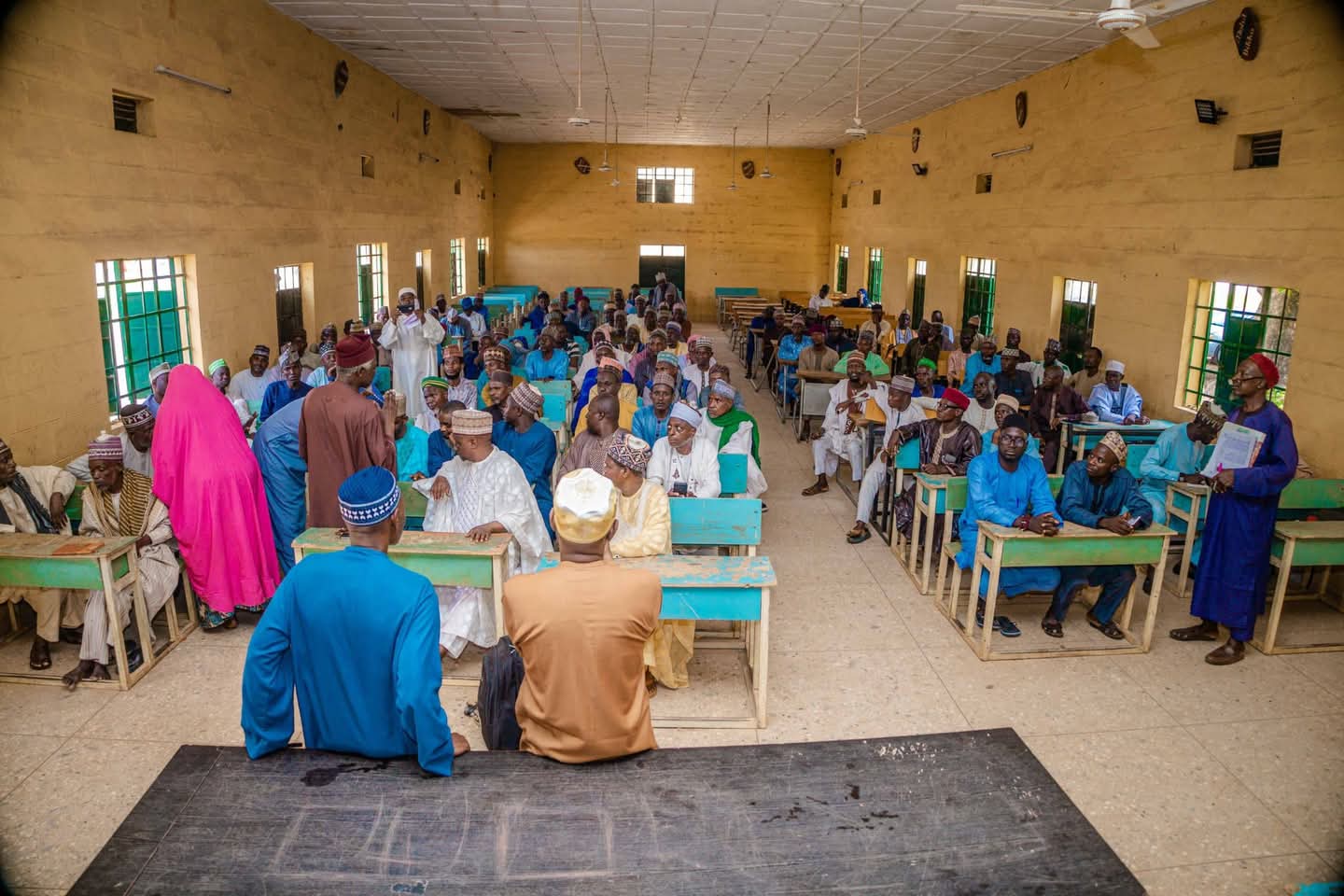
The Kaduna State Universal Basic Education Board (KADSUBEB) has organized a sensitization meeting for Tsangaya teachers, popularly known as Alarammas, as part of efforts to strengthen the implementation of the Integrated Qur’anic Tsangaya Education (IQTE) Programme and promote inclusive education across the state.
The IQTE Programme, a collaborative initiative of the Universal Basic Education Commission (UBEC) and KADSUBEB, was introduced to bridge the educational gap among Almajiri children by integrating literacy, numeracy, life skills and vocational education into the traditional Qur’anic education system while preserving religious instruction.
Read also: BUK Interfaculty Games: Students Battle for Sporting Glory
Speaking at the meeting, the Director of Social Mobilization, Muhammad Kabir Lawal, urged the Alarammas to fully support the programme by dedicating adequate time and commitment to its implementation in their respective Tsangaya schools.
He explained that the integration of the Tsangaya curriculum with the Nine-Year Basic Education Curriculum is a strategic effort by the government to provide learners with both religious knowledge and practical skills needed to succeed in contemporary society.
Lawal noted that the programme is designed to improve learning outcomes through the provision of critical educational facilities and support services, including classrooms, desks, student hostels, boreholes for potable water supply and instructional materials.
Read also: UNICEF Seeks Increased Funding for Child Nutrition in Adamawa
According to him, the initiative also aims to reduce the number of out-of-school children, address issues related to child welfare and street begging, and support the education agenda of Governor Uba Sani’s administration, which prioritizes access to quality education for all residents of Kaduna State.
“The programme is not only about expanding access to education but also about equipping children with the skills and knowledge required to become productive members of society while preserving their religious and cultural values,” he said.
The sensitization exercise brought together Alarammas from five clusters across Kaduna State, creating an opportunity for constructive dialogue on challenges affecting the implementation of the programme.
Read also: ACF Appoints Three-Member Interim Leadership in Kano
Participants shared experiences, identified key obstacles and proposed practical recommendations aimed at improving the integration of Qur’anic and basic education across the state.
KADSUBEB said the engagement reflects its commitment to ensuring the successful implementation of the IQTE Programme and advancing inclusive, equitable and quality education for all children in Kaduna State.