


A Senior Broadcast Journalist with the Voice of Nigeria (VON), Mallam Hussain Bin Hyacinth, has urged Muslims, particularly journalists and media organisations, to resist responding emotionally to perceived bias against Islam, stressing that ethical, evidence-based and professional journalism remains the most effective response to negative narratives.
Bin Hyacinth made the call while speaking as a panellist at the 7th Anniversary Lecture and MNAwards presentation organised by Muslim News Nigeria in Lagos.
Read also: RMAFC Chairman Demands Accountability, Discipline
The lecture was themed, “Framing the Faith in the Midst of Media Representation and Global Conflicts.”
FG, UNICEF Train 60 Journalists on Ethical Child Rights Reporting
The panel featured the Executive Director of the Muslim Rights Concern (MURIC), Professor Ishaq Akintola; the Director of the Nigerian Television Authority (NTA), represented by Principal Reporter Mallam Talha Babalola Musa; and the Director of the Hijab Rights Advocacy Initiative, Hajia Mutiat Orolu-Balogun. Discussions focused on the challenges of media representation of Islam and Muslims in the contemporary global media environment.
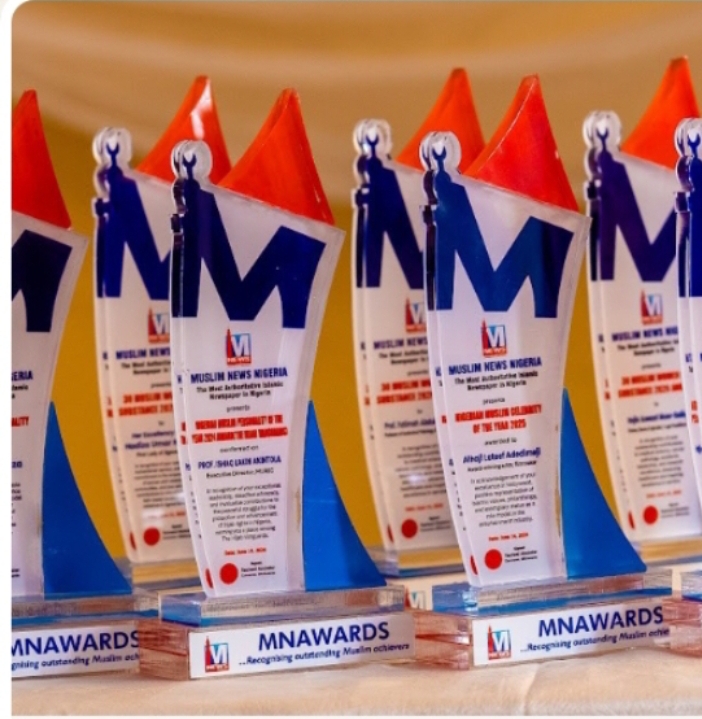
The event also featured the presentation of the Global and Nigerian Muslim Personalities of the Year 2025 (MNAwards) and the 30 Muslim Women of Substance Awards, recognising individuals for their outstanding contributions to the Muslim community and national development.
Speaking during the panel session, Bin Hyacinth said Muslim media practitioners should understand how news framing influences public perception and focus on producing factual, balanced and professionally credible reports rather than reacting to narratives created by others.
He explained that media framing involves the selection, organisation and emphasis of particular aspects of events in ways that shape how audiences interpret those events.
Using the Christmas Eve explosion of December 24, 2025, as an example, he argued that some media organisations highlighted the timing of the incident by describing it as a “Christmas Eve” attack despite reports that many of the victims were Muslims.
According to him, such editorial decisions could influence public perception by portraying Muslims as aggressors while shifting attention away from the actual victims of the tragedy.
Bin Hyacinth further argued that while some mainstream and Christian-owned media organisations often adopt what he described as “offensive journalism” when reporting issues relating to Islam, Muslim-owned media frequently respond with what he termed “defensive journalism.”
“Stop Using Cybercrime Laws to Silence Journalists,” CITAD Demands in Sakpe Arrest
“While doing so, we sometimes fall into their trap without knowing,” he said.
Read also: Terrorism: Kebbi Court Jails Two Convicts 15 Years Each
The veteran broadcaster also criticised recurring claims that Muslims are pursuing an agenda to Islamise Nigeria, describing such narratives as strategies that place Muslims on the defensive.
He argued that these narratives have, at times, prompted Muslims to advocate certain policies as reactions to Christian practices rather than on the basis of independent Islamic principles. As examples, he cited calls for a public holiday on the first day of Muharram because January 1 is observed as a public holiday, and demands for public recognition of 12 Rabi’ al-Awwal in response to Christmas celebrations.
On journalism ethics, Bin Hyacinth questioned the practicality of complete objectivity in news reporting, arguing that every media organisation inevitably frames stories through ideological, political or cultural perspectives.
He noted that the traditional news value of prioritising unusual events and the pursuit of desired outcomes often influence media coverage of conflicts and religious issues.
In contrast, he said Islamic ethical principles emphasise justice and fairness, citing the Qur’anic injunction that believers should not allow hatred for any group to prevent them from acting justly.
According to him, journalism founded on truth, fairness and justice is more consistent with Islamic values than reporting driven by sensationalism or vested interests.
Bin Hyacinth further argued that international media frequently portray Christianity as peaceful and moderate while associating Islam with terrorism, extremism and violence, creating unequal public perceptions of similar realities.
Drawing examples from the Russia-Ukraine war, the Israeli-Palestinian conflict and the Israel-Iran confrontation, he maintained that language is often strategically employed to enhance or damage reputations depending on geopolitical interests.
He said differences in the reporting of casualties in Israel and Gaza, as well as narratives surrounding military actions involving Iran, demonstrate how similar events are framed differently depending on who controls the flow of information.
Tracing the challenge to what he described as the North-South imbalance in global information dissemination, Bin Hyacinth observed that Muslims and much of the Global South remain consumers rather than producers of dominant media narratives.
“Globally and locally, we are not in control of information dissemination machineries. Giant news organisations in the world are owned and managed in the Global North, which frame news events the way they want and disseminate them to us for consumption. The situation is not different here in Nigeria,” he said.
He called on Muslim journalists and media organisations to invest in building credible media institutions capable of producing high-quality journalism that earns public trust.
Read also: Nigeria Moves to Cut Air Travel Costs Through ECOWAS Reform
According to him, until Muslims strengthen their capacity to own and sustain effective information platforms at both national and international levels, they will continue to rely largely on narratives framed by others.
The anniversary lecture brought together journalists, media professionals, scholars and Muslim leaders to explore strategies for promoting accurate, ethical and balanced reporting of Islam in an era of growing global conflicts and expanding media influence.