


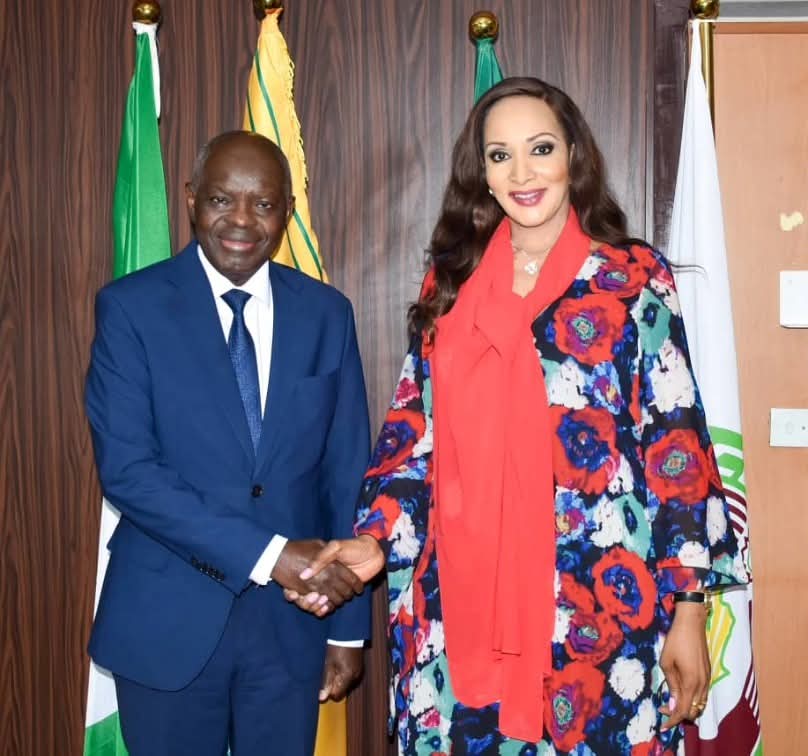
Nigeria’s Minister of Foreign Affairs, Ambassador Bianca Odumegwu-Ojukwu, has reaffirmed the Federal Government’s commitment to strengthening diplomatic and economic relations with the Republic of Côte d’Ivoire.
The minister made this known during a meeting with the Ambassador of Côte d’Ivoire to Nigeria, His Excellency Kalilou Toure, held in Abuja.
Read also: Affordable Housing: FG Advances 10,000 Units Across Nigeria
Kano Leads Regional Push for Energy Reforms with Katsina, Jigawa Partnership
The discussions focused on deepening bilateral cooperation between both countries and promoting regional development across West Africa.
During the meeting, both parties reaffirmed the longstanding cordial relations between Nigeria and Côte d’Ivoire and reiterated their commitment to sustaining regular diplomatic engagements at bilateral and multilateral levels.

Key areas of cooperation discussed included trade, investment, industrial development, security, culture, migration, and consular affairs.
Read also: Speaker Commissions Soba Projects to Boost Education, Healthcare
Odumegwu-Ojukwu noted that Côte d’Ivoire remains one of Nigeria’s major trading partners in Africa and stressed the need to expand bilateral cooperation into sectors such as cosmetics, perfumes, coffee production, petroleum products, technical partnerships, and industrial manufacturing.
The two sides also reviewed existing Memoranda of Understanding (MOUs) and expressed optimism over the reactivation and implementation of pending bilateral agreements during the forthcoming bilateral session scheduled to hold in Côte d’Ivoire.
The meeting highlighted the importance of parliamentary diplomacy, institutional partnerships, and collaboration among governance and electoral institutions as critical tools for promoting democratic consolidation, good governance, and regional stability.
The minister further reiterated Nigeria’s commitment to strengthening regional efforts aimed at combating terrorism, violent extremism, human trafficking, drug trafficking, and other forms of transnational organized crime within the West African sub-region.
Read also: WOFAN Turns Years of Hardship into Renewed Hope for Spinal Cord Patient in Jigawa
Kano Deputy Governor Calls for Regional Synergy
Both parties emphasized the importance of intelligence sharing, security cooperation, and coordinated regional responses in tackling emerging security threats across the region.