


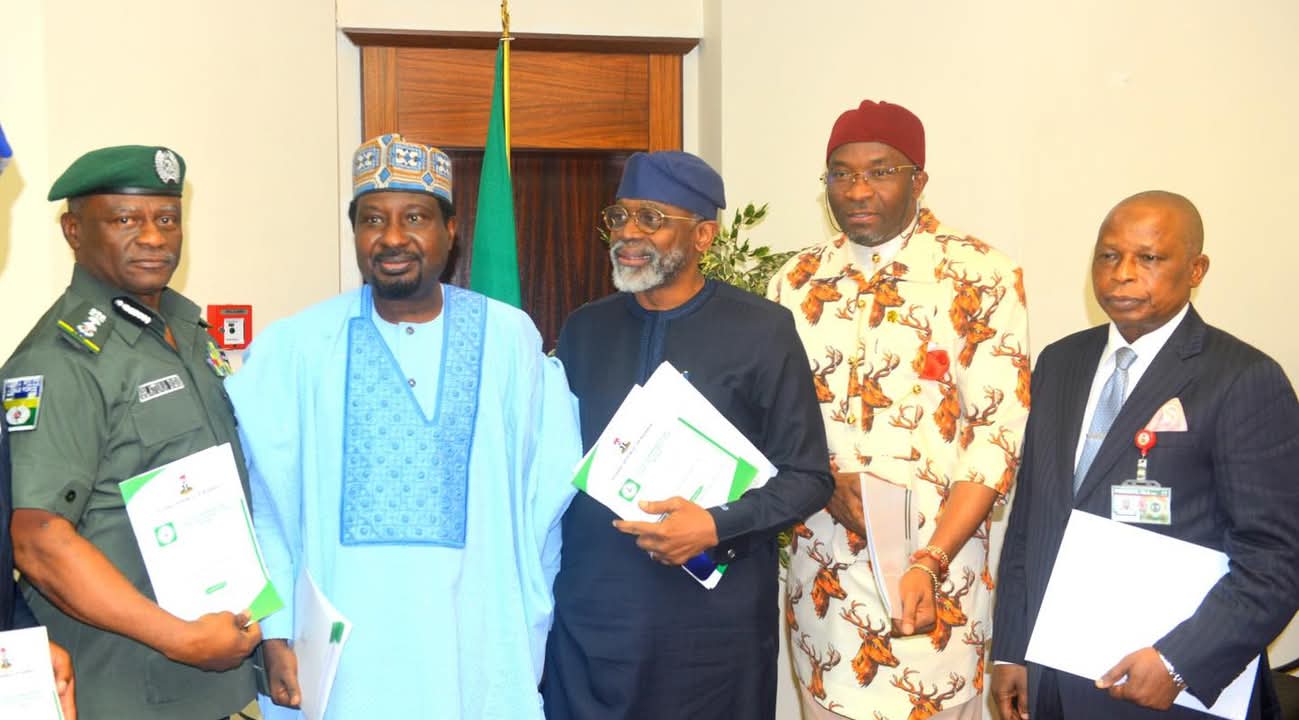
The Presidency has announced significant progress in the ongoing efforts to establish state police in Nigeria, disclosing that work on the required constitutional amendment is now at an advanced stage.
The Chief of Staff to the President, Hon. Femi Gbajabiamila, made this known on Thursday while briefing State House correspondents after a high-level consultative meeting on state police held at the Presidential Villa, Abuja.
Read also: Affordable Housing: FG Advances 10,000 Units Across Nigeria
Kano State Police Command Celebrates Promotion of 272 Officers
Gbajabiamila explained that the initiative, which began several months ago following a directive by President Bola Ahmed Tinubu, has gained considerable momentum through sustained consultations among the Executive, the National Assembly, and relevant security agencies.
According to him, the process of establishing state police involves complex constitutional and legal considerations that require careful deliberation and cannot be implemented hastily.

“We started deliberations in the last three or four months on how to go about the establishment of state police as directed by Mr. President. Establishing state police is not something that you do with the snap of the fingers because there are constitutional and legal implications involved,” he said.
He added that discussions have now progressed to the stage of finalizing the necessary constitutional amendments, which will be followed by enabling legislation to guide implementation.
Read also: Federal Universities Get Green Light to Recruit Staff
“Right now, what we are looking at is the constitutional amendment itself, and then the enabling law would follow thereafter,” Gbajabiamila stated.
The Chief of Staff noted that there is broad national consensus on the need for state police, stressing that the debate has shifted from whether it should be created to how it should be effectively structured and implemented.
He further disclosed that President Tinubu, who has consistently advocated for a decentralized policing system as part of efforts to strengthen internal security, will be briefed on the outcome of the ongoing consultations.
Gbajabiamila described state police as a critical reform aimed at enhancing Nigeria’s security architecture, improving intelligence gathering, and enabling sub-national governments to respond more effectively to local security challenges.
The meeting was attended by key stakeholders, including the Deputy President of the Senate, Senator Jibrin Barau; the Deputy Speaker of the House of Representatives, Benjamin Kalu; the Inspector-General of Police, Kayode Egbetokun; and other senior government and security officials.
The Presidency said the consultations form part of broader efforts to develop a sustainable and constitutionally backed framework for decentralized policing in Nigeria.
Read also: Gambo Musa Gets NBBF Role to Develop Young Basketball Talent
Kano State Police Command Beefs Up Security for Ember Months
If adopted, the proposed reform is expected to mark a major shift in the country’s security structure since the return to democratic governance in 1999.