


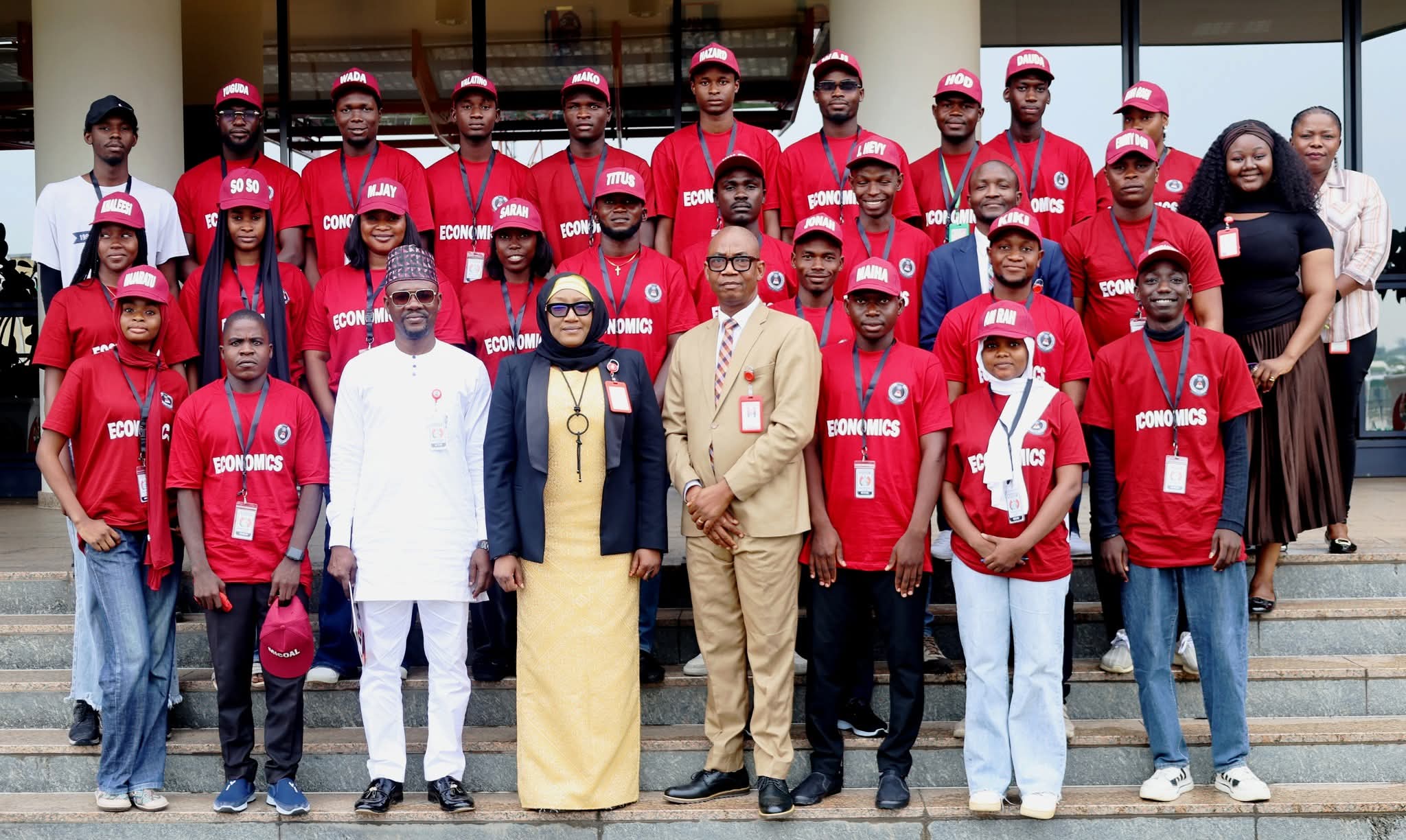
The Economic and Financial Crimes Commission (EFCC) has called on Nigerian youths to actively support the agency in the fight against corruption, economic crimes, and financial fraud across the country.
The Executive Chairman of the Commission, EFCC, Ola Olukoyede, made the call when students of Adamawa State University visited the EFCC headquarters in Jabi, Abuja on a study tour.
Read also: ABU SPESSE-CE Graduates 420 in Sustainability Training
Olukoyede, who was represented at the event by the Head of Public Interface of the Public Affairs Department, Assistant Commander of the EFCC (ACE I), Tony Orilade, described corruption as the most pressing challenge confronting Nigeria today.
He warned that the country’s development would remain stunted unless citizens unite to confront corruption collectively.
“If Nigerians come together and fight corruption sincerely, we will secure a better future. But if we fail to do so, we will continue to face unemployment, underdevelopment and loss of opportunities,” he said.
The EFCC chairman stressed that the Commission cannot win the anti-corruption battle alone, emphasizing that youths and other stakeholders must play active roles in rebuilding national integrity.
“The EFCC needs you in this fight. We cannot take back this country from corruption unless everyone stands together,” he added.
He noted that while corrupt individuals remain determined to continue illegal activities, the Commission is equally committed to stopping them and protecting the nation’s future.
In her presentation, the Head of Enlightenment and Reorientation Unit of the EFCC, Assistant Commander of the EFCC (ACE II), Aisha Mohammed, explained that the agency’s mandate goes beyond arrests and prosecution.
Read also: Indonesian Scholar Advocates Waqf Model to Transform Almajiri Education
She said prevention remains a key focus, achieved through public enlightenment campaigns, lectures, media engagements, and advocacy programmes.
According to her, the Commission runs Integrity Clubs in primary and secondary schools and Zero Tolerance Clubs in tertiary institutions, while also collaborating with the NYSC, faith-based organisations, and civil society groups to promote ethical values.
Mohammed urged Nigerians to embrace whistleblowing and speak out against corruption, stressing that silence enables wrongdoing.
“What is bad is bad. Don’t fold your arms. Don’t put your hands where you are not supposed to,” she said.
Also speaking, Deputy Superintendent of the EFCC, DSE Ogunjuobi Philip, delivered a presentation on cybercrime, describing it as the misuse of Information and Communication Technology (ICT) devices and internet services for criminal purposes.
He explained that cybercrime is divided into cyber-dependent crimes such as hacking, phishing, malware attacks, ransomware, and Distributed Denial of Service (DDoS) attacks, and cyber-enabled crimes, which include romance scams, contract fraud, and investment scams.
Ogunjuobi warned that cybercrime undermines public trust, causes financial losses, disrupts essential services, and damages Nigeria’s global reputation.
Read also: Federal Universities Get Green Light to Recruit Staff
He urged students to educate others on the dangers of cybercrime and to reject criminal behaviour regardless of economic or peer pressure.
The excursion coordinator, Mr. Enam P. Abalis, expressed appreciation to the EFCC for hosting the students and sensitising them on issues of national integrity and cybercrime prevention.