


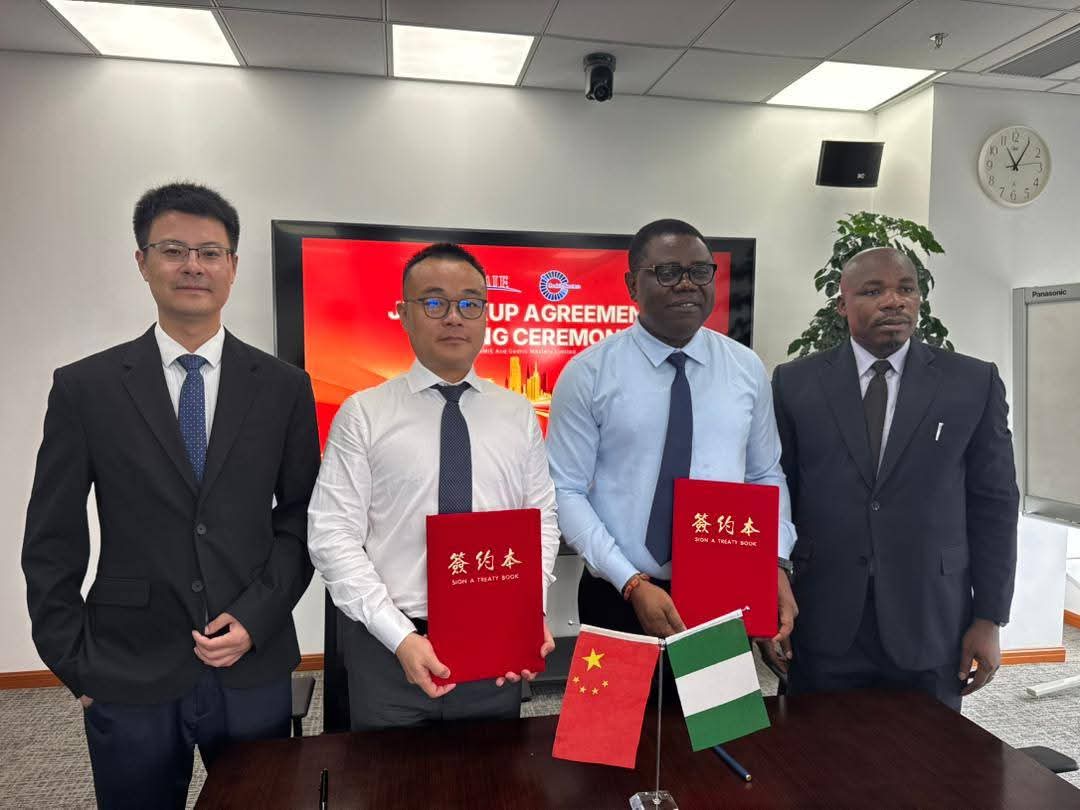
The Director-General of the National Automotive Design and Development Council (NADDC), Otunba Oluwemimo Joseph Osanipin, has reaffirmed the Federal Government’s commitment to supporting local vehicle assembly and accelerating automotive industrialisation in Nigeria.
Osanipin made the commitment during a strategic engagement with Jiangling Motors Group Co. Ltd. in Nanchang, China, aimed at exploring opportunities for collaboration and investment in Nigeria’s automotive sector.
Jigawa to Establish 27 CNG Conversion Centres
The meeting brought together Nigerian automotive industry stakeholders and senior officials of the Chinese automotive company to discuss initiatives focused on local vehicle assembly, technology transfer, component localisation, and industrial capacity development.
As the government agency responsible for the development and regulation of Nigeria’s automotive industry, NADDC’s participation underscored the Federal Government’s support for credible local assemblers and its commitment to attracting long-term investments into the sector.
Speaking during the engagement, Osanipin stated that the government remains focused on creating an enabling environment that promotes vehicle assembly, technology transfer, local content development, and sustainable industrial growth.
He noted that strategic international partnerships are vital to positioning Nigeria as a leading automotive manufacturing hub in Africa while strengthening investor confidence in the country’s growing automotive market.
According to him, collaborations with global automotive manufacturers will help drive innovation, enhance local production capabilities, and create employment opportunities for Nigerians.
A major highlight of the engagement was the signing of a collaboration agreement between Jiangling Motors Group Co. Ltd. and Nigerian automotive assembler, Cedric Masters Limited.
The agreement was signed in the presence of the NADDC Director-General and the Chief Executive Officer of Cedric Masters Limited, Chief Anslem Ilekuba, marking a significant step towards deepening automotive manufacturing cooperation between Nigeria and China.
Discussions during the meeting also focused on future opportunities in component localisation, workforce skills development, and electric vehicle technology.
Participants expressed optimism that the partnership would contribute significantly to the advancement of Nigeria’s automotive industry and support the country’s broader industrialisation agenda.
Dangote Peugeot Launches 3008 GT Assembly in Kaduna State
The engagement reflects ongoing efforts by the Federal Government to strengthen local automotive production, encourage technology-driven investments, and position Nigeria as a key player in Africa’s automotive value chain.SEO Headlines