

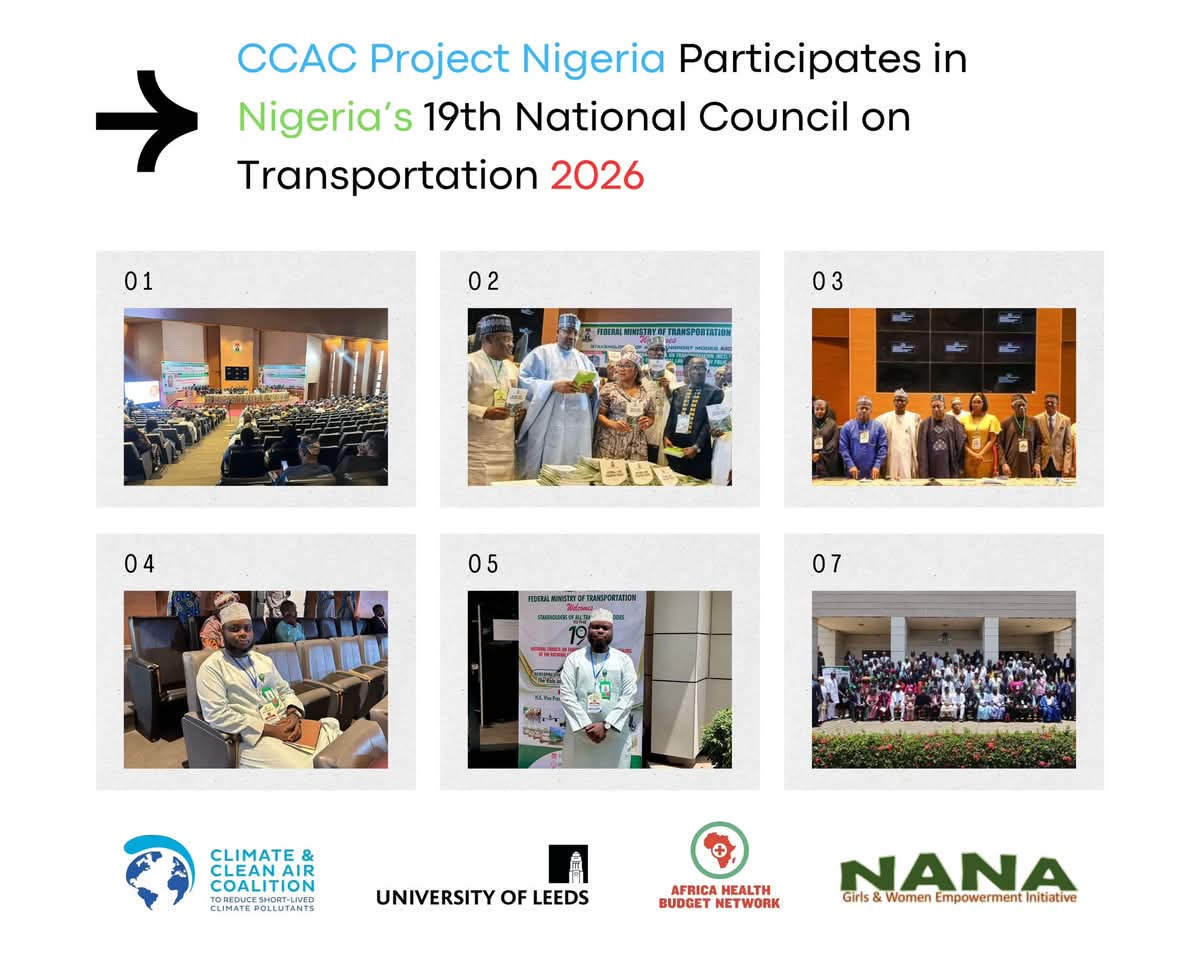
The Climate and Clean Air Coalition (CCAC) Project Nigeria has participated in the 19th National Council on Transportation (NCT) and the unveiling of the Approved National Land Transport Policy (NLTP) held in Abuja.
The four-day event, which took place from August 31 to September 3, 2026, brought together key stakeholders in Nigeria’s transportation sector to deliberate on measures to develop a more effective, integrated and sustainable transport system.
Read also: Kano Police Assures Adequate Security for 2024 Maukibi
Representing the CCAC Project Nigeria at the event was the Africa Health Budget Network (AHBN) Budget and Communications Specialist, Sadiq S. Malami.
His participation was aimed at supporting strategic knowledge gathering, policy engagement and stakeholder interactions relevant to the project’s ongoing work on cleaner and sustainable transportation in Nigeria.
Read also: Kebbi Gov Vows Strict Oversight as New Mining Officials Take Oath
The CCAC Project Nigeria is supporting the development of a National Policy and National Implementation Plan for Soot-Free Buses, with a focus on promoting cleaner bus technologies, including Compressed Natural Gas (CNG) and Electric Vehicle (EV) buses.
Participation in the National Council provided an opportunity to gather policy insights that could help inform the project’s activities and contribute to national discussions on sustainable mobility and cleaner transportation.
A major highlight of the event was the unveiling of the Approved National Land Transport Policy, which provides a policy framework for improving and integrating Nigeria’s land transportation system.
Read also: Tinubu Commends Super Eagles Despite World Cup Playoff Exit
Discussions at the council also focused on the transition towards cleaner transportation, including the role of CNG in supporting lower-emission mobility.
The CCAC Project Nigeria said the discussions were particularly relevant to its efforts to support practical and sustainable pathways for reducing emissions and improving air quality in Nigeria’s transportation sector.