


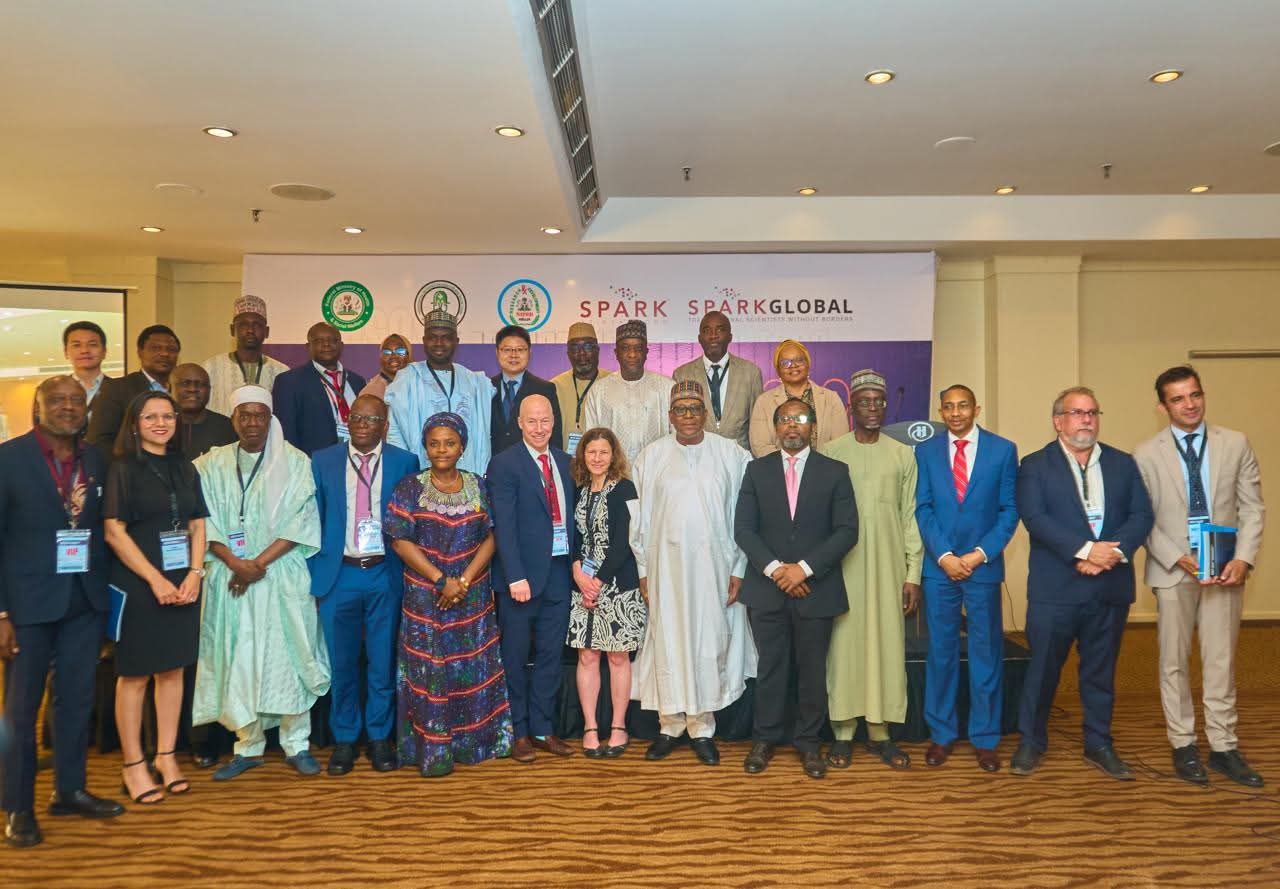
The Federal Government of Nigeria, in collaboration with global and local partners, has intensified efforts to strengthen translational research across Africa, urging the continent to transition from being primarily a source of data to a hub of scientific innovation, health solutions, and economic growth.
The call was made by the Coordinating Minister of Health and Social Welfare, Professor Muhammad Ali Pate, at the SPARK Translational Research Boot Camp and Conference 2026, held in Abuja.
Read also: NAWOJ Kano Congratulates Khadijah Aliyu on UK Media Fellowship
BUK Strengthens Reputation in Impactful Research as Dr Halilu Wins Global Education Grant
The event was jointly organised by the Nigeria Institute of Pharmaceutical Research & Development (NIPRD), SPARK Global at Stanford University, and the Presidential Initiative for Unlocking the Healthcare Value Chain (PVAC).
Delivering the keynote address, Prof. Pate commended the organisers for their months of coordination to bring the programme to Africa despite resource constraints, describing the initiative as a timely intervention amid overlapping global crises.
“We are living through an era of pandemics, economic shocks, technological disruption, and demographic transitions,” he said. “At such a moment, scientific inquiry and evidence-based policymaking are not optional—they are essential.”
Prof. Pate highlighted the fragility of global health and development gains, noting that the COVID-19 pandemic exposed vulnerabilities in supply chains, economies, and governance systems.
He identified Africa’s rapid population growth, epidemiological shifts from infectious to non-communicable diseases, and fast-paced technological change as pressing challenges that require research-driven solutions.
Expressing concern over Africa’s limited contribution to global research, he said: “These risks position Africa as a perpetual extraction hub for data and knowledge. We must invest deliberately in local research ecosystems, including clinical trials, regulatory capacity, and science governance.”
The Minister noted that Nigeria’s ongoing health sector reforms under President Bola Ahmed Tinubu are anchored in scientific evidence, highlighting pillars such as research governance, regulatory strengthening, healthcare delivery expansion, unlocking the healthcare value chain, and health security.
In her remarks, Professor Kevin Grimes, Co-Director of SPARK at Stanford University, explained that the programme is designed to help African researchers translate high-quality science into products and services that benefit patients and society.
Read also: Kano Assembly Tackles Soaring House, Shop Rents
“African scientists are as capable as any in the world,” he said. “What they often lack is structured support and access to industry expertise. That is the gap SPARK is designed to fill.”
Earlier, Dr. Obi Adigwe, Director-General of NIPRD, said the conference aims to build a strong bridge between science, policy, and impact-driven innovation. “No matter how brilliant you are, if policy does not understand the priority of your work, you will not make an impact,” he said, highlighting the importance of political will in advancing scientific progress.
The conference drew 60–70 participants from across Africa, the outcome of over 18 months of planning with Stanford University partners.
Dr. Adigwe urged researchers to remain resilient amid global pressures, including funding cuts, misinformation, and declining political commitment, emphasizing that translational research ensures scientific intellect delivers real-life solutions.
Dr. Abdul Mukhtar, National Coordinator of PVAC, stressed the centrality of research and development in Nigeria’s healthcare reform agenda.
Established in 2023 by President Tinubu, PVAC aims to unlock Nigeria’s healthcare value chain, boost local production, create jobs, and mobilize sustainable financing.
“When we talk about the healthcare value chain, the foundation is research and development,” he said, noting that Africa accounts for only about two percent of global R&D spending. “Many groundbreaking studies never move beyond academic journals. Science and medicine ultimately exist to save lives—that is the essence of what we do.”
Dr. Mukhtar added that the initiative adopts an ecosystem approach, strengthening clinical trials, human capital development, supply chains, and market access, with the ambition to make Nigeria a hub for local manufacturing of essential medicines for Africa.
Stakeholders at the conference—including policymakers, researchers, industry players, and development partners—agreed that strengthening translational research and science communication is critical to counter anti-science narratives and ensure research findings translate into measurable health and economic gains.
Read also: Court Strikes Out FG’s Case Against Fake PFIPC DG
ECoN Will Elevate Nigeria’s Research, Innovation Sector-Minister
The boot camp was formally declared open with renewed commitment from the Federal Government and partners to support research, innovation, and clinical trials as part of a broader strategy to position Nigeria and Africa as active contributors to global scientific advancement.