


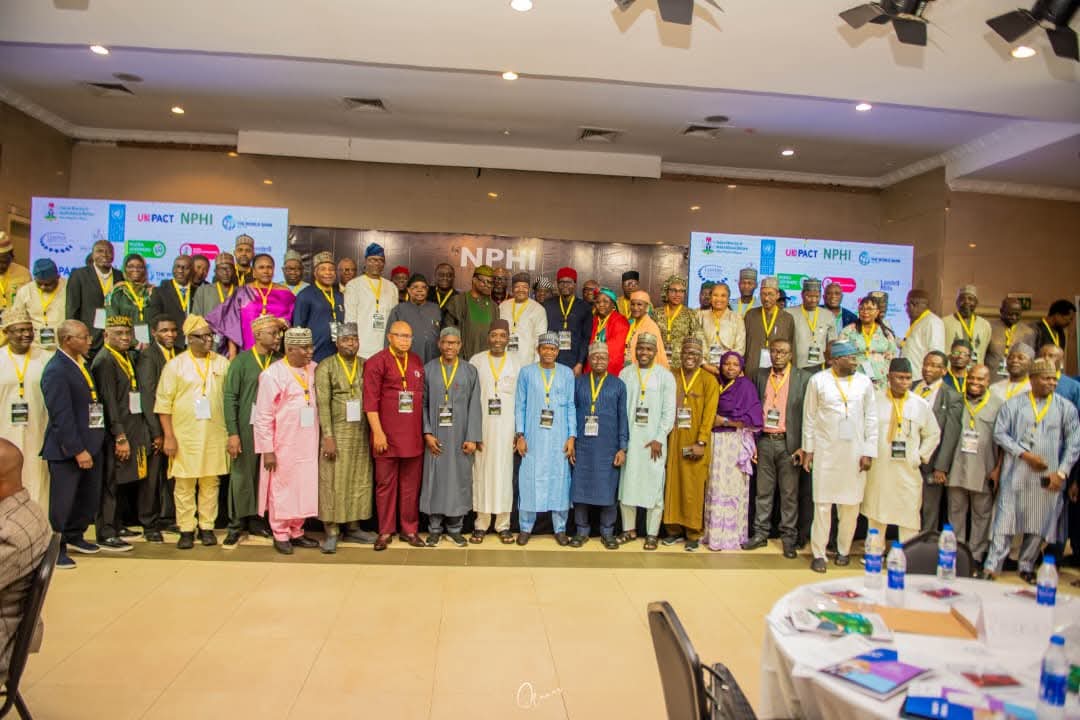
The Federal Government has reaffirmed its commitment to ensuring reliable, affordable, and sustainable energy supply across healthcare facilities in Nigeria through strategic partnerships with the private sector, development finance institutions, and investors.
Speaking at the National Healthcare Electrification Investor Matchmaking Forum held in Lagos, the Minister of State for Health and Social Welfare, Iziaq Adekunle Salako, described healthcare electrification as a critical enabler of quality healthcare delivery and improved health outcomes.
Read also: Say No to Vote Buying, Violence, Minister Urges Nigerians
AKTH Pleads for Electricity as Patients Die After Cut-off
The forum, convened under the Nigeria Power for Health Initiative, brought together stakeholders from the health, power, finance, climate, development, and private sectors to explore investment opportunities aimed at addressing energy poverty in Nigeria’s healthcare system.
Dr. Salako noted that unreliable electricity supply continues to undermine healthcare service delivery across the country, affecting critical services such as surgeries, vaccine preservation, diagnostic testing, oxygen delivery systems, emergency response operations, and digital health solutions.

According to him, electricity is not merely a utility but a fundamental requirement for effective healthcare delivery, adding that energy poverty remains a major obstacle to ongoing reforms and the Federal Government’s healthcare transformation agenda.
The Minister disclosed that the Nigeria Power for Health Initiative was established following the National Stakeholders’ Dialogue on Power in the Health Sector and subsequently approved by President Bola Ahmed Tinubu as the national platform for advancing healthcare electrification across the country.
He explained that the initiative introduces a new model that shifts healthcare electrification from traditional government-funded and donor-driven approaches to a sustainable, private-sector-led Energy-as-a-Service framework.
Under the arrangement, specialised Energy Service Providers will finance, deploy, operate, and maintain energy infrastructure while healthcare facilities focus on delivering quality medical services. The model is expected to improve accountability, ensure long-term sustainability, and create predictable revenue opportunities for investors.
Read also: Indonesian Scholar Advocates Waqf Model to Transform Almajiri Education
Dr. Salako noted that although the current phase focuses on federal tertiary health institutions, the initiative is designed to eventually support primary, secondary, and tertiary healthcare facilities in both the public and private sectors nationwide.
To strengthen investor confidence, he highlighted the governance framework established under the initiative, including an Inter-Ministerial Steering Committee, a 24-member Inter-Agency Technical Committee, Facility Energy Management Teams, and a dedicated Project Secretariat domiciled within the Federal Ministry of Health and Social Welfare.
The Minister further revealed that the initiative is pursuing a blended financing strategy that combines government support, development finance, climate finance, concessional funding, and private-sector investment to accelerate the deployment of sustainable energy solutions in healthcare facilities.
He commended the United Kingdom Partnership for Accelerating Climate Transition and Landell Mills International for supporting the development of the initiative’s framework and implementation structure.
Calling on commercial banks, development finance institutions, infrastructure funds, impact investors, climate financiers, and energy developers, Dr. Salako urged stakeholders to take advantage of emerging opportunities within the healthcare electrification space.
He emphasized that healthcare electrification offers significant benefits at the intersection of health security, climate resilience, economic growth, and sustainable infrastructure development, while reducing dependence on expensive diesel-powered generation.
Describing the Investor Matchmaking Forum as “the beginning of a marketplace where ideas become projects, projects become investments and investments become reliable electricity for healthcare facilities,” the Minister urged participants to move beyond discussions and embrace practical partnerships capable of delivering sustainable solutions at scale.
He reassured prospective investors of the Federal Government’s commitment to providing the policy support and enabling environment necessary for successful investments in the sector.
Read also: Speaker Commissions Soba Projects to Boost Education, Healthcare
National Electricity Grid Remains Prone to Collapse-Minister
“Together, we can build a future where every healthcare facility in Nigeria has access to reliable, affordable and sustainable energy. Together, we can strengthen our healthcare system and save lives,” he said.