


Jamilu Abubakar
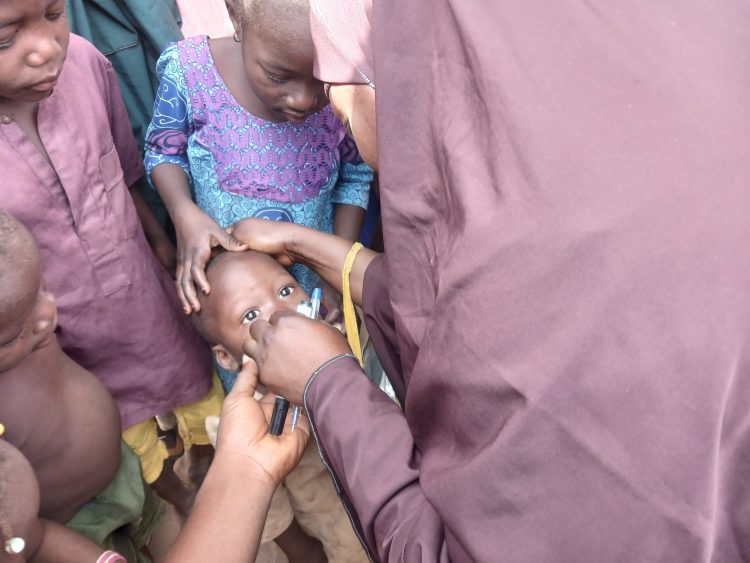
The Gombe State Government, in partnership with the UNICEF, has intensified efforts to eradicate polio with the commencement of its first immunisation campaign for 2026, targeting over 900,000 children across the state.
Read also: Kano Gov Hails Saudi Arabia for 52 Free Urological Surgeries
The Chief of UNICEF Bauchi Field Office, Dr. Nuzhat Rafique, disclosed this during an interactive session with journalists after an evening review meeting on the ongoing exercise in Gombe.
She described the campaign as rigorous and crucial to Nigeria’s ambition of becoming completely polio-free, noting that the state has shown strong commitment.
Dr. Rafique commended Governor Muhammadu Inuwa Yahaya and the state health team for their dedication, highlighting their active participation in daily review meetings to monitor progress and address challenges.

According to her, the five-day campaign began with flag-off activities at both state and local government levels and is already recording steady progress, especially in hard-to-reach communities.
She said vaccination teams are effectively covering all local government areas, with completion rates improving daily.
The UNICEF official also highlighted the role of traditional rulers and emirs, noting that many flag-off ceremonies were held in their palaces, thereby strengthening community participation and ownership.
Read also: 484 Kano Wards to Get Fully Equipped Rural Ambulances
She disclosed that UNICEF and its partners have supplied over 965,000 doses of oral polio vaccines, which have been distributed through established primary healthcare systems.
Dr. Rafique added that the campaign is targeting about 900,000 children, including over 50,000 “zero-dose” children who have never received any form of immunisation.
She explained that field observations and identified gaps are being addressed to improve the quality of the exercise, stressing that high standards are maintained in every campaign to enhance coverage.
Also speaking, the Executive Secretary of the Gombe State Primary Health Care Development Agency, Dr. Abdulrahman Shuaibu, said extensive advocacy and sensitisation were carried out at state, local government, and ward levels ahead of the campaign.
He noted that the engagement involved traditional and religious leaders, media organisations, women and youth groups to boost acceptance and reduce resistance.
Dr. Shuaibu, however, acknowledged pockets of non-compliance in some communities, adding that authorities are addressing the issue through sustained sensitisation and collaboration with trusted community leaders.
He reiterated that vaccines are safe, free, and effective, noting that acceptance has improved over the years, contributing to better routine immunisation coverage.
Read also: Kano Govt Pledges Support for NIPR, WPRF 2026
On the composition of vaccination teams, he explained that members are selected from within their communities to ensure trust and accessibility, supported by regular training and daily refresher sessions.
He expressed optimism that the campaign would achieve over 95 per cent coverage by the end of the exercise.