


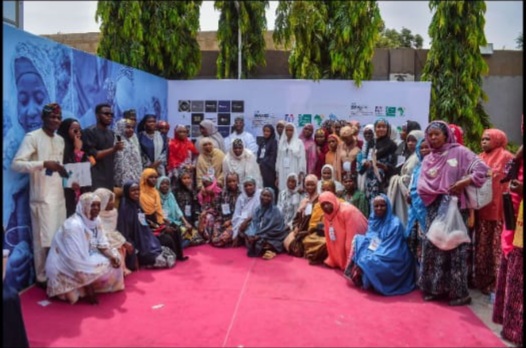
The Bridge Connect Africa Initiative (BCAI) has organized the second edition of its capstone event under the Women Against Violence Empowered Through Sustainability (WAVES) II project, bringing together stakeholders and beneficiaries to showcase impact-driven initiatives.
The WAVES project is designed to tackle gender-based violence (GBV) through a holistic approach that integrates economic empowerment, climate-smart agriculture, agribusiness development, and awareness on GBV prevention.
Read also: UNICEF Trains 600 Women Waste to Wealth in Jigawa State
Targeting vulnerable women and girls, the initiative provides training in financial literacy, sustainable agriculture, and entrepreneurship, while also strengthening access to critical support networks.
As part of the intervention, about 50 women and girls in Kano State have benefited from hands-on training and support aimed at enhancing their economic resilience and enabling them to build sustainable livelihoods.
A key component of the project is the promotion of circular economy practices, which empower participants to convert agricultural waste into valuable and productive resources.
According to the organizers, the showcase offered beneficiaries a platform to present their products, agribusiness ventures, and entrepreneurial achievements, while also sharing inspiring stories of resilience and transformation.
In her welcome address, the Commissioner Kano State Ministry of Women Affairs, Children and People with Special Needs, Hajiya Amina Abdullahi, highlighted key government interventions aimed at addressing gender-based violence (GBV) and improving women’s economic independence.
She disclosed that the state government is currently supporting 5,200 women with ₦50,000 each on a monthly basis to strengthen their businesses and reduce economic dependence in marital homes, where vulnerability to GBV is often higher.
Read also: CGS BUK, Commemorates International Multilateralism Day
Amina further revealed that the government has also supported 400 GBV survivors with ₦50,000 each to enable them start businesses of their choice, helping them overcome isolation, stigma, and financial hardship.
According to her, the initiatives reflect the commitment of the state government under the Kano First Agenda, stressing the need for stronger collaboration with NGOs, philanthropists, and partners such as Bridge Connect to effectively tackle GBV and promote women’s economic empowerment.
The commissioner emphasized that GBV remains a violation of fundamental human rights, noting that while both men and women can be victims, women constitute the majority of those affected.
She added that GBV limits victims’ ability to contribute meaningfully to their livelihoods and to societal development.
“Empowerment for women is not just for women; it is empowerment for humanity,” she said.
In a keynote address tagged ” Economic Empowerment as a Strategy for Preventing Gender-Based Violence: Lessons from Kano.”the Director of the Centre for Gender Studies, Bayero University Kano (BUK), Ambassador Safiya Nuhu, PhD, noted that GBV is often driven by multiple socio-economic factors.
She revealed that recent research conducted by her organization showed that economic hardship, including food deprivation and spousal abandonment, significantly contributes to the rising cases of GBV in communities.
Read also: Misconduct: Kano Judicial Commission Sanctions 3 Magistrates
The director cited findings from a focus group discussion where a woman recounted being abandoned by her husband during childbirth without any form of support or preparation.
The event featured a rich lineup of activities, including spoken word performances, panel discussions, cultural dance presentations, and exhibition booths highlighting participants’ innovations.