


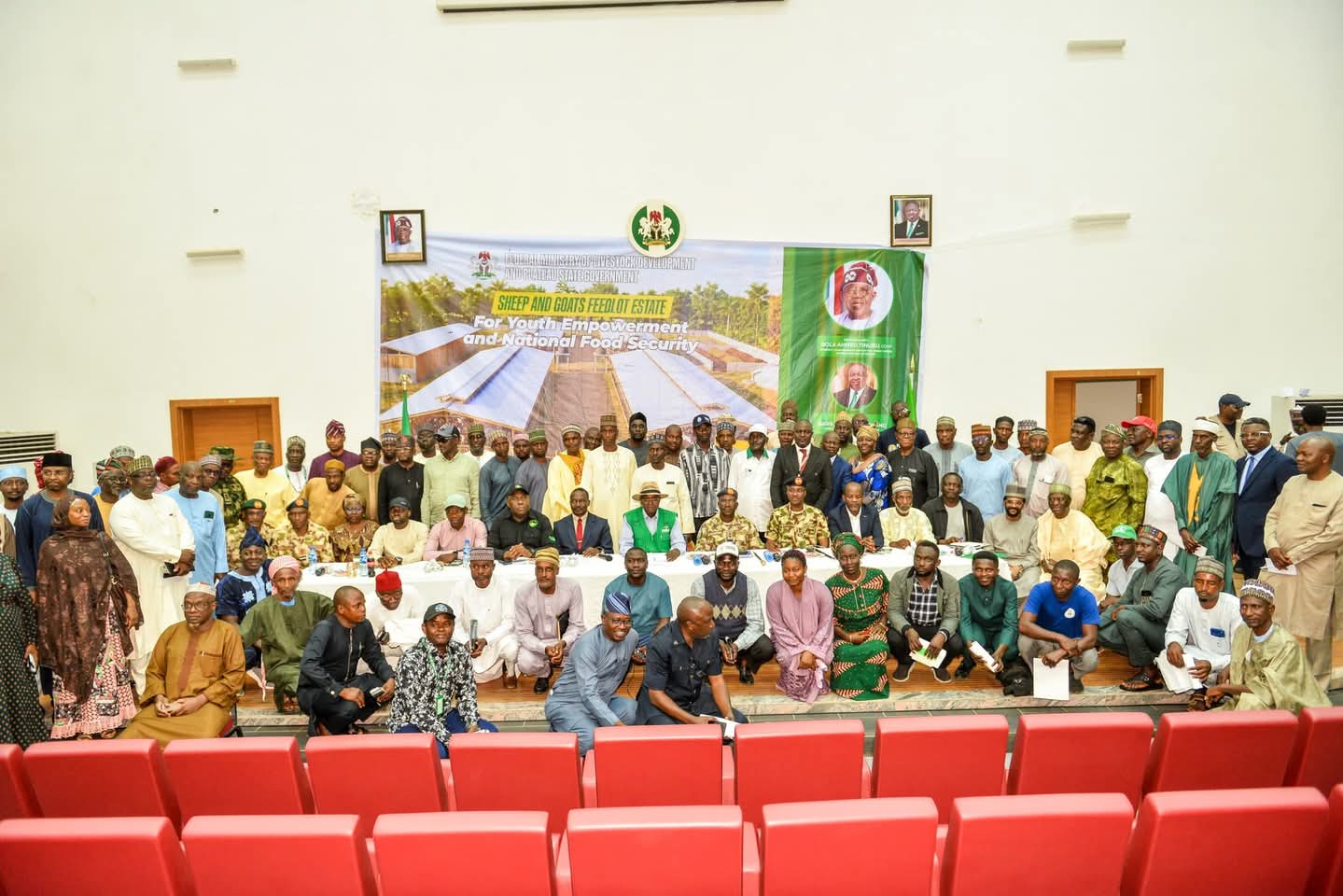
The Federal Government has reaffirmed its commitment to transforming Plateau State into a leading centre for livestock production, research, and peacebuilding through strategic investments in ranching, dairy production, feedlot development, grazing reserve rehabilitation, and livestock value-chain expansion.
Speaking at a Livestock Stakeholders Meeting in Jos, the Minister of Livestock Development, Idi Mukhtar Maiha, described Plateau State as a historic hub of livestock innovation and veterinary excellence, urging stakeholders to leverage its unique advantages to drive economic growth, job creation, food security, and sustainable peace.
Read also: Indonesian Scholar Advocates Waqf Model to Transform Almajiri Education
The Minister also extended condolences to the government and people of Plateau State over recent security challenges and loss of lives, emphasizing the need to promote economic activities capable of uniting communities and fostering shared prosperity.
According to him, Plateau possesses significant comparative advantages, including the presence of the National Veterinary Research Institute and the Federal College of Animal Health and Production Technology, institutions that have positioned the state as Nigeria’s livestock knowledge capital for more than a century.
Maiha disclosed that the Federal Ministry of Livestock Development is collaborating with the Defence Headquarters to advance the National Ranching Policy and facilitate the establishment of a modern ranch on approximately 30,000 hectares within the Wase Grazing Reserve.

He explained that the initiative is expected to improve livestock productivity, reduce conflicts associated with uncontrolled grazing, and create sustainable livelihoods for thousands of residents.
The Minister further announced plans to promote feedlot development across the state, noting that Plateau has the potential to become a major livestock hub for cattle, sheep, goat, and pig fattening enterprises.
Read also: Halt Registration Fees Before Businesses Suffer-Phone Traders to FG
He revealed that efforts are also underway to modernise livestock infrastructure, including the expansion of abattoir facilities with the capacity to process up to 500 cattle and 500 pigs daily.
Highlighting investment opportunities within the sector, Maiha identified commercial pasture cultivation, dairy production, homestead dairy enterprises, sheep and goat fattening, piggery development, and livestock waste management as high-potential areas capable of generating employment, particularly for women and young people.
He stressed that livestock development should be viewed as a business enterprise with the capacity to drive rural transformation, reduce poverty, stimulate investment, and strengthen social cohesion.
“Livestock is central to national food security, job creation, wealth creation and social stability. The future of livestock in Plateau should be organised, scientific, inclusive, peaceful and profitable,” he stated.
The Minister called on the Plateau State Government, local government councils, development partners, financial institutions, private investors, traditional rulers, and community leaders to work together in creating an enabling environment for sustainable livestock development.
Read also: ABU SPESSE-CE Graduates 420 in Sustainability Training
He urged stakeholders to seize the opportunity to reposition Plateau as Nigeria’s foremost livestock enterprise hub capable of feeding the nation, empowering women and youths, attracting investment, and promoting peaceful coexistence among communities.
The Federal Ministry of Livestock Development is mandated to enhance livestock productivity, strengthen veterinary services, support ranch development, facilitate private-sector investment, ensure food security, and advance sustainable livestock systems across Nigeria.