


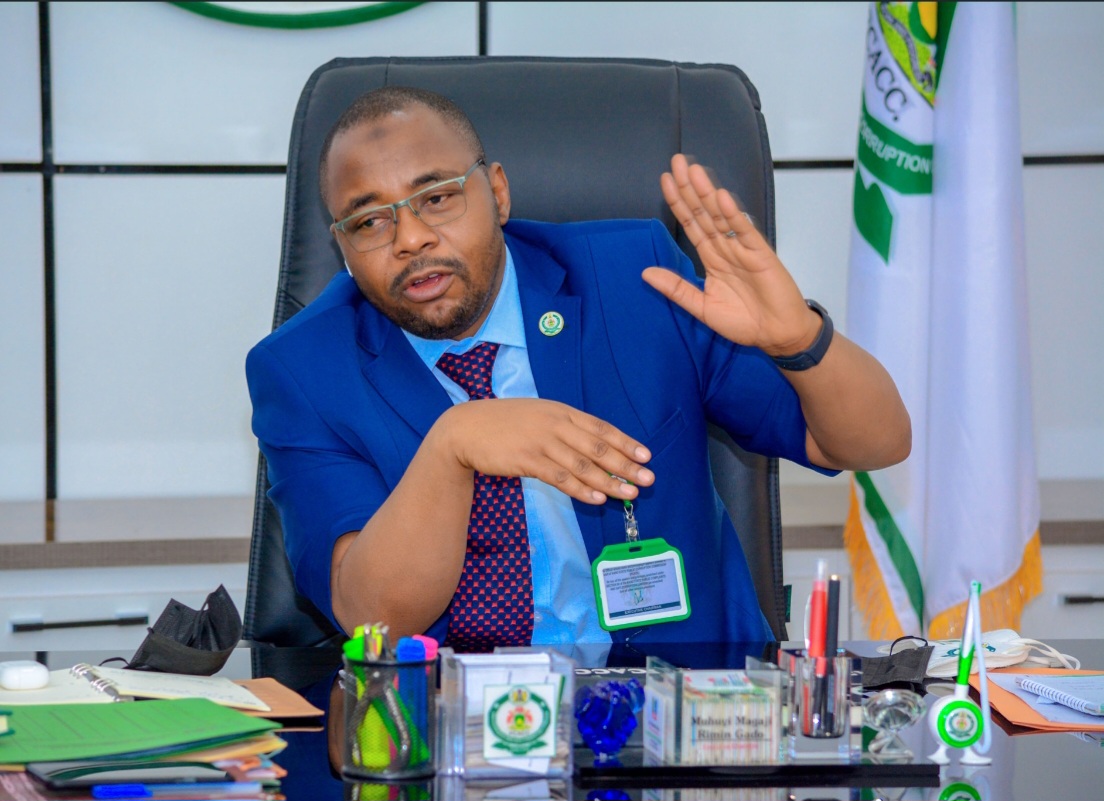
Kano State’s renewed campaign against drug abuse and illicit trafficking has recorded more than 380 arrests and over 230 convictions within two months of the inauguration of a multi-agency task force established to confront the growing challenges of substance abuse, street thuggery and related crimes.
The Chairman of the Kano State Multi-Agency Task Force on Drug Abuse and Illicit Trafficking, Muhuyi Magaji Rimin Gado, disclosed this on Tuesday, September 22, 2026, during a press briefing on the activities of the committee since its inauguration on July 22.
Read also: Court Sentences TV Presenter Sarah Khalifa, 10 Others to Death
According to him, the task force has combined enforcement with prevention, sensitisation and rehabilitation in its effort to achieve what it described as a drug-free Kano.
Crackdown on drug joints
Since its inauguration, the task force has conducted joint dislodgment and enforcement operations targeting locations identified as drug joints and criminal hideouts.
Among the areas targeted are Race Course, Filin Idi, Filin Mahaha, Tashar Rami, Kawo and Tashar Rimi, as well as other locations within the metropolis and beyond.
Rimin Gado said the operations resulted in the arrest of more than 380 suspects and the recovery of assorted substances, including Cannabis Sativa, Exol-5, Diazepam, Pentazocine, Tramadol, Pregabalin and other substances identified by the task force as being used illicitly.
The operations also led to the recovery of locally made weapons, including knives, cutlasses, daggers and clubs, which the task force said were seized from suspected drug dealers and street gangs.
870,000 Pregabalin capsules seized
One of the most significant seizures highlighted during the briefing involved about 870,000 Pregabalin capsules reportedly recovered from a pharmaceutical company in Kano.
The task force said the drugs were suspected to have been diverted from legitimate pharmaceutical channels for illicit use.
Rimin Gado expressed concern over the alleged diversion of controlled medicines from legitimate supply chains, warning pharmaceutical companies, pharmacy managers, superintendent pharmacists and other personnel to strengthen their internal controls.
He said the task force would investigate any individual or organisation found culpable, stressing that no one would be spared if evidence established wrongdoing.
Children rescued from substance exposure
Beyond arrests and seizures, the task force said its operations had uncovered cases involving the exposure of children to intoxicating substances.
Two dealers, Kabiru Isa, popularly known as Mada, and Usman Hamisu, known as Mani, were convicted over what the task force described as the supply of rubber solution and other intoxicants to 43 underage children engaged in street scavenging.
The children have since undergone medical examinations and are receiving counselling and treatment, according to the task force.
Some have also been reunited with their families, while efforts continue to trace the relatives of those whose families have not yet been identified.
The case has added a child-protection dimension to the state’s campaign against substance abuse, particularly the vulnerability of children living or working on the streets.
Former Rogo chairman faces court case
The task force also highlighted a case involving the alleged administration of Pentazocine to a 63-year-old woman.
According to Rimin Gado, the investigation followed a complaint alleging that the former Chairman of Rogo Local Government Area, Yahuza Musa, administered the controlled substance to the woman.
The task force said the allegation was further corroborated by a 24-year-old man who claimed to have spent more than ₦10 million and given a plot of land to obtain the same injection from the former council chairman.
The former chairman has been charged before a competent court, while the case remains ongoing.
The allegations are subject to determination by the court.
Read also: South Korea’s Lee Gains Public Backing After 15% US Tariff Deal
War against ‘Daba’ and phone snatching
The task force has also expanded its operations beyond drug trafficking to activities it says are associated with substance abuse, including street thuggery, locally known as “Daba.”
Rimin Gado said several alleged gang members had been arrested and convicted, including individuals identified as Abdullahi Ahmad, popularly known as Horror; Abubakar Sada, known as Daburi; Abdullahi Sani, known as Sarki Ale; and Umar Aliyu.
He said some suspected gang members had used social media platforms to promote or defend violent behaviour, adding that the task force intended to use the convictions as a deterrent.
In another operation, the task force said it arrested a member of a suspected phone-snatching syndicate known as “Yan Liya” and secured the forfeiture of a tricycle allegedly used in the commission of the offences.
The task force said the suspect confessed to stealing phones using commercial tricycles and alleged that some tricycle owners were aware of the criminal activities of their riders.
Rimin Gado warned owners who knowingly make their vehicles available for criminal activities that they could risk losing the vehicles.
From enforcement to rehabilitation
While enforcement remains a major component of the campaign, the task force says it is also placing increasing emphasis on prevention, treatment and rehabilitation.
It has conducted sensitisation programmes in communities, schools, markets and religious institutions, seeking to discourage young people from experimenting with illicit substances.
About 125 individuals have so far been referred to the Kano Reformatory Institute in Kiru for rehabilitation, according to the chairman.
But increasing demand for rehabilitation services has reportedly placed pressure on the existing facility.
New rehabilitation centre in Tofa
The growing demand has prompted the Kano State Government to provide an additional facility in Tofa Local Government Area to serve as an extension of the rehabilitation programme.
Rimin Gado said the facility would be equipped and put into use immediately to accommodate people seeking treatment and rehabilitation.
The task force’s longer-term target is considerably larger.
It plans to take 10,000 young people off the streets, provide rehabilitation and equip them with vocational skills before reintegrating them into society.
The chairman said the task force was engaging industrial stakeholders on employment, skills acquisition and other productive opportunities for rehabilitated youths.
The objective, he said, is to ensure that those who complete rehabilitation can return to their communities with skills and opportunities that reduce the risk of returning to substance abuse and criminal activities.
A multi-agency approach
The campaign brings together several government and security agencies, including the National Drug Law Enforcement Agency, Nigeria Police Force, Department of State Services, Nigeria Security and Civil Defence Corps, Nigeria Customs Service, Nigerian Correctional Service, Kano State Hisbah Board, KAROTA, KOSSAP and vigilante groups.
According to the task force chairman, bringing the agencies together has improved intelligence sharing and coordination of operations.
He also acknowledged the contribution of civil society organisations, non-governmental organisations, traditional and religious institutions and the media to the campaign.
For Kano, the challenge now extends beyond the number of arrests or convictions.
Read also: Minister of Education Commends Cordenia Technology Foundation
The task force’s stated 10,000-youth rehabilitation target places equal emphasis on what happens after enforcement—whether young people affected by substance abuse can receive treatment, acquire skills and find legitimate opportunities to rebuild their lives.
As the campaign enters its next phase, the task force says it will continue combining enforcement with prevention, rehabilitation and reintegration in its drive to reduce drug abuse and associated criminal activities across the state.