


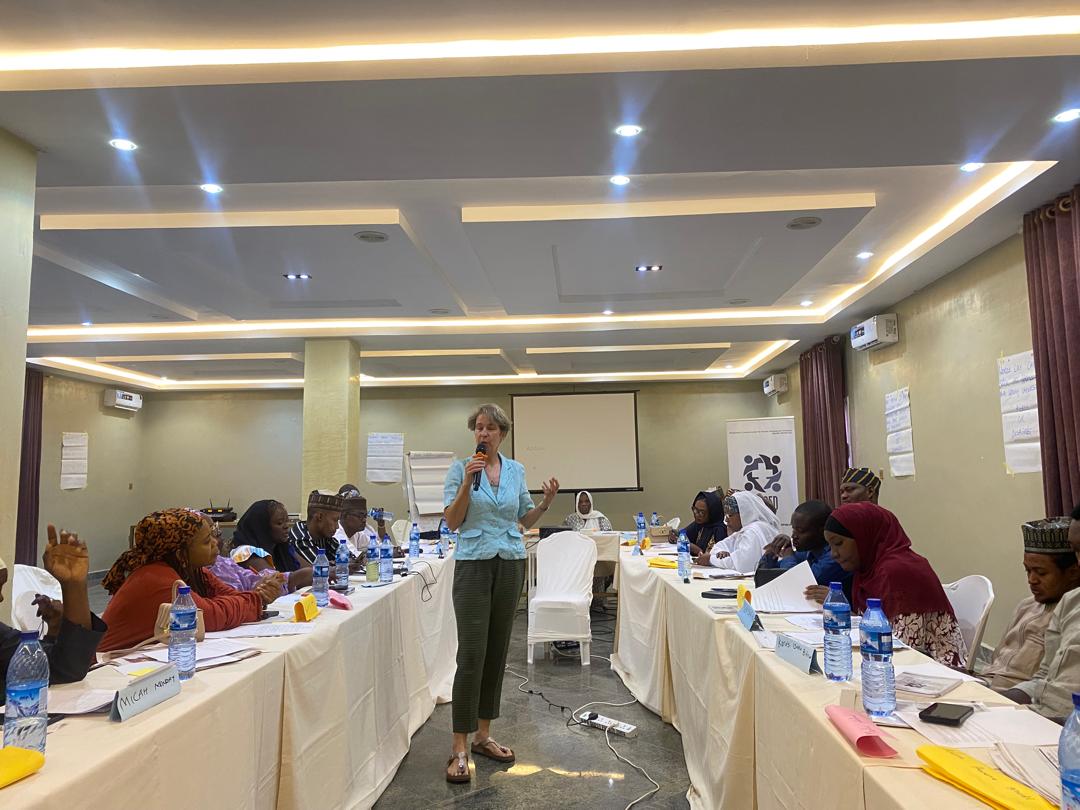
A non-governmental organisation, Participatory Communication for Gender Development Initiative PAGED Initiative, has organised a media workshop for selected journalists from Kano, Kaduna, and Borno States under its Media Advocacy Project for Married Adolescents, supported by the Malala Fund.
The project is a participatory advocacy initiative aimed at expanding access to 12 years of inclusive education and strengthening formal re-entry pathways for married adolescent girls and young mothers across the three states.
Read also: Kano Moves to Fill Vacancies with Six Commissioner Nominees
PAGED Initiative Trains Journalists on Gender-Sensitive Reporting
Speaking to journalists, the Programme Director of PAGED Initiative, Ummi Bukar, said many girls in Northern Nigeria drop out of school due to early marriage, pregnancy, and economic pressures, limiting their life opportunities and exposing them to risks such as poverty and abuse.
She explained that the project is rooted in child-rights frameworks that guarantee access to education and protection from harmful practices. According to her, it empowers married adolescents and young mothers to lead storytelling and advocacy efforts that promote inclusive policies and social acceptance of girls’ education.
Bukar emphasised the critical role of the media in achieving these goals, noting that ethical, gender-sensitive reporting can help reshape narratives, amplify grassroots voices, and generate public demand for policy reforms that support girls’ return to school.
KNSG to Showcase Plans at 2025 Nigeria Education Forum Summit
She outlined key project approaches, including capacity building for media professionals, youth-led storytelling through film, radio, and digital platforms, community dialogues to challenge stigma, participatory research, and policy engagements such as town hall meetings.
Read also: Kebbi Targets Better Roads With New Township Projects
In a presentation titled “Understanding the Issue,” Associate Professor Auwal Halilu of the Department of Adult and Community Development, who also serves as Co-Chair of the Kano State Accountability Forum on Education (K-SAFE), highlighted the broader impact of early marriage and motherhood beyond economic challenges.
He noted that many adolescent girls experience loss of childhood, limited personal freedom, and pressure to assume adult responsibilities prematurely.
Some, he said, express regret over leaving school early, while others feel discouraged, believing education is no longer an option.
Auwal identified key barriers to returning to school, including domestic responsibilities, financial constraints, social expectations, and the lack of flexible learning opportunities.
“These obstacles create a cycle where girls remain out of school even when they are motivated to continue their education,” he said.
The workshop featured interactive sessions on case studies, story development, and ethical interview techniques, led by media expert Femke Van Zeijl.
Read also: ACReSAL: Kebbi Moves to Tackle Erosion in Vulnerable Communities
Participants were also guided on gender-sensitive reporting and newspaper review techniques.
The training highlights ongoing efforts to equip journalists with the skills needed to promote inclusive education and advocate for the rights of married adolescent girls and young mothers in Northern Nigeria.