


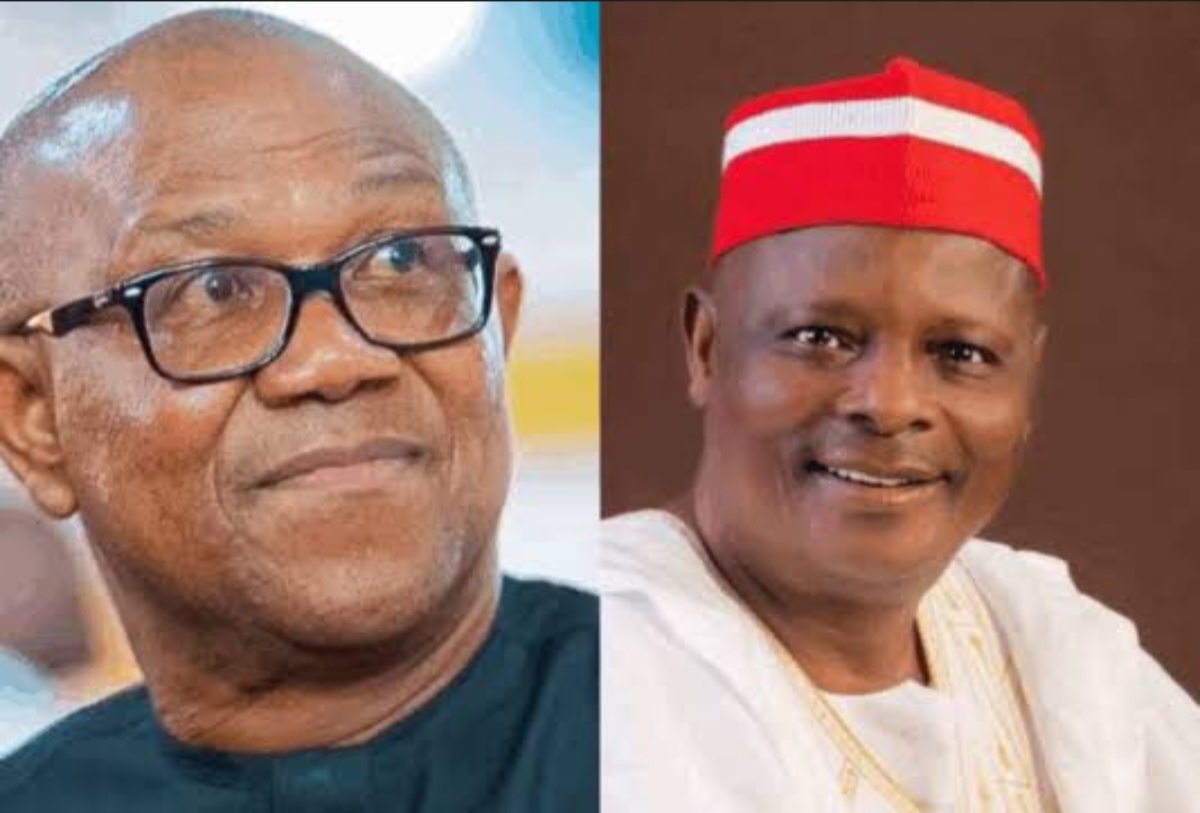
The Kwankwasiyya Movement has defended ongoing discussions surrounding a possible political alliance between its national leader, Rabiu Musa Kwankwaso, and Peter Obi, describing recent criticisms of the former Kano State governor as politically motivated and driven by fear of a new national political realignment.
In a statement signed by the spokesperson of the movement, Habibu Sale Mohammed, the group said public reactions to reports of strategic cooperation between the two political leaders under the platform of the Nigeria Democratic Congress (NDC) had largely been positive across different regions and political divides.
Read also: Over 1,000 Benefit as NMA Holds Medical Outreach in Bunkure
The movement, however, expressed concern over what it described as “selective attacks and misleading narratives” allegedly targeted at Senator Kwankwaso by sections of the Northern political establishment.
According to the statement, what appears to unsettle certain political interests is not merely the possibility of cooperation between the two leaders, but the broader national implications such an alliance could produce ahead of future elections.
The group noted that Senator Kwankwaso commands a strong grassroots political structure across Northern Nigeria, particularly in Kano and the Northwest, while Peter Obi enjoys significant support among youths, urban voters and large sections of Southern Nigeria.
It argued that a political understanding between both leaders could create a new political equation capable of transcending ethnic, religious and regional divisions in the country’s opposition politics.
Read also: Kebbi Targets Better Roads With New Township Projects
“For the first time in recent political history, Nigerians are witnessing the realistic possibility of a broad-based political understanding capable of bridging the long-standing regional divide in opposition politics,” the statement read.
The movement accused some commentators of unfairly portraying Kwankwaso as ambitious or disruptive while praising similar political engagements by other politicians as strategic and patriotic.
It described the criticism as a double standard aimed at undermining the growing acceptance of the former presidential candidate.
The statement further maintained that Senator Kwankwaso’s political relevance was built on years of public service, grassroots mobilisation and support from ordinary Nigerians rather than influence from federal power structures or media support.
The group also stressed that Nigerians were increasingly demanding issue-based politics, national inclusion and credible leadership capable of addressing the country’s economic and security challenges.
Read also: ACReSAL: Kebbi Moves to Tackle Erosion in Vulnerable Communities
It therefore urged political stakeholders and commentators to embrace fairness, healthy political competition and coalition-building in the interest of national unity and democratic development.
The movement reaffirmed its commitment to what it described as a democratic future built on unity, mutual respect and constructive national engagement.