
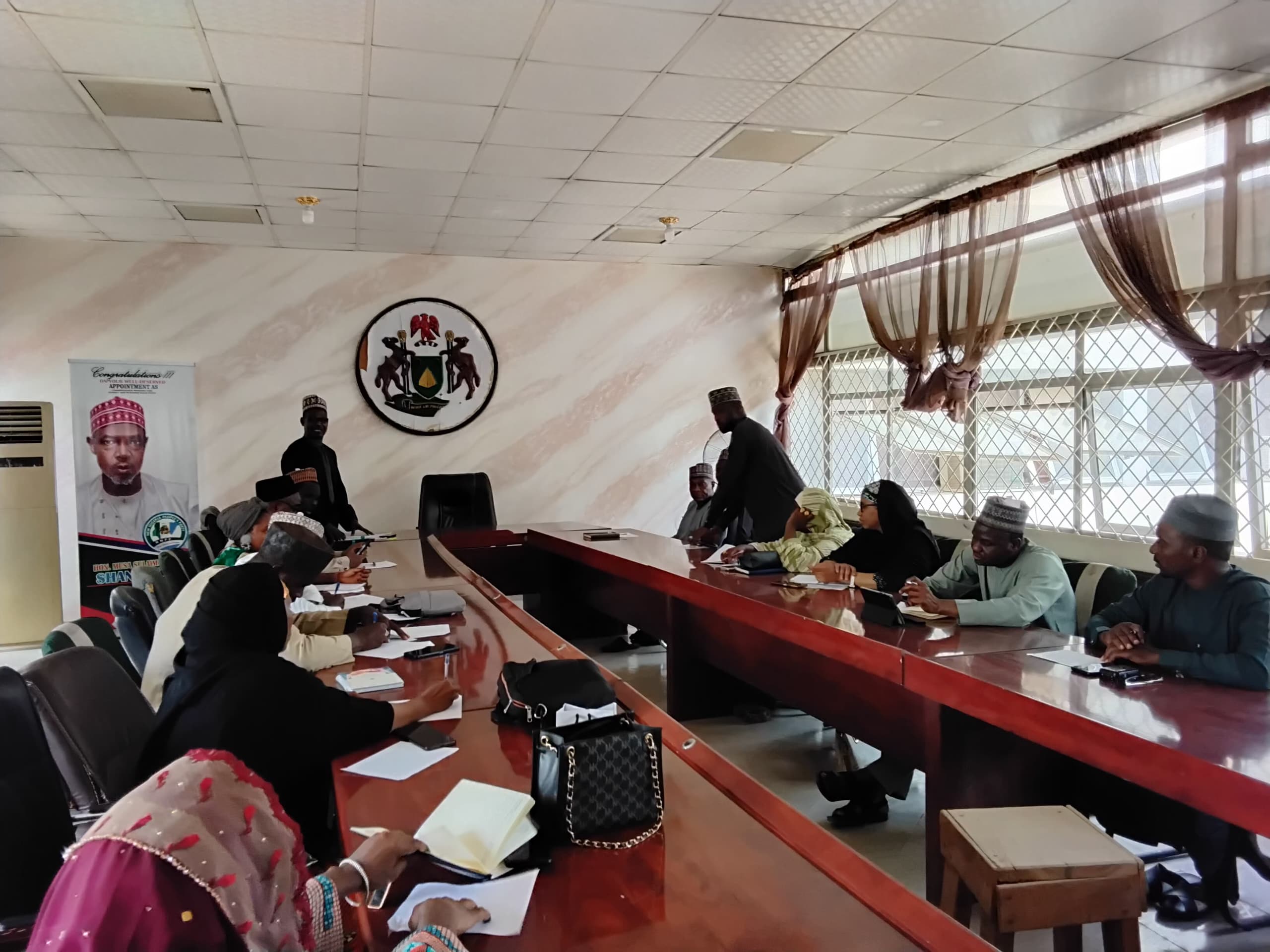
Stakeholders in Kano State have converged for a high-level roundtable on Maternal, Newborn and Child Health (MNCH) and Family Planning (FP), organised by the Ministry of Planning and Budget (MoPB) in collaboration with KanSLAM, with a strong focus on improving coordination, funding efficiency, and service delivery in the health sector.
The meeting, held at the conference hall of the Ministry of Planning and Budget in Kano, recorded a large turnout of government officials, members of Kanslam, civil society organisations, and other key actors in the health sector.
Read also: Kano Moves to Improve Tracking of Maternal, Newborn Deaths
Speaking at the event, the Co-Chair of KanSLAM, Maimuna Yakubu Muhd, emphasised that coordination remains central to achieving sustainable progress in MNCH and family planning interventions.
She called for stronger synergy among government ministries, development partners, civil society organisations, media actors, and community structures to ensure effective implementation of health programmes.
KanSLAM Urges Kano Govt to Boost Maternal, Child Health Funding
In his remarks, the Secretary of KanSLAM, Dr. Nura Haladu, said the roundtable was convened to foster dialogue among critical ministries including Health, Finance, and Planning and Budget, alongside civil society and media stakeholders.
He commended the state government for its continued investment in maternal and child health as well as family planning programmes, but stressed that funding levels remain insufficient given Kano’s large population.
Dr. Nura Haladu added that the meeting was designed to identify challenges affecting budget allocations and fund releases for MNCH and family planning programmes, while also developing advocacy strategies for civil society organisations and the media.
“Looking at the population and the amount allocated, the money is still inadequate when broken down to the number of women within reproductive age,” he said.
Declaring the roundtable open, the Acting Permanent Secretary of the Ministry of Planning and Budget, Abdulhamid Ajumawa, stressed that the administration of Governor Abba Kabir Yusuf has surpassed the Abuja Declaration benchmark on health financing, but noted that available resources remain inadequate to meet the sector’s growing needs.
He explained that while the government remains committed to prioritising healthcare, fiscal limitations require additional resource mobilisation beyond state allocations.
Read also: Indonesian Scholar Advocates Waqf Model to Transform Almajiri Education
“We know the resources are inadequate. If you put in the entire budget, the health sector will still consume that. We need to mobilise resources both within and outside the state to finance these critical health issues,” he said.
Ajumawa disclosed that the 2026 budget has been completed, passed by the State House of Assembly, and assented to by the governor, with implementation directed to commence in January. He added that ministries, departments, and agencies are now expected to ensure proper utilisation of approved allocations, particularly for maternal and child health programmes.
KanSLAM Urges Timely Release, Effective Use of Health Funds at Kano 2026 Budget Hearing
He also called on civil society organisations to intensify advocacy for timely release of approved funds from the Ministry of Finance and the Office of the Accountant General.
Ajumawa further highlighted the need to address malnutrition,saying that the World bank supported nutrition project would soon commence, urging kanSLAM to support advocacy and awareness efforts around the program.
The state Family Planning Coordinator, Dr. Aisha Barka, revealed that over ₦1 billion had been allocated for family planning and reproductive health programmes in the 2026 budget. She explained that the funds include ₦500 million for commodity procurement under childbirth programmes, ₦500 million for reproductive health operations, and ₦20 million for adolescent health interventions.
She further noted that an ₦80 million request for commodity procurement had already been approved but was yet to be released, while another request for ₦20 million for adolescent health programmes was still awaiting executive approval.
According to her, three memos have been submitted so far, with varying stages of approval and release delays.
In her remarks, the state MNCH coordinator, Mansura Yahaya Haruna, expressed appreciation for the engagement and assured participants that the issues raised would be addressed to improve coordination and strengthen service delivery across the state health system.
Read also: Speaker Commissions Soba Projects to Boost Education, Healthcare
Stakeholders at the meeting also identified weak coordination among health institutions and development partners as a major barrier affecting performance tracking and effective implementation of health interventions
Participants collectively called for the establishment of stronger coordination platforms to properly document contributions from development partners, civil society organisations, and donor-supported interventions, with the aim of improving accountability, transparency, and performance monitoring in the health sector.