

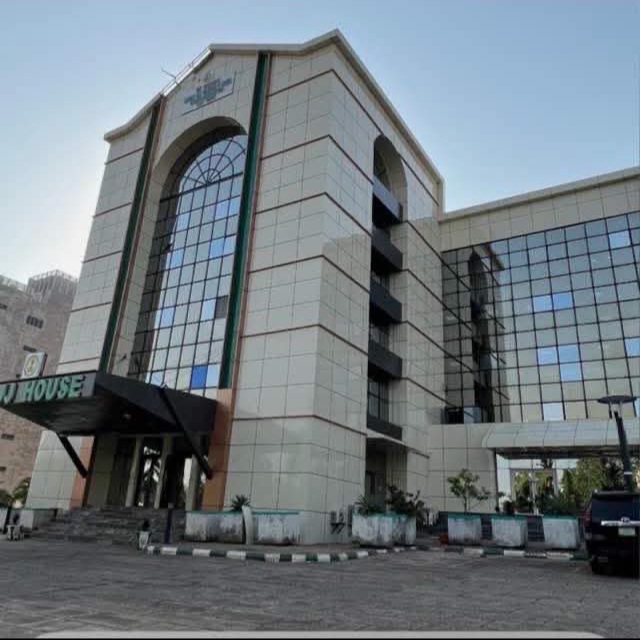
As the National Hajj Commission of Nigeria (NAHCON) marks its twentieth anniversary on October 12, 2026, the milestone offers more than a moment of celebration. It presents a rare opportunity for sober reflection on the Commission’s journey and, more importantly, on the vast but largely untapped potential of Nigeria’s Hajj and Umrah sector.
NAHCON was established in 2006 by an Act of the National Assembly to oversee, regulate, and coordinate Hajj and Umrah activities in Nigeria.
Read also: U.S. Advances New Consulate Project at Eko Atlantic City
Its creation followed decades of administrative disorder, most notably Nigeria’s recurrent inability to airlift pilgrims efficiently.
When the Commission formally commenced operations in 2007, it inherited a sector riddled with corruption, weak service delivery, and systemic inefficiencies.
Over the past two decades, however, NAHCON has played a transformative role. The first and second Boards, under the leadership of Mal. Muhammad Musa Bello, restored stability and accountability to the apex regulatory body.
The third Board, led by Barrister Abdullahi Mukhtar Muhammad, deepened administrative and fiscal reforms, repositioning NAHCON from a dependent agency into a self-reliant institution respected both within and beyond Nigeria.
The fourth Board, under Barrister Zikrullah Kunle Hassan, operationalized key legacy initiatives such as the Hajj Savings Scheme (HSS) and the Hajj Institute of Nigeria (HIN)—interventions designed to fundamentally reposition Nigeria’s Hajj and Umrah ecosystem.
These initiatives were sustained and expanded by the fifth Board, led initially by Mal. Jalal Arabi and later Professor Abdullahi Usman, including the expansion of the HSS banking framework from one to four participating Islamic banks.
Unlocking Nigeria’s Halal Economy Potential
With a now-stabilized Hajj and Umrah sector, Nigeria stands at the threshold of a historic economic opportunity driven by one of the world’s largest Muslim populations. Nigeria is currently the eighth-largest domestic halal economy market globally, yet captures only a small fraction of the value generated within the global halal economy.
Global halal economy spending was estimated at $107 billion in 2022 and is projected to reach $180 billion by 2027. Despite this growth, Nigeria accounts for only 5.7% of Africa’s $4.2 billion halal exports to OIC countries.
Recognizing this gap, the Federal Government is developing a strategy to position Nigeria as a key halal economy player, with a projected $1.5 billion GDP contribution by 2027.
One of NAHCON’s most promising interventions is the Hajj Savings Scheme (HSS). Introduced in 2020, the scheme recorded a turnover of ₦10.9 billion in 2022, rising to ₦17.7 billion by 2025.
In December 2025, NAHCON signed a Memorandum of Understanding with Alternative Bank, Jaiz Bank, Lotus Bank, and TAJ Bank, expanding participation and introducing competition into the scheme.
This expansion, however, should be viewed as an interim step toward a fully developed national Hajj savings and investment system. With proper implementation, Nigeria can replicate the success of Malaysia’s Tabung Haji, established in 1963 and now a multi-billion-dollar Islamic investment institution with 17 subsidiaries spanning finance, plantations, telecommunications, and real estate. Notably, this success was achieved with a Muslim population of fewer than 30 million.
Nigeria’s projected Muslim population of about 120 million presents even greater possibilities. If just 1% of Nigerian Muslims save ₦10,000 monthly, annual deposits could reach ₦144 billion, with total funds exceeding ₦1 trillion within seven years.
Strategic investment of these funds could significantly subsidize Hajj costs, finance infrastructure, and create thousands of jobs.
Recalibrating NAHCON’s Strategic Compass
Read also: Don Calls for Innovation-Driven Science Education in Nigeria
These projections will only materialize with a deliberate recalibration of NAHCON’s focus—from the annual management of Hajj operations and its attendant political distractions to long-term strategic planning.
To fully unlock the potential of Nigeria’s Hajj and Umrah sector over the next decade, urgent action is required in five critical areas:
First, the development of a comprehensive National Hajj and Umrah Policy—a 10-year strategic framework positioning the sector as a driver of GDP growth, foreign exchange earnings, halal economy development, Islamic finance innovation, and dignified employment.
Second, a clear separation of roles, with NAHCON consolidating its regulatory mandate while operational responsibilities are transferred to a strengthened, professional, and well-regulated private sector. Government’s role should be regulation, not business operation.
Third, sector professionalization through standardized policies and mandatory capacity development. Leveraging the Hajj Institute of Nigeria, NAHCON should introduce credential-based participation, enforce minimum service standards, and integrate technology including AI-driven pilgrim management, health monitoring, and service delivery systems—aligned with Saudi Arabia’s Vision 2030.
Fourth, the transformation of the Hajj Savings Scheme into Nigeria’s largest Islamic investment vehicle. The Special Purpose Vehicle (SPV) framework proposed by the Alhaji Bashir Bugaje-led Technical Committee on HSS deserves renewed attention.
Fifth, the strengthening of regional and global partnerships—particularly with Saudi authorities and leading Hajj-managing countries while positioning Nigeria as a leader in AfCFTA’s halal economy agenda.
The 2022 Letter of Intent between NAHCON, Indonesia’s BPKH, and the Islamic Sharia and Economic Festival provides a strong foundation for such collaboration.
A Vision for 2036
By 2030, Nigeria should aim for:
100% digital integration of all Hajj and Umrah operations
Enrollment of 5 million Nigerians into the HSS with ₦1 trillion under management
Creation of 50,000 direct jobs within the Hajj and Umrah ecosystem
Ranking among the top five halal exporters to OIC countries
By 2036, Nigeria should target $5 billion in halal export revenues, achieve fully self-financing Hajj operations with zero government subsidies, and emerge as a regional training hub for Hajj and Umrah in West and Central Africa.
A Call to Action
NAHCON’s twentieth anniversary offers a historic opportunity to elevate the Commission from a regulatory body into a strategic economic institution. The Federal Government should consider convening a Presidential Summit on Hajj, Umrah, and the Halal Economy, establishing a Presidential Steering Committee on a National Hajj and Umrah Policy, securing ₦50 billion seed funding from the Islamic Development Bank for HSS infrastructure and technology, and mandating collaboration between NAHCON, NEPC, and related agencies on an Integrated Halal Export Strategy.
Read also: Tragedy Strikes as 3 Missing Children Found Dead in Parked Car
The unique position of Vice President Kashim Shettima, as Chairman of the National Economic Council and supervisory authority over NAHCON, presents a rare opportunity to redefine the Commission’s legacy.
Twenty years ago, NAHCON was created to solve a crisis. Today, it holds the potential to unlock prosperity. With its demographic strength, Nigeria can lead Africa’s halal economy. Let NAHCON’s next twenty years be defined not by what it regulates, but by what it enables dignified pilgrimage experiences, a thriving halal economy, massive job creation, and Nigeria’s rightful place in the global Islamic economy.