


The United Nations Children’s Fund (UNICEF) has called on the Benue State Government to take full ownership of nutrition interventions and commit dedicated funding to address the growing burden of child malnutrition in the state.
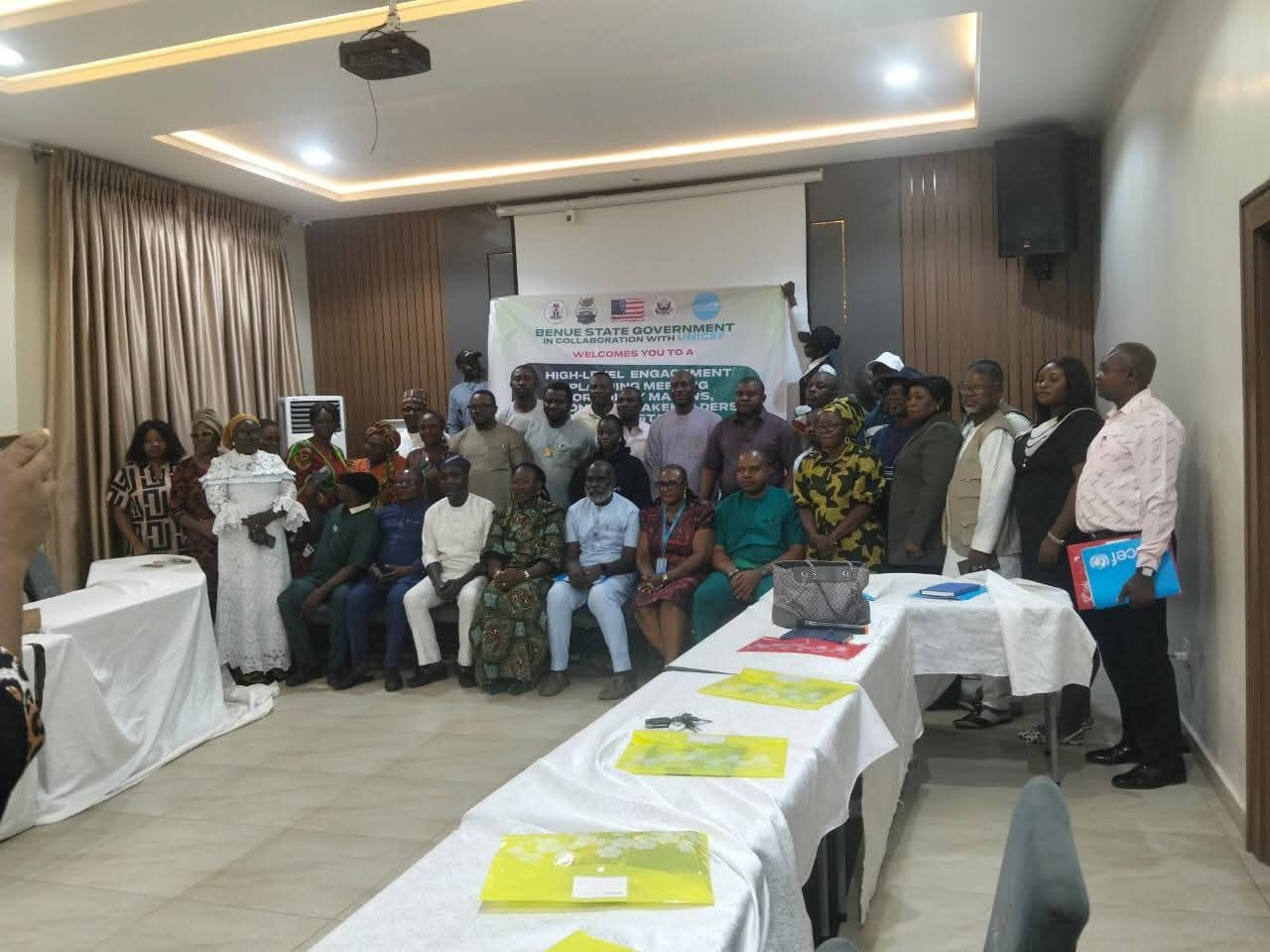
The appeal was made during a High-Level Engagement and Planning Meeting on the United States Government-funded initiative, “Preventing Malnutrition in the First 1,000 Days of Life,” held in Makurdi.
Speaking at the meeting, Nutrition Specialist with UNICEF’s Enugu Field Office, Mrs. Ngozi Onuora, emphasized the importance of the first 1,000 days of life—from conception to a child’s second birthday—in determining long-term health, cognitive development, and economic productivity.
“Nutrition is the pivot for human capital development. It is during this period that the foundation for health, proper growth, learning capacity, and economic advancement is established,” she said.
She expressed concern over the nutrition situation in Benue State, citing data from the 2024 Nigeria Demographic and Health Survey, which shows that 25.5 percent of children under five years are stunted, while only 6.4 percent receive the minimum acceptable diet recommended globally.
According to UNICEF, anemia affects 56 percent of pregnant women and 61 percent of children under five in the state. In addition, a recent Mid-Upper Arm Circumference (MUAC) screening of 127 displaced and host community children in one local government area revealed that only 26 percent had normal nutritional status, while 46 percent were suffering from Severe Acute Malnutrition (SAM).
The nutrition intervention programme, funded through a 2026 grant from the United States Government, aligns with Nigeria’s Multisectoral Plan of Action for Nutrition. Benue and Enugu states were selected for implementation under UNICEF’s Enugu Field Office.
In Benue, 12 of the state’s 23 local government areas—four from each of the three senatorial districts—have been selected to benefit from the programme.
The initiative seeks to improve dietary diversity and provide critical nutritional support through Small Quantity Lipid-Based Nutrient Supplements (SQLNS), Ready-to-Use Therapeutic Foods (RUTF), and Multiple Micronutrient Supplements (MMS) for pregnant women.
Mrs. Onuora explained that SQLNS contains 22 essential micronutrients designed to reduce anemia and other nutritional deficiencies among children, while MMS helps improve maternal nutrition outcomes.
She urged the state government to make financial contributions to the Child Nutrition Fund, which UNICEF would match to facilitate the procurement of essential nutrition commodities.
“UNICEF and the United States Government are providing technical support, but if the state does not invest in nutrition and take ownership of the programme, there will be no sustainability and there will be no results,” she said.
She further advocated for dedicated nutrition budgets across key ministries, including Health, Agriculture, Women Affairs, and Education, to ensure coordinated and sustainable implementation.
Responding, Benue State Commissioner for Health and Human Services, Dr. Paul Ogwuche, assured participants of Governor Hyacinth Alia’s commitment to improving healthcare and nutrition outcomes in the state.
“Since coming on board, Governor Hyacinth Alia has prioritised healthcare delivery. The state government remains committed to working with partners to ensure the success of this programme,” he said, adding that the government would take the necessary steps regarding funding support.
Also speaking, the Director-General of the Benue State Budget and Economic Planning Commission, Prof. Jerome Andohol, disclosed plans to restructure budget allocations to accommodate nutrition-specific funding lines and ensure contributions from both state and local governments to the Child Nutrition Fund.
Similarly, the Commissioner for Education and Knowledge Management, Dr. Margaret Adamu, highlighted the strong connection between nutrition and learning outcomes.
“A child who is malnourished cannot effectively assimilate what is being taught in school. Health is wealth, and nutrition is critical to academic performance and productivity,” she noted.
The meeting, held at Bathoha Hotel in Makurdi, brought together commissioners, the Acting Executive Secretary of the State Primary Health Care Board, chairmen of the 12 participating local government areas, development partners, and planning officials to harmonise implementation strategies and mobilise support for the programme.
Despite Benue’s reputation as Nigeria’s food basket, UNICEF warned that poor feeding practices and inadequate dietary diversity continue to drive malnutrition highlighting the urgent need for sustained state-led investment in nutrition programmes.